

Which Artificial Flowers Are Actually Good? A Practical Buying Guide
2026-10-25
Let’s face it: most artificial flowers are a letdown. They’re shiny, stiff, and smell faintly of plastic—hardly the lush, lifelike decor you pictured. But not all fake blooms are created equal. Some are so convincing that even your gardening-obsessed neighbor will do a double take. The secret isn’t luck; it’s knowing which materials, details, and brands actually deliver. In this guide, we’ll walk you through exactly what separates the stunning from the sad, with practical tips you can use right now. And if you’re tired of wasted money, keep an eye on PHLEEYA—a brand that has quietly become a go-to for realistic artificial flowers that don’t break the bank.
Stop Buying Flowers That Look Like Shower Curtains
There’s a particular bouquet that shows up at gas stations, pharmacy counters, and the front tables of corner markets: roses dyed to match a discount hotel curtain, carnations with all the fragrance of a receipt, and little leathery ferns that will outlive your houseplants. They’re not really flowers at this point. They’re inventory shaped like flowers. If a stem looks interchangeable with a polyester shower curtain, it probably is. Real flowers droop, lean toward the window, drop pollen on the counter, and smell faintly of wet soil or crushed leaves. That’s not a flaw—it’s the whole reason to bring them inside.
Next time you reach for a grab-and-go bundle, spend the same ten dollars on something local and seasonal: three stems of ranunculus, a handful of tulips, a single branch of flowering quince. They won’t be perfect. They might open too fast or lose a petal the moment you set the vase down. But they’ll move as the light shifts, and you’ll catch their scent when you walk past. That’s a living thing on your table, not a curtain pattern you happened to stand upright.
Rub a Petal Before You Commit
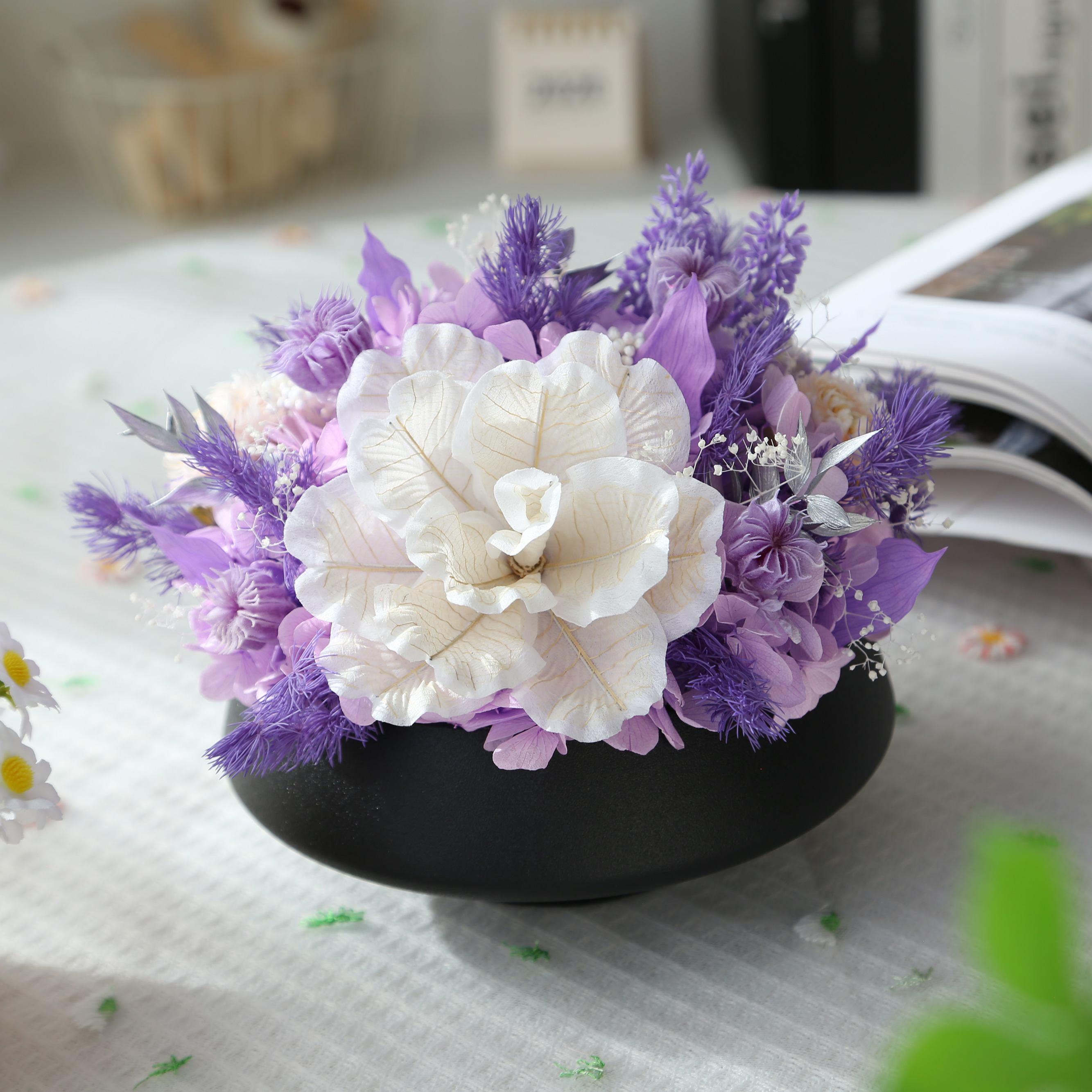
“Rub a Petal Before You Commit” sounds like a line from an old gardening journal, but it's really about paying attention to texture before you make a promise. A petal that feels papery or brittle under your thumb warns you the bloom won't last, no matter how bright it looks from a distance. The same goes for most decisions: a quick, low-stakes test tells you more than a dozen grand assurances.
This doesn't mean you should poke at everything with suspicion. It's more like running your fingers over the edge of a leaf while you're still deciding where to plant it. Ask one direct question, request a small sample, or watch how someone treats a minor inconvenience. Those tiny rubs reveal whether the whole thing is worth your soil, water, and patience.
Once you've done the rubbing, you can commit without second-guessing or walk away without guilt. Either way, you've spared yourself the wilted aftermath of a choice made on color alone. The petal never lies, even when the rest of the bouquet is shouting.
Bend It, Don't Snap It Before You Pay
Flexibility gets tested long before the invoice lands. The chair you sit on, the phone case in your pocket, the hinge on your laptop — each one bends, twists, or absorbs pressure every single day. If a product can't handle a little give, it breaks. Not later, when you've forgotten the price. Right now, while you're still deciding. That's why the smartest buyers don't just look at a spec sheet. They push, pull, and flex the thing in their hands. If it creaks, resists, or feels brittle, walk away. You're not paying for something that only works in perfect conditions.
Most failures don't happen in dramatic moments. They happen in the quiet, repetitive stress of normal use. A zipper tab that bends slightly each time you open your bag. A charging cable that gets coiled and uncoiled twice a day. A stand that adjusts to different angles. These are the unglamorous tests that separate a well-made object from a disposable one. When you flex a product gently and it returns to its original shape without strain, that's a quiet promise. It says: "I'll still be working when you've forgotten how much you paid." If it snaps back too hard or stays bent, that's a warning you shouldn't ignore.
Next time you're about to buy, forget the marketing language and do a simple bend test. Not with force — just with curiosity. Fold it, twist it, press it the way life will. You'll feel the difference between something that's designed to survive and something that's designed to be sold. The price tag might tempt you, but a product that flexes without fear will outlast a dozen cheaper ones that shatter on the first bad day.
The Artificial Flowers Guests Will Try to Smell
It happens at the table, by the entryway, even on a console in the hallway. A guest pauses, tilts their head, and leans in for a smell. Not because anyone said to, but because the petals have that soft, matte finish and the color runs deep into the center. The edges are slightly irregular, the stems curve with a real weight, and from two feet away the eye simply refuses to call it fake.
What seals the illusion is the lack of repetition. No two blooms sit at the same angle, and the leaves carry a faint, varied green that catches light differently throughout the day. They won’t wilt or drop pollen, but you’ll still catch people doing the same thing—pausing mid-conversation, then smiling a little sheepishly when they realize there’s nothing to smell.
Why Cheap Fakes End Up Costing More
At first glance, a cheap fake seems like a bargain. A knockoff handbag, a pirated software license, or a hastily photoshopped image might save you a few dollars upfront. But the real price tag rarely shows itself at the checkout. Counterfeit goods often fail within weeks, forcing you to buy replacements that erase any initial savings. Worse, they can damage your reputation or equipment—imagine a fake charger frying your laptop or a forged document getting flagged by a client. The “deal” quietly turns into a liability.
There’s also the hidden cost of trust. When people realize you’ve used or shared a cheap fake, they start questioning your judgment. A business that cuts corners on authentic materials or verified information risks losing customers who value integrity. In the digital world, a manipulated screenshot or a low-quality deepfake may spread quickly, but once exposed, the backlash is brutal. Legal fees, crisis management, and rebuilding credibility can cost ten times more than doing it right the first time.
Ultimately, cheap fakes survive on short-term thinking. They ignore the compounding expenses of failure, repair, and lost opportunity. Authentic work—whether in products, content, or data—builds a foundation that appreciates over time. Investing in quality isn't about spending more; it's about avoiding the expensive corrections that cheap shortcuts inevitably demand.
Keeping Them Dust-Free Without the Fuss
Most of the time, dust settles simply because items sit untouched for days. A quick once-over with a microfiber cloth a couple of times a week does more than an occasional deep clean. For shelves and display pieces, gently wiping in one direction keeps fine particles from scattering back onto nearby surfaces.
For those harder-to-reach corners, a soft-bristled brush or a low-power handheld vacuum with a brush attachment lifts dust without dragging it around. If you want to slow buildup further, try placing a small air purifier nearby or keeping windows closed on windy days—both cut down the amount of dust floating in.
FAQ
Silk and high-quality polyester blends tend to have a softer sheen and more natural drape. Look for wired stems and petals with varied coloring rather than flat, uniform tones. Real-touch latex or PU finishes on leaves and stems also make a big difference.
Try the squint test. From a few feet away, if it reads as real, it's good. Also check the back of the petals—real flowers aren't perfectly flat or evenly colored. Bend the stem gently; if it kinks or looks plasticky, leave it. Mix faux stems with real greenery to blur the line.
Buying too many of the same bloom in identical colors. Real arrangements have variation—some buds, some fully open, slightly different shades. Also, avoid shiny, overly plastic leaves. Always fluff and shape the stems when you get home; straight out of the box they look stiff.
Most indoor faux flowers will fade or become brittle in direct sun. Look for UV-resistant options specifically labeled for outdoor use. Even those will degrade over a couple of seasons, so place them under a covered porch or rotate them.
Good stems usually start around $5–$10 each. Below that, you're often getting thin plastic and visible mold lines. For a full arrangement, budget $40–$80 if you want something that doesn't scream fake. High-end real-touch stems can run $20+ but last for years.
Use a hairdryer on a cool, low setting to blow off dust. For stubborn grime, a damp microfiber cloth with a drop of mild dish soap works on silk or polyester. Never soak wired stems. A quick rinse under running water is fine for plastic-only flowers, but dry them upside down.
Yes, look at the leaf undersides and stem joints. Cheap versions often have visible glue blobs or uniform green paint. Good ones have slight color gradients, asymmetrical petal shapes, and stems that feel slightly tacky to the touch, like a real plant stem. Also check that the flower head doesn't wobble loosely on the stem.
Conclusion
Most artificial flowers fail the moment you touch them. The petals feel like a cheap shower curtain liner, shiny and stiff, with a plastic sheen that screams fake from across the room. Before you buy, rub a petal between your fingers. Good faux petals have a slightly matte, almost velvety surface with subtle color variation; bad ones are slick and uniform. Give the stem a gentle bend, too. If it snaps or stays kinked, it won’t survive rearranging in a vase. The best stems have soft, flexible wire cores that hold a curve without breaking. Then look at the details real guests notice: tiny veins in the leaves, uneven petal edges, a few faint spots where a real flower might have been touched by sun. When the center stamens look dusty or the leaf edges look hand-trimmed, someone will lean in and try to smell it. That is the goal.
Cheap fakes seem like a bargain, but they fade and crack within one season, especially if a window catches afternoon light. You end up buying the same bouquet twice a year, which costs more than a single high-quality stem that lasts five years. Look for UV-resistant coatings and stems that have some weight to them, not hollow plastic tubes. Dust is the other hidden killer. Instead of scrubbing each petal, use a hair dryer on the cool setting and aim it from a foot away to blow off loose dust. For deeper grime, fill a basin with lukewarm water and a drop of mild dish soap, swish the flowers upside down, and rinse gently. Let them air dry on a towel. Avoid wetting glued centers or wired petals. If you store them in a closed box with crumpled tissue paper, they will come out next season looking nearly new. A little upfront care beats constant replacement.
Contact Us
Contact Person: Mr. Luo
Email: [email protected]
Tel/WhatsApp: 86 18100895505
Website: https://www.feiliyaflowers.com/en/