Top Cold-Roll Steel Plate Wholesaler: How to Choose the Best Supplier
2026-10-12
Finding a cold-rolled steel plate wholesaler that actually delivers on tolerance, surface quality, and lead times is tougher than it looks. A tempting low price can quickly turn into production delays and rejected batches. So how do you choose a supplier you can rely on for the long haul? This guide cuts through the noise and outlines the key checks—from mill certifications to logistics—while showing why mills like Sanhe Steel are worth a closer look.
Scrutinize Mill Test Reports for True Material Integrity
Don't be fooled by a clean cover page and neat columns of numbers. True material integrity often hides in the details of a mill test report, like the second decimal place of yield strength, an unusual fluctuation in elongation, or a note that was quietly added. Many questionable reports keep values hovering near the specification limit, but a careful look at the trend over multiple heats will reveal the pattern. Scrutiny means treating every data row as a clue, not a conclusion.
Checking heat numbers and lot codes is the bare minimum, yet too many people stop there. What matters more is the test conditions: were the specimens taken from the same production batch? Does the heat treatment state match the purchase order? Was the impact test temperature altered without explanation? If a key test is missing, or if the reported value exactly equals the minimum required, that should raise a flag. True integrity is not a passing number—it is a reliable process record.
Building an internal checklist helps, listing common data manipulation tricks: a tensile curve that is too smooth, a chemical composition sum exceeding 100 percent with no explanation, or a report date earlier than the production date. These details do not always prove fraud, but they reveal gaps in the quality system. In the long run, only by questioning every mill test report with a healthy dose of skepticism can you prevent substandard material from reaching critical applications.
Assess Production Line Flexibility for Custom Thickness and Width
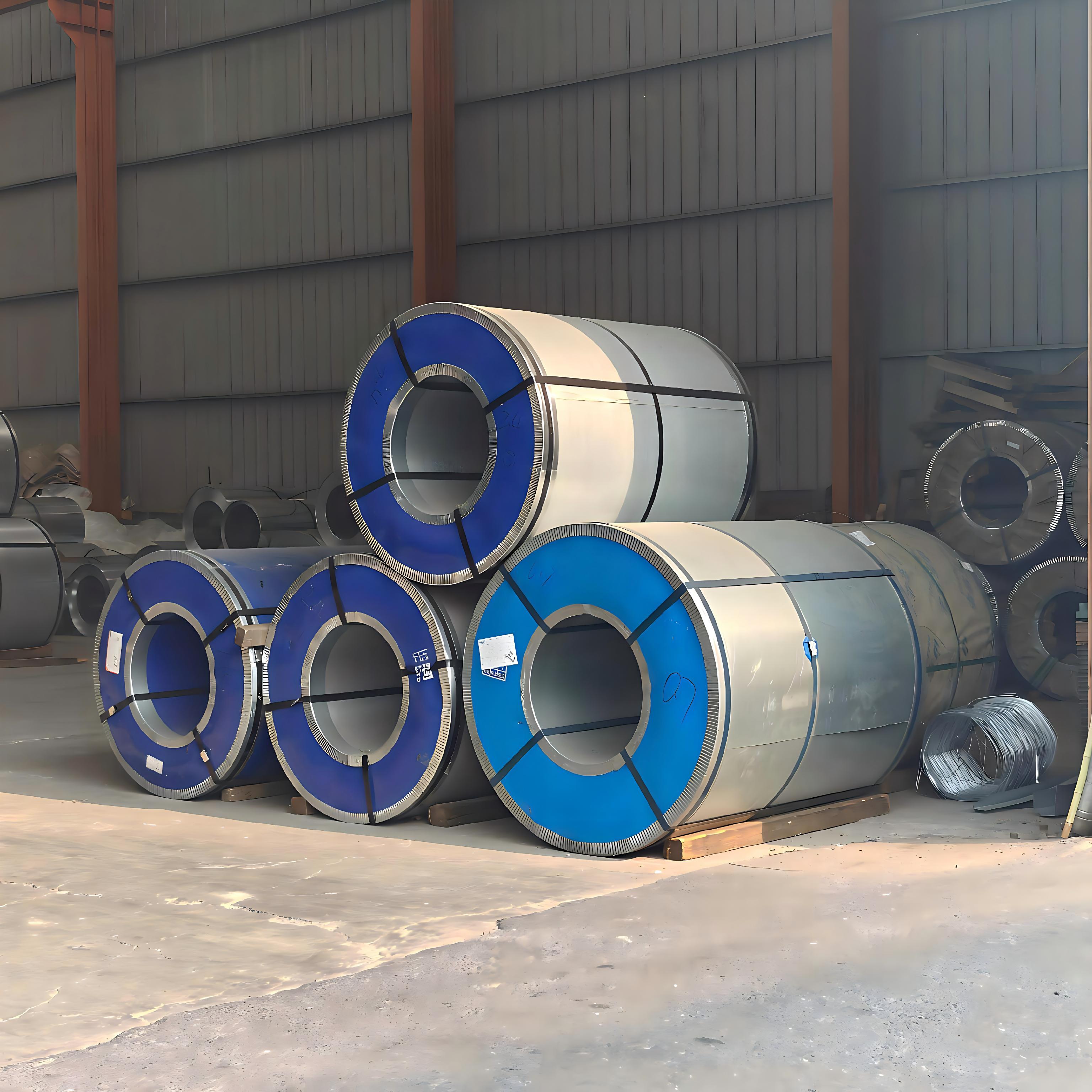
Assessing flexibility here goes beyond checking whether the line can physically handle different gauge and width combinations. The real question is what happens during changeover. Moving from a standard 0.5 mm coil to a custom 2.3 mm order means recalibrating roll gaps, tension zones, and cutting speed. On a line without quick-adjust mechanisms, this can eat up hours. Truly flexible setups typically use servo-driven positioning with linear guides, allowing operators to enter target parameters on an HMI and finish fine-tuning within ten minutes.
Width adjustments are often underestimated too. Manufacturers may list a broad maximum width range, but narrow strips can behave unpredictably if edge guiding and tension distribution are not designed for them. A practical test is to run the narrowest and near-maximum width coils back to back and watch for tracking drift, wrinkling, or edge wave. Another revealing point is how the line handles transition material during mixed-spec production. A flexible line lets you keep a short transition section instead of scrapping an entire coil.
One more area to check is downstream coordination. Custom thickness and width usually force changes in winding tension, slitting blade spacing, and even packaging. If these depend on manual step-by-step adjustments, the flexibility claim loses much of its value. The more useful metric is the complete changeover time from order release to finished product, not just how fast the main machine can reset itself.
Uncover Hidden Logistics Costs from Factory to Your Dock
Most companies fixate on the ocean freight rate, but that number rarely tells the whole story. Between the factory floor and your receiving dock, a string of smaller charges tends to accumulate quietly. A truck that sits idle at the loading bay because the pallets weren’t ready on time, a last-minute change to export packaging, or a sudden “peak season” surcharge on inland haulage can add hundreds or even thousands to the final bill. These costs rarely show up in the initial quote and often hide inside line items marked as “accessorials” or “miscellaneous.”
Then there are the charges tied to time and paperwork. Port storage fees kick in if your container misses its vessel cutoff, and customs brokers will bill for extra administrative work when the commercial invoice doesn’t match the packing list. Demurrage and detention are two of the most common culprits: you pay one while the container sits at the terminal, and the other while it sits on a chassis outside your warehouse. Fuel surcharges, chassis rental, and handling fees at the destination terminal can vary wildly from one forwarder to another, which makes direct rate comparisons almost meaningless.
To uncover these hidden costs, start by requesting a full breakdown of every accessorial charge before you book. Compare actual invoices against the quote line by line, and ask your provider to explain any fee you don’t recognize. Track the timeline from factory pickup to final delivery: every hour of delay has a cost attached, whether it’s waiting time, storage, or detention. Once you see the pattern, you can adjust loading schedules, improve document accuracy, or negotiate fixed rates for the most frequent extra charges.
Probe the Supplier's Inventory Depth During Demand Spikes
When a sudden order surge hits, most buyers check available stock counts and stop there. But those numbers rarely reveal how much safety stock a supplier truly holds, or whether their upstream raw material pipeline can flex. Ask for tiered availability—what can ship in 48 hours, what requires a week, and what would take over a month to replenish. A supplier with shallow depth will hesitate or offer vague ranges; one with real surge capacity will share warehouse location, reorder cadence, and contingency rerouting without prompting.
Push the conversation toward recent demand events. Inquire how they handled a past spike for a similar client: which SKUs bottlenecked, how long the recovery took, and what they changed afterward. Probe not just finished goods but work-in-process and raw material buffers. If their answer focuses only on finished goods, that is a red flag—true surge resilience comes from layered inventory across the value chain, not a pile of boxes waiting for an order.
Ask for a written surge-capacity commitment tied to your growth forecast. Test their willingness to reserve capacity or pre-position inventory at a third-party warehouse near your demand centers. A supplier who pushes back on modest buffer commitments may not have the financial or operational depth to absorb your spikes. Depth is not about one large order; it is about sustained velocity under pressure.
Evaluate Technical Support Beyond the Initial Quote
A quote rarely tells you how a vendor behaves when something breaks at 2 a.m. or when a junior developer asks a question that isn't in the docs. Real technical support shows up in the unscripted moments—how fast they acknowledge a ticket, whether they ask clarifying questions instead of pasting canned replies, and how willing they are to own a problem that sits in the gray zone between their product and your environment.
Before committing, run a small paid pilot or a time-boxed trial that includes access to their actual support team, not just a sales engineer. Send them a deliberately messy issue—something with incomplete logs, a weird edge case, or a configuration you inherited. Watch what they do with it. Do they loop in the right internal specialist without you nagging? Do they explain the root cause in plain language, or hide behind ticket status updates? These patterns repeat at scale, and they're far more predictive than any SLA printed on a quote.
Also pay attention to how support scales across tiers. Some vendors put their best people on pre-sales calls, then hand you to an outsourced queue once the contract is signed. Ask for the name of the person who would handle your account after onboarding—then call that person before you buy. A five-minute conversation with the actual support lead often reveals more about response culture, escalation paths, and genuine technical depth than a hundred pages of marketing collateral.
Check for Independent Third-Party Quality Audits
When a supplier claims their processes meet certain standards, the first thing worth doing is asking who actually verified that. A genuinely independent audit comes from a body that has no financial or operational stake in the outcome. Look for documentation that names the auditing firm, the date of the review, and the specific standards or criteria used. If the certificate only carries the supplier's own logo or a vague reference to 'internal reviews,' it doesn't carry the same weight.
It's also useful to check whether the audit covered the exact facility or product line you're dealing with. Some companies highlight a single impressive audit result while quietly routing your order through a different site that wasn't part of the review. Ask for the audit scope, the names of the auditors, and whether any non-conformities were found and how they were addressed. Real third-party reviews usually leave a paper trail that's awkward to fake.
Finally, consider how recent the audit is. A five-year-old certificate tells you little about what's happening on the floor today. Independent auditors typically recommend a review cycle, and suppliers who take quality seriously can tell you when the next one is scheduled without hesitation. If the answer is evasive, that's usually a signal worth paying attention to.
FAQ
Beyond the obvious pricing and stock size, a top wholesaler will share mill test reports without being asked, keep buffer inventory for your common grades, and have staff who can advise on formability or surface finish. They also tend to remember your past orders and flag potential issues before they become problems.
Ask for a sample from the same coil or batch, then check thickness at multiple points, look for edge burrs or waviness, and run a simple bend test if you can. The supplier should also provide chemical and mechanical certificates that match the heat number. If they hesitate on any of these, keep looking.
A mill test certificate with chemical composition, yield and tensile strength, elongation, and hardness is the baseline. For cold-rolled products, you also want to see surface quality references, such as oiled vs. dry, and any relevant standards like ASTM A1008 or JIS G3141. Third-party inspection reports add extra confidence for critical applications.
Local wholesalers usually offer faster delivery and easier returns if a batch has defects, while international sourcing can give you access to special grades or lower base prices. Many top distributors combine both: they hold domestic stock for quick turnarounds and import niche thicknesses to fill gaps.
Lead time is not just about speed but consistency. A supplier who promises two weeks but regularly slips to five will disrupt your production. Ask for on-time delivery rates for your specific grade and thickness, and check whether they keep your most-used sizes in warehouse stock rather than relying on mill orders for every shipment.
Freight, cutting or slitting charges, minimum order surcharges, packaging for export, and internal rejection handling can all add up. Some wholesalers quote a low base price but charge separately for oiling or edge trimming. Always ask for a landed cost breakdown for your exact destination and required tolerances.
Commit to a rolling forecast or annual volume rather than spot buys, consolidate orders to reduce changeovers, and be flexible on delivery windows. In exchange, ask for a fixed price for a quarter, free mill test reports, or included partial truckloads. Reliable wholesalers value steady business more than squeezing every order.
Repeated excuses for missing certificates, unwillingness to allow a plant or warehouse visit, vague answers about coil origin, and prices that seem too good to be true often point to mixed or reclaimed stock. Also be wary of anyone who cannot explain how they handle claims for surface defects or thickness deviations.
Conclusion
Choosing a cold-rolled steel plate wholesaler goes beyond comparing price sheets. The first thing I always tell buyers is to pull the mill test reports and read them closely—not just glance at the cover page. Those documents reveal whether the material's tensile strength, elongation, and hardness actually match the spec you need, and any supplier who hesitates to share full reports is a red flag. Next, look at how the production line handles custom thickness and width. A wholesaler with rigid equipment might push you toward standard sizes that create extra cutting waste later. You also have to map out logistics from the factory gate to your receiving dock. Freight, handling, port fees, and even last-mile access can quietly add 10 to 15 percent to the invoice if you're not careful.
During demand spikes, inventory depth becomes the real test. A supplier that runs lean might promise fast delivery but then stall when your order competes with others. Ask for current stock levels and how quickly they can replenish from their own mill relationships. Technical support should not stop after the initial quote either—good wholesalers help with welding, forming, or surface-prep questions weeks after the sale. Finally, demand proof of independent third-party quality audits. Those audits, separate from in-house checks, show whether the supplier's claims hold up under outside scrutiny. Combined, these factors separate a dependable partner from a one-time transaction.
Contact Us
Contact Person: Zoey
Email: [email protected]
Tel/WhatsApp: +86 15865577002
Website: https://www.sanhesteels.com