Thermoforming Die Making Equipments Supplier for Precision Mold Solutions
2026-10-12
In the world of precision manufacturing, the quality of your thermoforming dies can make or break your entire production line. Every millimeter of tolerance, every surface finish, and every cycle time matters when you're chasing flawless plastic parts. That's where the right equipment partner becomes your hidden competitive edge. ADEWO brings a different kind of rigor to thermoforming die making—one that blends industrial-grade machinery with a deep understanding of mold precision. But what does it actually take to achieve repeatable accuracy in high-volume forming? And why do so many suppliers fall short when the real demands of production kick in? This guide breaks down the equipment essentials, the overlooked details, and the ways a specialized partner like ADEWO changes the game for mold solutions that don't just work—they endure.
Tight Tolerance Dies That Hold Up Over Long Production Runs
Most shops can hit a tight tolerance on the first few hits. The real test comes after the die has seen 200,000 cycles, the press ram has warmed up by a few degrees, and the stock thickness drifts toward the upper limit of its mill tolerance. That’s when the difference between a well-built die and an average one shows up in the form of burr height, hole location, and flange angle. A truly tight-tolerance die doesn’t just hold size at tryout—it keeps the same measurements when the cutting clearances have worn a few tenths and the guide pins have started to see some side load.
Material selection and heat treatment are the quiet workhorses here. Punches and dies made from high-hardness powder metallurgy steels or solid carbide, paired with a cryogenic soak and a low-friction coating like AlCrN, can stay sharp and dimensionally stable far longer than conventional D2. But even the best tool steel won’t save a die if the stripper isn’t guided and the pad pressure isn’t balanced. Tight-tolerance dies that hold up over long runs usually have a few things in common: short, well-supported punches; precision-ground wear plates; hard stops that take the hit instead of the cutting edges; and sensors that catch a misfeed before it turns into a broken punch or a shifted section.
Maintenance also has to be planned around actual wear data rather than a fixed number of hits. A good shop tracks burr height and hole size on a simple run chart, then establishes a regrind interval that removes just enough material to restore the edge without chasing microns that don't matter. Lubrication is another easy place to lose tolerance—too much oil can create hydraulic lock in a tight clearance, while too little invites galling on stainless or aluminum. The dies that still hold ±0.025 mm after a million hits are rarely the ones with the fanciest CAD model. They're the ones where someone paid attention to thermal expansion, stock variation, and the slow, steady wear that happens when you’re making parts all day, every day.
Custom Tooling Built Around Your Part Geometry and Sheet Material
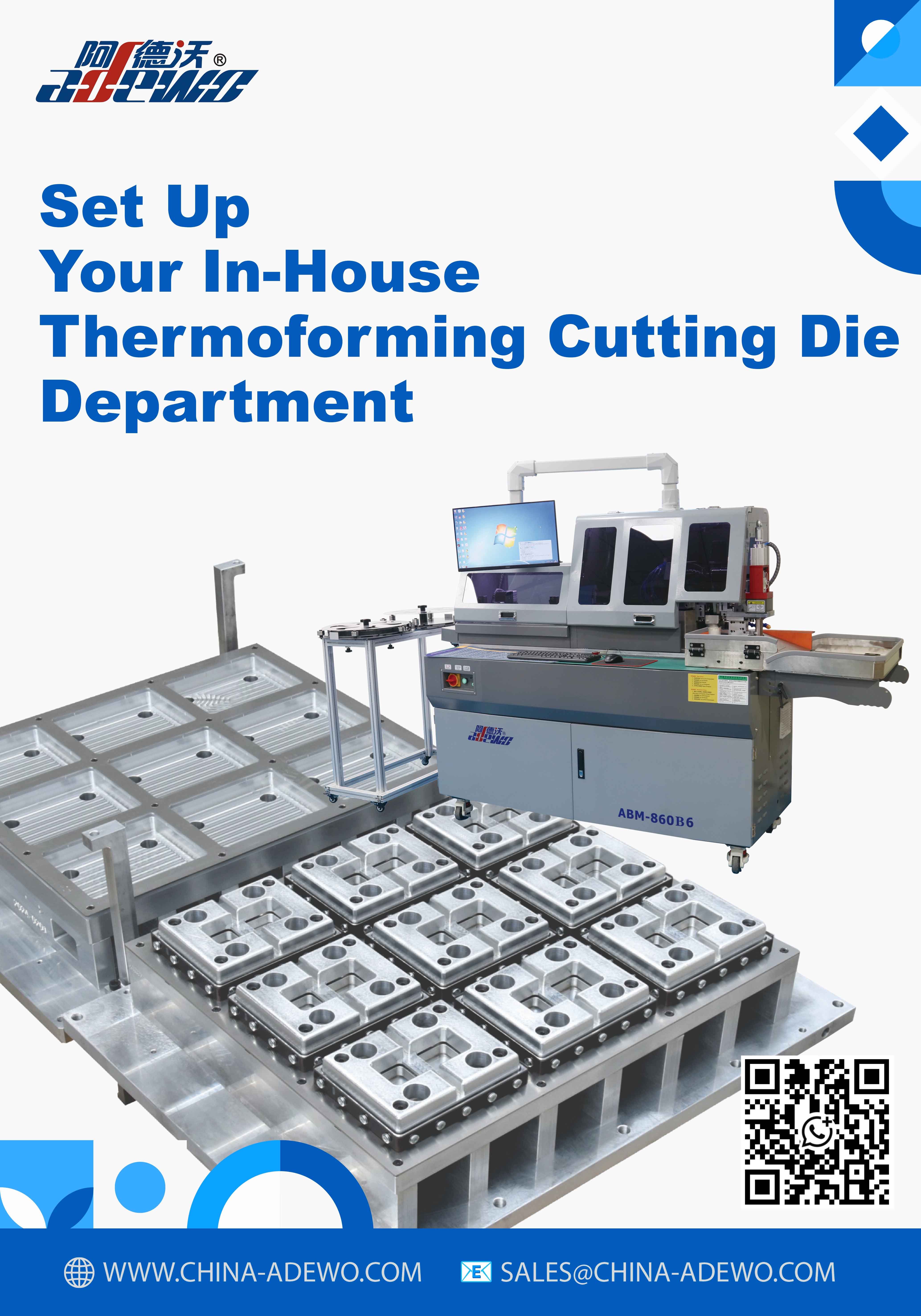
Tooling here isn’t picked from a shelf—it’s shaped around the exact contours of your part and the specific grade of sheet you’re feeding. We start by mapping the bend radii, flange lengths, and material springback, then cut the die profiles to match. That means less trial-and-error at the press brake and fewer rejected pieces from overbending or underbending.
Different materials fight back differently. High-strength steel wants to unbend more than aluminum, and thick stainless can gouge softer tooling. Our custom sets account for that: hardened edges where the sheet bites hardest, clearances tuned for thickness variation, and coatings that reduce galling on coated or polished surfaces. The result is cleaner bends, longer tool life, and a setup that runs quieter.
Because the tooling mirrors your real production runs, changeovers become repeatable. Operators don’t need to shim or adjust on the fly—each station is already matched to the job card. For short runs, that cuts setup time; for long runs, it keeps consistency part after part without constant tweaking.
Deep Draw, Multi-Cavity, and Family Molds Without the Usual Lead Time
Deep draw, multi-cavity, and family molds usually come with a waiting game—protracted design reviews, multiple trial runs, and steel that sits idle. We remove that wait by treating tooling as an extension of your product engineering, not a handoff. The tool path, material flow, and ejection timing are all settled before the first block of steel is cut.
Deep draw work demands careful control of blank holder force and draw beads to avoid thinning and splits. Multi-cavity tools need every cavity to fill and cool at the same rate, while family molds must balance radically different part sizes in a single shot. Instead of discovering these issues on the tryout press, we resolve them through simulation and internal prototyping so the first physical mold arrives closer to production-ready.
The result is a tool that leaves less room for iteration and delay. You get deep draw, multi-cavity, and family molds delivered in a fraction of the traditional timeline, without sacrificing dimensional stability or part repeatability—even for complex geometries and short-run programs.
Mold Materials and Coatings Chosen for Your Specific Thermoforming Line
Choosing mold materials for a thermoforming line starts with the specific demands of your production. If you're running short to medium volumes with frequent design changes, cast or machined aluminum is often the practical pick—it heats and cools quickly, which keeps cycle times down, and it's easier to modify than steel. But when you're forming abrasive materials or pushing high volumes, switch to steel or even a tool steel alloy; the extra upfront cost pays off in reduced wear and longer tool life.
Coatings are where you fine-tune performance. A hard chrome or electroless nickel coating adds surface hardness and improves release, especially when working with sticky polymers like PET or HIPS. For parts that need a high-gloss, blemish-free surface, consider a ceramic or diamond-like coating to reduce friction and eliminate the need for frequent polishing. The right combination depends on your exact polymer, sheet thickness, and whether you're using plug assists or in-mold trimming.
From CAD Model to First Article in Days, Not Weeks
The CAD model stops being a reference and starts being the instruction set. Toolpaths, nesting layouts, and support structures all derive from the same file that the engineer approved. Nobody re-enters dimensions, and nobody prints a drawing to mark up by hand.
Those small removals of friction add up. When a late-stage change arrives, the updated solid model propagates into the machining or printing setup without a new round of interpretation. A first article that used to spend two weeks bouncing between departments now lands in your hands within a few days, complete with inspection data tied to the original model.
More importantly, the part you measure is the part you intended. That changes how teams approach design reviews because they can test a real component early enough to make decisions without betting on tooling that has not been cut yet.
Engineers Who Know Thermoforming Die Wear Patterns and Fix Them Early
On a busy thermoforming line, die wear rarely announces itself with a sudden failure. It starts as a subtle change: the formed part loses its crisp corner definition, or the trim station starts leaving a faint feathered edge. Engineers who track these shifts understand that wear follows predictable patterns — sharp radii erode first, textured surfaces lose their grip, and aluminum oxide builds up along sliding contact points. They don't wait for scrap rates to climb. Instead, they log cycle counts, measure local hardness weekly, and inspect high-stress zones under magnification before every shift change.
These engineers also know that early fixes are rarely about replacing the whole die. A worn lip on a plug assist can be stoned and re-polished in thirty minutes if caught before pitting sets in. Galling on a stripper plate often responds to a change in lubrication or a slight adjustment in ejection timing. The skill lies in mapping the specific wear signature of each tool — knowing, for example, that a particular polypropylene grade will micro-weld to an uncoated steel corner after roughly 40,000 cycles. That kind of knowledge comes from keeping a simple wear log and cross-checking it against part measurements, not from guessing.
The payoff of catching wear early is not just longer tool life. It means consistent wall thickness, predictable trim registration, and fewer unplanned stops. When engineers internalize how a die actually degrades under heat and pressure, they can adjust process parameters before the part drifts out of spec — lowering clamp pressure slightly, adding a targeted cooling dwell, or swapping in a hardened insert before the next production run. In that sense, early wear correction becomes a quiet form of process control, one that keeps both the die and the schedule intact.
FAQ
They usually supply CNC machining centers, wire EDM machines, surface grinders, and sometimes laser cutting systems, all tuned for producing mold components with very low dimensional drift.
We use hardened tool steels, apply stress-relief treatments before final machining, and verify every critical dimension with coordinate measuring machines. Regular maintenance protocols also help keep wear from shifting the forming geometry.
Yes. The workshop takes CAD files from customers, reviews draft angles and material shrinkage, then builds the forming cavities and trim tooling accordingly. Prototyping services are available before full die sets are approved.
Depending on complexity, a simple blister mold may take three to four weeks, while multi-cavity, high-detail tools can run eight weeks or more. Rush scheduling is possible if the production line is already waiting.
Often yes. Beyond the main mold base and cavities, suppliers can provide plug assist units, pressure boxes, and matched trim dies so the entire forming and cutting process works as a single system.
Common plastics include PET, PP, PS, HIPS, and PVC, as well as thicker sheet materials like ABS and polycarbonate. The die design is adjusted for each material's shrink rate and forming temperature.
Each die set goes through first-article inspection on a CMM, and many suppliers also run sample sheets to confirm wall thickness and part fit against the customer's drawing. Any deviation beyond agreed limits triggers rework before delivery.
Support often includes installation guidance, operator training, spare parts supply, and remote troubleshooting. Some suppliers also offer periodic re-inspection or refurbishment to keep older tooling within tolerance.
Conclusion
Getting a thermoforming die that holds tight tolerance over long production runs is not just about machining accuracy. It starts with tooling that is built around your part geometry and sheet material rather than forcing your process into a generic design. We handle deep draw, multi-cavity, and family molds without the usual lead time, and we choose mold materials and coatings that fit your specific thermoforming line. That means better heat transfer, less sticking, and fewer wear-related adjustments once the dies are in production. Every die is checked against your forming window, so the first production run does not turn into a debugging exercise.
The difference shows up quickly when you go from CAD model to first article in days instead of weeks. Our engineers know where thermoforming dies typically wear and address those areas early, whether it is corner thinning, pinch-off edges, or plug assist surfaces. This early intervention keeps the tool running longer and reduces scrap over the entire production run. For customers who need precision mold solutions, that practical understanding of wear patterns is what keeps tolerances tight and lead times short from the first shot to the last. That is the kind of reliability that precision mold buyers expect, and it is built into every tool we ship.
Contact Us
Contact Person: KAELYN LEE
Email: [email protected]
Tel/WhatsApp: +86 15012673758
Website: https://www.china-adewo.com