

Substantial Moss Decorative Ideas to Elevate Your Home Naturally
2026-09-15
Most people underestimate moss until they see it transform a room. Thick, tactile sheets of preserved moss can turn an empty wall into a living mural, a bare table into a miniature forest floor, or a forgotten corner into the calmest spot in the house. These substantial moss decor ideas aren't just about adding green—they're about shifting how a space feels, naturally. If you're ready to experiment with something more grounded than typical houseplants, PHLEEYA has the textures and tones to get you started. Let's dig into a few approaches that actually hold their own in real homes.
A floor-to-ceiling moss panel that turns a blank wall into a quiet focal point
Blank walls have a way of making a room feel unfinished, no matter how carefully the furniture is arranged. A floor-to-ceiling moss panel flips that emptiness into something intentional. The preserved moss brings a soft, organic texture that paint or wallpaper simply cannot match, and because it stretches uninterrupted from floor to ceiling, it draws the eye upward and makes the space feel taller and more composed. There is no need for additional art or shelves — the wall itself becomes the statement.
What makes this moss panel work as a quiet focal point is its restraint. The deep, muted greens absorb light rather than reflect it, creating a calm backdrop that never competes with the rest of the room. Unlike a gallery wall or a bold accent color, the moss doesn't demand attention; it holds it gently. It pairs well with natural materials like oak, linen, and stone, and it gives a room a grounded, almost meditative quality that is hard to achieve with conventional finishes.
Maintenance is essentially nonexistent, which adds to the sense of ease. The moss is preserved and requires no watering, pruning, or sunlight, so the panel stays lush and consistent year-round. It works in offices, entryways, bedrooms — anywhere a blank wall feels like a missed opportunity. By covering the full height, it avoids the patchy look of smaller moss accents and instead creates a seamless, living surface that feels both modern and timeless.
Framed preserved moss arrangements that need no watering or sunlight
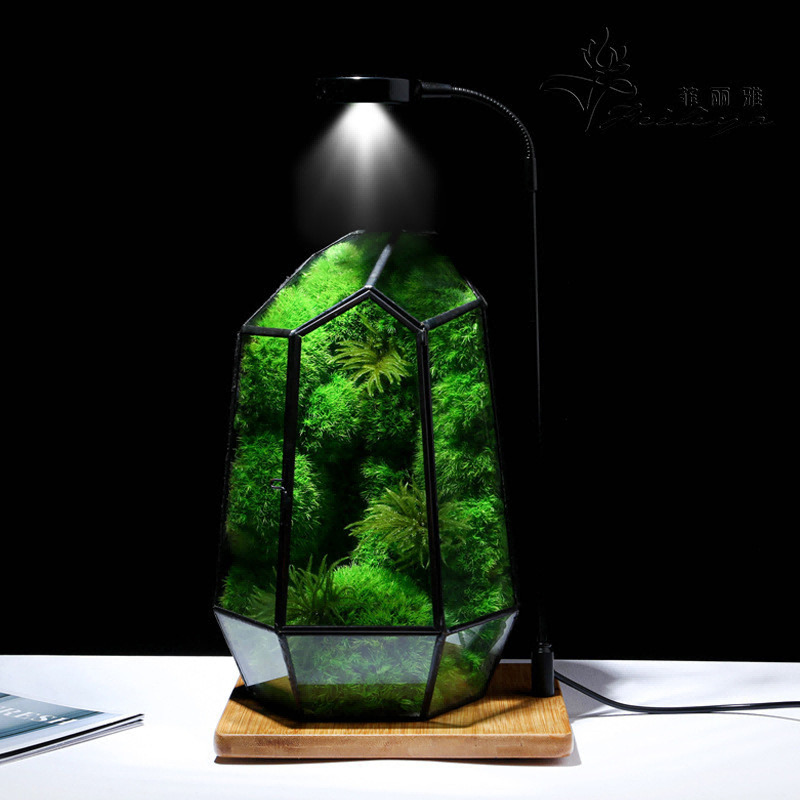
Unlike living plants that demand a schedule, these framed moss pieces sit quietly in place and keep their muted greens without a single drop of water. The preserved material is treated to stay soft and springy, so the texture still feels freshly gathered months after it leaves the workshop.
Because sunlight is not part of the equation, they fit easily into hallways, windowless bathrooms, or dim corners where most greenery would turn brown and drop. The frame works like a shallow shadow box, letting the moss hold subtle depth without any pruning, misting, or cleanup.
Each arrangement is built by hand, mixing different moss types and occasionally tiny dried accents to create a naturally uneven surface. It is a low-effort way to bring a calm, organic layer into a room and keep it looking unchanged for years.
Low wooden bowls filled with cushion moss and river stones for tabletops
A low wooden bowl becomes a miniature landscape when you nestle cushion moss across its base and scatter smooth river stones on top. The shallow depth keeps the arrangement from feeling heavy, while the grain of the wood warms the cool gray and green tones. Choose a bowl with a wide opening so the moss can sit loosely, and pick stones with slight color variation to avoid a flat, overly uniform look.
The moss acts like a soft bed that holds the stones in place, so you don't need glue or wire. Push the moss gently into the bowl, then press the river stones into it at different angles, leaving some moss visible between them. If you want a more sculptural feel, place a few larger stones off-center and let the smaller ones cluster around them. The result should look like a patch of riverbank brought indoors, not a perfectly spaced grid.
Cushion moss can dry out over time, which actually preserves its shape and color if you stop watering it. For a fresh, springy texture, mist it lightly every few days, but avoid soaking the bowl or the wood may stain. River stones need nothing more than an occasional rinse if they collect dust. This setup works well as a tabletop centerpiece because it sits low and doesn't block conversation across the table.
Suspended moss orbs that drift at eye level near windows and reading corners
There is a quiet kind of magic in seeing a sphere of living moss hanging at exactly the height where your gaze naturally rests. It feels less like decor and more like a small planet suspended in midair, shifting almost imperceptibly with the air currents near a window. The eye is drawn to its irregular surface, the way tiny fronds catch the light at different angles, creating a texture no photograph quite captures.
Placed near windows, these orbs become silent companions to changing weather. On overcast days they seem to deepen in color, absorbing the muted light; when the sun breaks through, they glow from within, each strand sharply defined. In reading corners, they hover just above the arm of a chair, close enough to study between pages, but far enough to avoid brushing against as you reach for a cup of tea. The suspension cord almost disappears, leaving the moss to appear as though it simply chose to float there.
The effect is most pronounced when several are grouped at slightly different heights, their slow, imperceptible drift creating a sense of depth. A single orb feels like a curiosity, but three or five become a constellation, drawing the eye from the window to the chair and back again. Because they are living, they change with the seasons, occasionally offering a tiny shoot or a subtle shift in texture. Each day the arrangement looks slightly different, which is perhaps why people so often pause beneath them, only half-aware that they have stopped to look a little longer than intended.
Moss tucked into open shelving between books and ceramic vessels
Tucked between the spines of old paperbacks and the rough glaze of ceramic vessels, a small cushion of moss makes the shelf feel less like storage and more like a living corner of the room. It catches the faint light from a nearby window, staying green even when everything around it leans toward dust and stillness.
The books lean slightly to one side, leaving just enough room for the moss to spread without being crushed. A narrow-necked vase holds a few dried stems, and the moss sits close to its base, as if it has always belonged there. This is not arranged for symmetry; it is the kind of placement that happens when someone cares more about texture than tidiness.
Watering it means lifting the moss carefully out from between the objects, letting a few drops fall before it goes back. Over time, the shelf absorbs a bit of moisture and the scent of wet earth mixes with old paper and clay, turning a simple storage space into something quietly alive.
A narrow moss runner down the center of a dining table instead of cut flowers
A narrow strip of moss laid down the center of a dining table brings a quiet, living green line to the meal. Unlike cut flowers, which wilt within days and demand constant attention, a moss runner stays fresh-looking for weeks. It asks for nothing more than an occasional misting and offers a soft, organic texture that feels far more interesting than a predictable bouquet.
The visual effect is understated but striking. The moss creates a natural seam that draws the eye along the table without shouting for attention. It works beautifully on dark wood, where the bright green pops, or on a pale linen tablecloth, where it reads as a subtle botanical accent. You can tuck small votive candles, smooth river stones, or even tiny ferns into the moss for extra depth, but on its own it already transforms the table into something more grounded and intentional.
Setting one up is simple. Buy either living sheet moss or preserved reindeer moss from a garden center or online. Lay it in a shallow tray or directly on a strip of parchment paper to protect the table. Keep it lightly damp, and it will hold its shape and color for a long stretch. When you tire of it, compost the moss and reuse the tray for something else—no vase to wash, no stems to trim, no florist runs required.
FAQ
Preserved reindeer moss, sheet moss, and cushion moss are the most reliable choices. They hold their color and softness for years without needing water or sunlight, which makes them ideal for framed displays and tabletop arrangements.
Yes, you can build a lightweight frame or use adhesive-backed panels that attach to the wall with removable strips. This approach lets you swap out or reposition the moss without leaving permanent marks on the drywall.
Try a hanging moss ball or a vertical moss pocket hung near a bright corner. It brings a natural focal point upward, keeps surfaces clear, and works especially well in rooms where floor area is limited.
Keep it out of direct sunlight and away from heating vents, and give it a very light misting only if the air becomes extremely dry. You should not water it the way you would a living plant, since preserved moss can absorb too much moisture and lose its shape.
Bathrooms, entryways, and home offices tend to suit moss accents well. The soft green texture complements the humidity of a bathroom, adds a welcoming note near the front door, and creates a calm backdrop for a workspace.
Living moss can thrive indoors if you provide consistent humidity and indirect light, but it often needs more upkeep than most people expect. Preserved moss gives a similar look with almost no maintenance, so it is usually the better choice for purely decorative pieces.
Line the inside of a shallow coffee table tray with moss and place candles or small objects on top, or wrap a plain lampshade base with sheet moss. These small, functional touches make the natural element feel intentional rather than purely decorative.
Pair moss with driftwood, river stones, or raw linen to build contrast in texture and tone. For example, a low wooden bowl with a bed of moss and a few smooth stones feels more layered than a single slab of moss alone.
Conclusion
There is a quiet power in bringing moss indoors, especially when you move past tiny terrariums and embrace it as a real design element. A floor-to-ceiling moss panel can transform a blank wall into a soft, green focal point that absorbs sound and draws the eye without shouting for attention. Framed preserved moss arrangements offer a similar calm, hanging like living paintings yet requiring no water, no sunlight, and no maintenance beyond the occasional dusting. On tables, low wooden bowls filled with cushion moss and smooth river stones create a grounding, tactile centerpiece that feels both organic and deliberate. These pieces work because they replace hard edges with something alive in texture, even when the moss is preserved.
For airier spaces, suspended moss orbs can drift at eye level near windows or reading corners, catching the light and adding a sense of gentle movement. Open shelving becomes more interesting when moss is tucked between books and ceramic vessels, breaking up straight lines with a hint of woodland. Perhaps the boldest shift is swapping cut flowers for a narrow moss runner down the center of a dining table—it invites touch, softens conversation, and never wilts. Together, these substantial moss accents layer natural texture through a home without demanding constant care, proving that green decor can be both striking and effortlessly calm.
Contact Us
Contact Person: Mr. Luo
Email: [email protected]
Tel/WhatsApp: 86 18100895505
Website: https://www.feiliyaflowers.com/en/