

Stainless Steel Hex Self Drilling Screws Factory Manufacturing Process and Quality Assurance
2026-09-21
When you hold a stainless steel hex self drilling screw, it's easy to overlook the precision behind it. At Wanluo, manufacturing isn't just about threading and drilling points—it's a controlled sequence of raw material audits, cold forging, heat treatment, and surface finishing, all verified by real-time quality checks. Many suppliers claim consistency, but few walk you through what actually happens on the factory floor. In this post, we open up the process and the quality assurance measures that separate reliable fasteners from costly callbacks.
Raw Material Integrity: Sourcing and Verifying Stainless Steel
Sourcing stainless steel with integrity starts long before any order is placed. We work directly with a small network of mills, not through layers of brokers, and every heat number is recorded at the point of purchase. This allows us to trace each coil or bar back to its exact production run, including the mix of primary and scrap metal used. If a mill cannot provide a full material certificate with chemical composition and ladle analysis, it does not enter our supply chain.
Verification goes beyond paperwork. Incoming lots are sampled and tested using optical emission spectrometry to confirm chromium, nickel, and molybdenum levels match the declared grade. We also run mechanical tests on critical batches and keep cut-off samples for at least five years. Any discrepancy, even a minor one in carbon content, triggers a full quarantine. That discipline may slow down a delivery now and then, but it keeps substandard or mislabeled alloy out of the workshop.
Heading the Hex: Precision Cold Forging Techniques
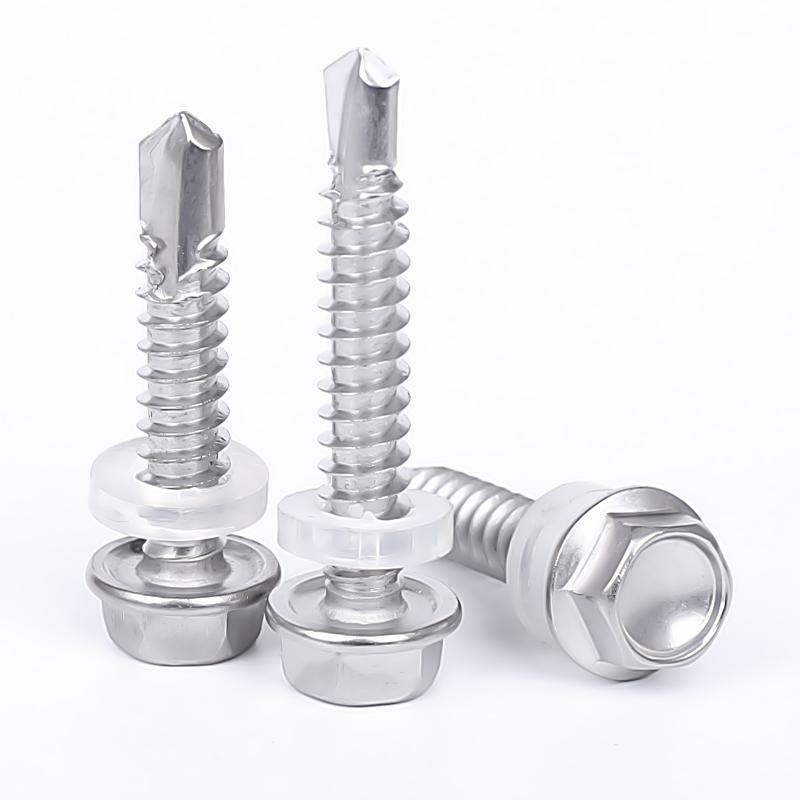
Cold forging a hex head isn't just about slamming a slug into a die. The material has to move into six sharp corners at once, and if the die fill sequence is off, you'll see incomplete points or excessive flash before the press ever reaches bottom dead center. Getting it right means tuning the incoming wire diameter against the cavity volume so that the final hit lands within a narrow plastic window—too little material and the corners starve; too much and you start fighting die lock and premature wear.
One approach that consistently holds tolerances is to stage the upset in two or three blows rather than trying to net-shape in a single station. The first blow sets the barrel and begins spreading the head, the second roughly preforms the hex, and the final strike irons the flats and corners to size. This lets the grain flow follow the hex contour instead of tearing across it, which improves both surface finish and fatigue resistance. Die coatings and controlled phosphate lubes also keep friction low enough that the metal can slide into the corner radii without galling.
Tolerance control on the hex itself usually comes down to how well the die insert is split and vented. Trapped air or lube can round off the points just enough to fail a go/no-go check. Small vent holes placed at the deepest corners, combined with a slight taper on the punch face, let the slug settle fully before ejection. That kind of detail work separates a hex head that merely looks right from one that holds consistent dimensions across a full production run.
Drilling Point Geometry: Machining Self-Tapping Threads
The tip geometry of a self-tapping thread drill is rarely given much thought, but it directly controls how cleanly the hole forms and how smoothly the cutting edges engage. A slightly blunted point with a controlled lead angle keeps the drill from walking, while the flute profile must leave enough room for chips to curl away without packing into the newly cut thread roots. When the web thickness is too heavy, thrust force spikes and the tap portion can shatter before it ever reaches full depth.
For materials that work-harden quickly, a split point or a four-facet grind helps reduce heat at the very center of the cut. The relief angle behind each cutting lip needs to be shallow enough to support the edge, yet steep enough to prevent rubbing. Many machinists overlook that the chamfer length on the self-tapping portion acts as a second cutting zone—if it's too aggressive, the threads tear instead of shear, leaving a ragged finish that will seize a fastener later.
Testing different point geometries on scrap stock is still the fastest way to dial in a job. A simple change in the included angle from 118° to 135° can shift the chip formation from long stringy spirals to short broken segments, especially in stainless or alloy steel. The goal is a balanced cut: enough point clearance to start without a center punch, but not so much that the tool chatters on the entry bevel.
Heat Treatment Protocols for Optimal Hardness
Achieving optimal hardness in steel is less about a single magic temperature than about matching the austenitizing soak to the alloy’s carbon content and intended service. For high-carbon tool steels such as O1 or 1095, bringing the part to 780–820°C and holding for 10–15 minutes per 25 mm of cross-section ensures complete carbide dissolution without excessive grain growth. Quenching then becomes the critical step: a fast oil or salt bath quench below the martensite start temperature locks in a hard martensitic structure, while water quenching—though faster—often introduces distortion or microcracks in complex geometries.
The quenched state is rarely the final answer. As-quenched martensite is extremely hard but also brittle, so a low-temperature temper at 150–200°C for at least one hour per 25 mm of thickness relieves internal stress while preserving hardness above 60 HRC. For high-alloy or air-hardening grades like D2 or A2, double tempering with a cryogenic treatment between cycles converts retained austenite into fresh martensite and pushes hardness a point or two higher. Skipping the cryo step or tempering above 250°C will drop hardness noticeably, so the sequence matters as much as the setpoints.
Corrosion Resistance: Passivation and Coating Options
Passivation is often misunderstood as a coating, but it's actually a chemical treatment that restores the protective chromium oxide layer on stainless steel. By removing free iron and surface contaminants with an acid bath, typically nitric or citric acid, the treated surface becomes less likely to develop red rust. The choice between acid types isn't trivial; citric acid is safer and increasingly common, while nitric acid can be more effective on certain free-machining grades. Process control matters more than chemical strength, because a poorly rinsed passivation line can leave residues that create corrosion sites later.
When the environment outstrips what passivation alone can handle, organic or inorganic coatings step in. Thin-film options like electrocoating and PVDF sprays add barrier protection without dramatically changing part dimensions, making them suitable for fasteners and architectural trims. Powder coating delivers a thicker, tougher finish and hides surface imperfections, but it can crack at sharp edges if the pre-treatment isn't uniform. The real differentiator is adhesion: without a clean, properly passivated substrate, even a high-spec coating will peel or blister once moisture penetrates a scratch.
Layering passivation with a coating creates a stronger defense than either method alone, yet the two must be compatible. Some coating systems require a specific surface profile or a thin conversion layer to bond well, while others work directly on passivated stainless. In coastal or chemical exposure, a two-step approach often outlasts thicker single-coat systems, but the maintenance burden shifts to inspecting for pinholes and edge damage rather than simply reapplying on a fixed schedule.
Beyond the Batch: In-Depth Quality Audits and Testing
Quality audits here don't stop at a certificate of conformance or a random sample from the production line. We trace raw material lots through every stage of manufacturing, checking supplier documentation, in-process measurements, and final functional tests. That means if a particular batch of components drifts even slightly from the approved specification, our team can pinpoint the exact range of serial numbers affected—not just the shipment date.
The testing protocols mirror the ways these products fail in actual use, rather than just the conditions where they pass in a lab. We run accelerated life cycles, thermal shock sequences, and repeated load tests on units pulled from multiple points in the production schedule. Each unit is tied back to its build record, so the data reveals patterns across batches: a shift in torque on a specific station, a subtle change in coating thickness, or a calibration drift in a test fixture.
Beyond routine pass/fail results, we maintain a rolling audit trail that flags anomalies before they become field issues. When a supplier changes a process or a line operator rotates, our system automatically requests additional inspections and cross-checks. This is not about adding paperwork; it is about creating a feedback loop where each audit sharpens the next one, so quality becomes a measurable outcome rather than a final inspection box to tick.
FAQ
We mainly work with A2 (304) and AISI 410 stainless steel. A2 offers strong corrosion resistance for outdoor and coastal environments, while 410 can be hardened further to handle tougher drilling into steel or aluminum.
The head is cold forged on multi-station headers. This preserves the metal's grain flow around the hex corners, so the drive recess stays intact under high torque instead of rounding out.
After heading, the point is milled or rolled into the classic drill-bit shape, then induction hardened. That combination creates a cutting edge hard enough to pierce sheet metal cleanly without a pilot hole.
We take random samples from each batch and run them into standardized steel plates at a set RPM and pressure. The screws must cut through within a defined time and hold a specified torque without snapping or stripping.
Threads are checked with go/no-go gauges on every production line shift. We also use optical comparators to inspect thread angle and pitch, catching drift before it becomes a full batch issue.
Most of the time, no coating is needed because the stainless itself resists rust. We do apply a light wax or passivation layer on request to reduce friction during installation or improve salt spray performance.
We include mill certificates for the raw steel, batch hardness reports, drilling test results, and dimensional inspection sheets. If needed, we can share third-party salt spray or SGS test reports.
Yes, we handle custom lengths, diameters, head markings, and even special drill point lengths. Usually we ask for a drawing or sample, then make a pilot run for approval before mass production.
Conclusion
At the heart of any reliable stainless steel hex self-drilling screw factory lies an uncompromising approach to raw material integrity. Incoming coils of 410 or 304 stainless undergo spectrographic verification and tensile checks long before they reach the cold forging line. The hex head itself is formed through precision multi-blow heading, which aligns grain flow to resist wrench stripping in high-torque applications. Drilling point geometry is then machined—not simply rolled—to ensure the self-tapping flute profile cuts cleanly through sheet metal and light structural steel without walking or skating. Heat treatment follows a carefully controlled austenitizing and tempering cycle; for martensitic grades, this balances the hard drill tip with a tougher, less brittle threaded zone to prevent premature snapping.
Corrosion resistance is never left to chance. Depending on customer requirements, parts may receive a passivation dip to remove free iron and enhance the natural chromium oxide layer, or a supplementary coating such as zinc flake for extreme salt-spray environments. Yet true confidence comes from what happens beyond the batch: an in-depth quality audit regime that includes dimensional CMM inspection, drill torque testing on calibrated steel plates, hardness traverses across the thread crest and root, and salt-spray chambers running 1,000 hours or more. Batch traceability ties every screw back to its heat lot and raw material certificate. This layered process—from verified stainless feedstock to post-production destructive sampling—ensures factory output performs consistently in the field, not merely on paper.
Contact Us
Contact Person: Shane
Email: [email protected]
Tel/WhatsApp: 8613357785029
Website: https://www.wanluohardware.com