Quality LED Therapy: A Comprehensive Guide to Its Benefits and Uses
2026-08-19
Your skin already knows how to heal—it just needs the right kind of light. Unfortunately, not every LED device delivers that. This guide cuts through the noise to explain the real benefits and practical uses of quality LED therapy, and why GUANG TAI is a brand we keep coming back to.
Can LED Therapy Actually Improve Skin Texture and Tone?
LED therapy's impact on skin texture isn't just marketing hype, though results vary depending on wavelength, dosage, and how regularly you use the device. Red light in the 630–660 nm range penetrates to the dermis and nudges fibroblasts to produce more collagen and elastin, the proteins that keep skin smooth and firm. Over weeks of consistent use, that extra structural support can soften fine lines and make rough patches feel more even. Near-infrared light around 830–850 nm goes deeper, helping to calm low-grade inflammation that often contributes to uneven texture and dull tone.
For skin tone, the story is more nuanced. LED won't bleach hyperpigmentation, but it can reduce background redness and improve microcirculation, which makes the complexion look brighter and more uniform. Some studies note that blue light (415 nm) targets acne-causing bacteria, indirectly preventing post-inflammatory marks that disrupt tone. If you're dealing with sun spots or melasma, LED alone is unlikely to deliver dramatic fading, but pairing it with a stable vitamin C or retinoid can amplify the overall evening-out effect.
That said, a full-face LED mask isn't a magic wand. Most at-home devices require three to five sessions per week for at least a month before texture and tone shifts become noticeable, and the improvements plateau once you stop. A small but growing body of clinical work supports measurable gains in skin smoothness and redness reduction, but the effect size is modest compared to procedures like fractional laser or microneedling. Think of LED as a low-effort maintenance tool rather than a one-time fix.
The Exact Wavelengths That Make LED Therapy Work
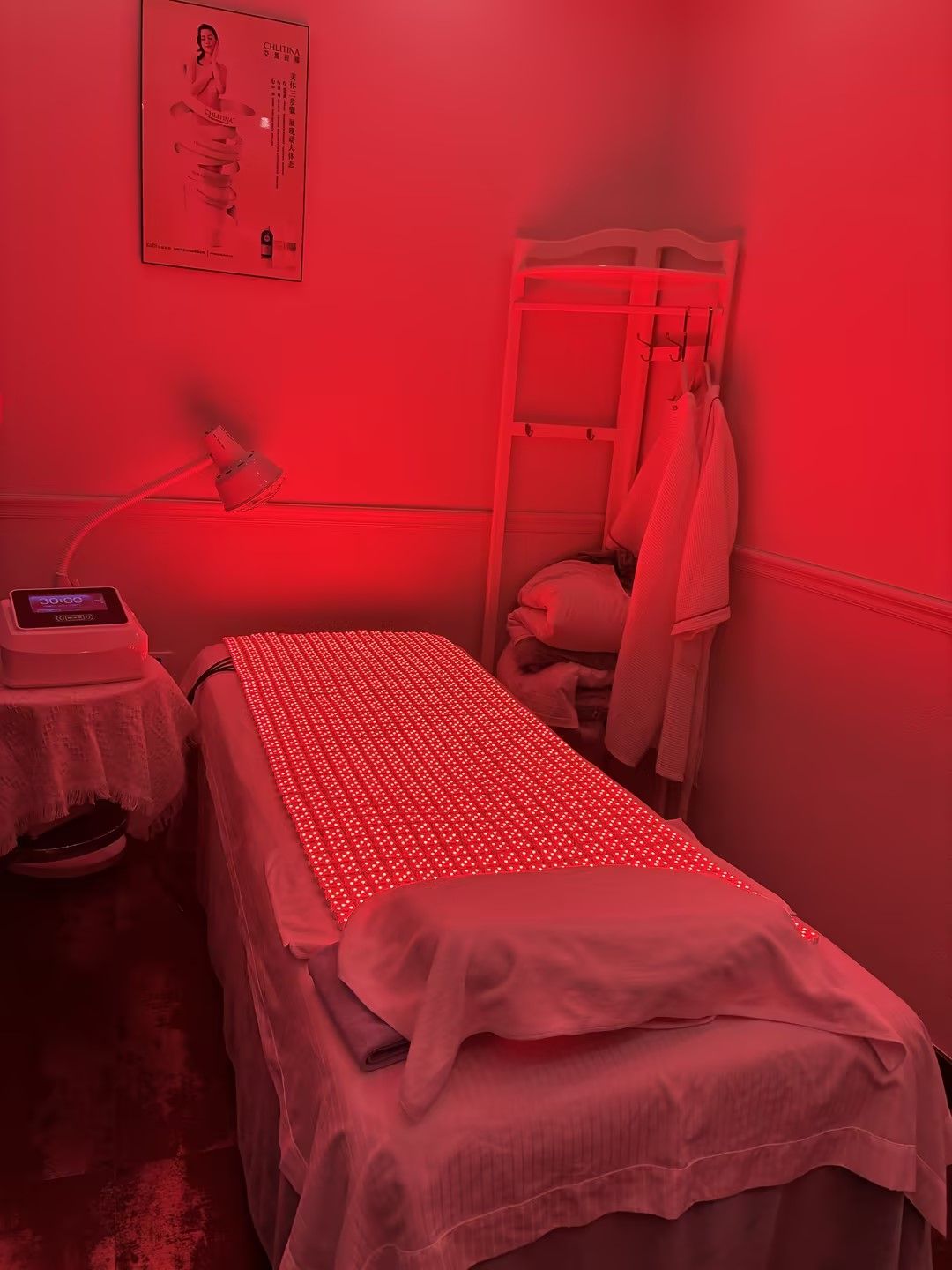
Plenty of people assume any red or infrared light will do the trick, but the wavelength is what decides whether the energy reaches the right layer of tissue. Red light in the 630–660 nm range is absorbed mostly by the skin and upper dermis, making it useful for surface-level concerns like fine lines, pigmentation, and wound healing. Near-infrared light from 810–850 nm penetrates much deeper, reaching muscles, joints, and even bone, which is why it shows up in recovery and pain-relief protocols.
The combination that keeps appearing in studies is 660 nm and 850 nm, often paired because both sit close to absorption peaks of cytochrome c oxidase inside mitochondria. When those specific wavelengths hit the enzyme, the cell shifts toward producing more ATP and clears out excess reactive oxygen species. That shift gives cells enough energy to repair tissue instead of staying stuck in an inflammatory loop.
What matters more than the number of LEDs is how tightly the device sticks to those narrow bands. If the wavelength drifts below 600 nm or above 900 nm, absorption drops off sharply, and the light becomes little more than a warm glow. Clinical-grade tools tend to concentrate output around a few nanometers rather than spreading it across a wide spectrum, because precision beats raw brightness every time.
LED Therapy for Pain: What the Research Actually Shows
Clinical trials on LED therapy for pain rarely deliver the dramatic results seen in marketing materials. Most studies show modest, short-term reductions in pain scores, often comparable to placebo when blinding is carefully maintained. The strongest signals appear in musculoskeletal and postsurgical settings, but effect sizes tend to shrink as sample sizes grow.
A recurring issue is dosage inconsistency. Protocols vary wildly in wavelength, irradiance, session length, and treatment frequency, making it nearly impossible to draw firm conclusions. Some meta-analyses report statistically significant pain relief, yet the clinical meaningfulness remains debatable when patients still require conventional analgesics.
More rigorous randomized controlled trials with sham devices and longer follow-up periods are needed before LED therapy can be positioned as a first-line pain treatment. Until then, it sits in a gray zone: safe and relatively inexpensive, but not convincingly better than a well-designed placebo for many chronic pain conditions.
Is an At-Home LED Device Worth It? A Candid Look
Most at-home LED masks promise the moon: fewer wrinkles, calmer breakouts, tighter skin. But the honest truth is that results depend heavily on wavelength, power density, and how consistently you use the thing. A cheap device with weak diodes might feel like a relaxing ten-minute ritual, yet deliver nothing beyond a faint warmth. On the other hand, a well-built panel or mask with clinically relevant wavelengths (think 630nm red and 830nm near-infrared) can indeed nudge your skin toward better texture and tone over 8 to 12 weeks—just don't expect a facelift in a drawer.
The real question isn't whether LED works, but whether you'll actually sit still for the required 3 to 5 sessions per week. Most people start strong, then the device migrates to a bathroom shelf graveyard. If you're already disciplined with a skincare routine and have realistic goals—think subtle firmness, less post-acne redness—then an at-home LED device can be a genuinely useful addition. If you're hoping to skip professional treatments entirely, you'll likely be disappointed.
Cost is another candid factor. A decent device runs $200 to $500, which is less than a single in-office LED series but still not pocket change. Look for third-party testing, eye protection built in, and a warranty that outlasts the initial excitement. In the end, an at-home LED is worth it only if you treat it like a slow, cumulative habit rather than a quick fix—and if you can resist the marketing hype long enough to pick a device based on specs, not Instagram filters.
Beyond the Face: Unexpected Ways People Use LED Therapy
Most people picture a glowing mask when they think of LED therapy, but the devices have quietly slipped into routines far removed from facial care. Runners now prop a red-light panel against their calves after long miles, swearing the stiffness fades faster than with ice alone. Others wrap flexible pads around arthritic knuckles while watching TV, hoping the warmth and wavelengths ease the ache enough to keep gardening through the weekend.
Scalp treatments are another quiet favorite. Instead of spending on serums, some folks use a handheld LED comb a few minutes a day, convinced it thickens thinning spots along the hairline. There are also small, dedicated devices for the neck and chest, where sun damage shows up years before the face. And yes, pet owners have started aiming low-level red light at senior dogs' hips, mixing wellness with a bit of hope.
What stands out is how casual these uses have become. No clinic appointments, no white coats—just people experimenting with light in the kitchen or garage. The evidence is still catching up, but the appeal is obvious: a non-invasive nudge for stubborn aches, slow-healing scrapes, or even a chilly back after a day at a desk.
Mistakes to Avoid When You Start LED Therapy
Most people crank the device to its highest setting on day one, assuming faster is better. That’s a quick route to irritated skin and wasted sessions. Start with short exposure times—maybe three to five minutes per area—and let your skin build tolerance over a couple of weeks. Pay attention to how it feels afterward: mild warmth is fine, but lingering redness or tightness means you need to dial it back.
Another common slip-up is holding the panel too close or too far away. The ideal distance depends on your device, but pressing it against your face often leads to overheating, while standing across the room gives you almost no benefit. Check the manufacturer’s range, then aim for a consistent spot—usually six to twelve inches—where the light spreads evenly without feeling hot.
Skipping cleanup before a session is more harmful than it sounds. Makeup, sunscreen, and even heavy moisturizers can block light from reaching your skin. Wash your face with a gentle cleanser and pat it dry, but don’t apply anything else until after the treatment. And if you’re using LED for acne or redness, resist the urge to layer on actives like retinol or strong acids right before—stick to a bare, calm face for the best results.
FAQ
The biggest differences come down to irradiance, wavelength precision, and build quality. Cheaper devices often use LEDs with broad or unverified wavelengths and lower power output, so you may not reach the dose needed for real results. Quality devices typically list irradiance in mW/cm², stay within proven ranges like 633nm red or 830nm near-infrared, and include safety features such as automatic shutoff and eye protection.
There is solid evidence behind it, especially for mild to moderate acne. Blue light around 415nm targets Cutibacterium acnes, the bacteria involved in breakouts, while red light helps calm inflammation and support skin repair. Results are not instant and tend to work best when combined with a basic skincare routine, but many people see fewer active breakouts after four to six weeks of consistent use.
Most clinical protocols start with three to five sessions per week for the first month or two, then drop to two or three maintenance sessions weekly. The exact schedule depends on the device's power output and your skin concern. Consistency matters more than occasional long sessions, because light therapy works through cumulative cellular responses rather than a single large dose.
Yes. Avoid it over active infections, broken skin, or if you are taking medications that make you highly light-sensitive, such as certain antibiotics or retinoids. People with a history of photosensitive epilepsy should be cautious with pulsed light modes. If you are pregnant, there is no strong evidence of harm, but many clinicians suggest waiting unless a doctor says otherwise. Always use the provided eye protection, especially with near-infrared panels.
Red light, around 630–660nm, is absorbed mostly by the upper layers of skin and is useful for fine lines, redness, and wound healing. Near-infrared light, around 810–850nm, penetrates deeper into muscle and joint tissue, which makes it more relevant for pain relief, recovery, and deeper inflammation. Many quality devices include both, but the ratio and your goal should guide which wavelength you prioritize.
It can help with pain and recovery, not just skin. Near-infrared wavelengths penetrate beyond the skin to reach muscles and joints, where they may reduce oxidative stress and improve circulation. Some LED panels are cleared for pain relief and are used in physical therapy settings. The effect is usually subtle and cumulative, so it works best as part of a broader recovery routine rather than a one-off fix.
In-office systems often have higher irradiance, so a single session can deliver more energy in less time. Home devices compensate with lower power and more frequent use. If you are willing to be consistent, a quality home mask or panel can produce meaningful improvements, but expect gradual changes over weeks rather than the immediate glow some professional treatments provide.
Look for precise wavelength ranges, not vague terms like 'red light therapy.' The device should state irradiance in mW/cm² at a given distance, treatment area size, and whether it has FDA clearance or an equivalent safety certification. Check the included eye protection, warranty length, and whether the manufacturer lists any third-party testing. Avoid products that only advertise before-and-after photos without technical details.
Conclusion
Quality LED therapy has outgrown its novelty reputation, and the question of whether it can genuinely improve skin texture and tone is met with a cautious yes. What sets a serious device apart from a toy is the precision of its output—not just any red glow will do. The effective wavelengths cluster around 630–660 nanometers for surface-level redness and fine lines, while 800–850 nanometers reach deeper tissues to support muscle recovery and joint comfort. Research on pain relief is less uniform than the skin-focused studies, but there is enough evidence to suggest that consistent, low-level exposure can ease stiffness and inflammation without the side effects of stronger interventions. The catch is that results depend on dose, frequency, and device quality, which is rarely obvious from marketing alone.
For anyone weighing an at-home purchase, the honest answer is that these tools can be worthwhile if you accept a slower timeline and lower irradiance compared to clinic systems. Beyond the face, people are finding unexpected uses—scalp stimulation for hair density, accelerating wound healing, and even managing seasonal low mood. The mistakes to avoid are predictable but still common: overusing sessions in hopes of faster progress, skipping eye protection, and expecting a single wand to erase years of sun damage. A measured routine, realistic expectations, and attention to the actual wavelength specifications make the difference between a useful wellness habit and an expensive drawer ornament.
Contact Us
Contact Person: Leon Yi
Email: [email protected]
Tel/WhatsApp: +86 17363316873
Website: https://zzgt.en.alibaba.com/