

Puff Snack Food Production Line Manufacturer Insights for High-Volume Snack Production
2026-10-22
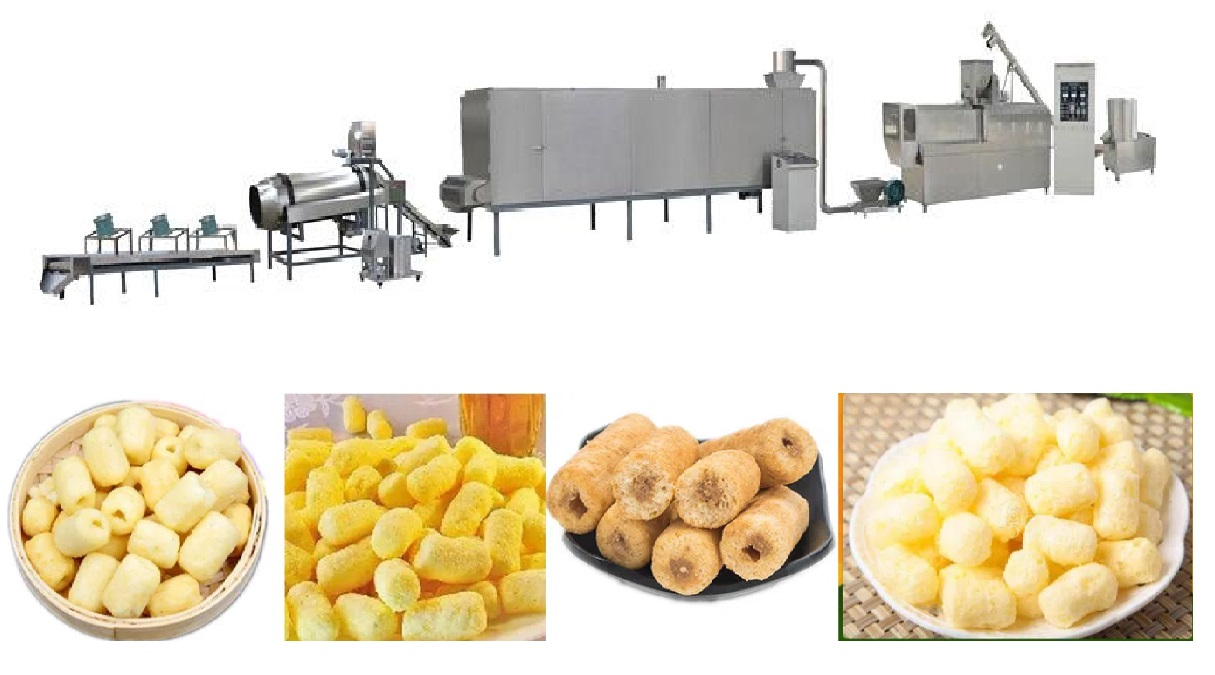
Scaling up puff snack production without sacrificing texture or consistency is a challenge most manufacturers know too well. Behind every high-volume line is a series of engineering decisions that determine output, waste, and downtime. MINGDE has spent years refining those details, and in this article we look at what actually matters when choosing or optimizing a puff snack production line—from screw design to drying curves. If you're planning a capacity expansion or just tired of troubleshooting the same bottlenecks, read on.
Die Geometry Sets the Ceiling for Hourly Output
The shape and size of the die cavity aren't just design details — they dictate how much material can move through the system in a given time. If the die has narrow channels or sharp corners, flow resistance rises quickly, forcing the machine to slow down to avoid pressure spikes or surface defects. In practice, this means a poorly optimized die will never reach the output numbers listed on the equipment brochure, no matter how fast the screw turns or how hot the barrel gets.
Many operators chase higher line speeds by pushing temperatures or screw RPM, but those adjustments hit a hard wall when the die geometry can't keep up. Melt fracture, uneven wall thickness, and overheating at the land area are typical signs that the die — not the extruder — is the limiting factor. A well-designed die, by contrast, distributes flow evenly and keeps shear rates within a safe range, allowing the entire line to run closer to its theoretical maximum.
So before investing in a larger motor or a second extruder, it's worth measuring the pressure drop across the die and comparing it to the available head pressure. If the die consumes most of that budget just to force material through, the fix isn't more horsepower — it's a geometry that matches the polymer's behavior and the desired output window.
Moisture Swings Are the Real Throughput Killer
Most operators fixate on average moisture content, but the averages lie. A batch that swings between 9% and 15% water can wreck a drying line even if the mean reads a perfect 12%. The real damage shows up as uneven heat transfer, clumping in conveyors, and constant tweaking of burner settings. Each adjustment burns time, and every jammed auger steals throughput that never comes back.
Take a corn drying setup running 40 tons per hour. When incoming moisture bounces from 18% to 24% within a single hour, the dryer’s discharge temperature lags behind, and the grain leaves either overdried or too wet. Operators end up recycling product or slowing the feed rate just to keep things stable. Over a 12-hour shift, that instability can silently erase 15% of expected output—not because the equipment failed, but because the process never settled into a rhythm.
Fixing this means chasing variance, not averages. Install inline near-infrared sensors every 30 seconds instead of relying on grab samples taken twice a shift. Pair that with a simple control loop that adjusts airflow based on rate of moisture change, not absolute value. One poultry feed plant saw throughput climb 11% in three weeks just by damping the swings—same dryer, same fuel, but a process that no longer fights its own fluctuations.
Zone Your Dryer for Crisp Texture, Not Just Moisture Removal
Most dehydrators push warm air evenly across every tray, which removes water but often leaves food uniformly dry and lifeless. To get that coveted crisp texture, you need to stop treating the whole machine as one zone. Instead, map the heat and airflow: the area near the fan or heating element runs hotter and moves air faster, creating a natural 'crackling' zone for thin slices, herb leaves, or fruit leather edges. Meanwhile, the cooler, slower corners are perfect for items that should stay pliable or chewy, like thick peach halves or jerky strips that need time to tenderize without turning brittle.
Use this zoning to your advantage by rearranging trays mid-cycle. Start thicker cuts in the hot zone to set a crisp outer layer, then rotate them to the back once that shell forms. For a batch of mixed vegetables, put zucchini coins and kale on the top tray near the exhaust, where moisture escapes quickly and edges curl into shards, while carrots and beets sit lower where they can dry slowly and retain a dense, almost fudgy center. Even the tray material matters: a mesh screen lets air hit both sides for all-over crunch, but a solid liner or silicone mat blocks bottom airflow, making the underside softer—ideal for granola clusters or fruit roll-ups that should tear instead of shatter.
The real trick is to stop chasing zero moisture and start chasing contrast. A perfectly crisp dried strawberry isn't just dehydrated—it's been exposed to a brief, intense dry heat that seals the outside while the inside stays slightly jammy. By dividing your dryer into microclimates and moving food through them with intention, you turn a simple dehydration run into a textural layering process. That's the difference between a sad, leathery chip and one that snaps cleanly, then melts on your tongue.
Build Lines That Scale Without a Full Rebuild
Scaling a production line usually means stopping everything, ripping out fixed conveyors, and welding new frames into place. There is a quieter alternative: design the line as a set of repeatable modules. Each station sits on a standard base frame with quick-release utility connections for air, power, and data. When volume rises, you add another module at the end of the existing flow, level it, and connect the same three lines. The original stations keep running while the new one is installed during a weekend shutdown.
The control side needs the same treat-as-a-module mindset. Instead of a central program that assumes a fixed number of stations, use distributed I/O blocks and a line controller that automatically discovers new devices. A new station appears on the network, loads its own motion and safety profile, and asks for the next pallet. That turns a six-week rebuild into a two-day integration, mostly spent checking sensors and torque values.
The final piece is staging capacity before you need it. Leave a blank pad at the end of the line, pre-install the trunk cable and a spare breaker, and keep one spare station frame in the warehouse. When demand spikes, you roll the module into place, plug it in, and run a short dry cycle. The line grows in increments of one station, not in a single expensive overhaul.
Cut Changeover Time with Sanitary Conveyor Details
Time lost during changeover often comes down to how many tools, panels, and small parts need to be removed before cleaning can begin. Sanitary conveyors designed for rapid teardown address this directly. Quick-release side rails, tool-less scraper blades, and flip-up idler rollers let operators expose contact surfaces in seconds. Because these components are held by hand-operated clamps or spring-loaded pins, there is no bolt inventory to manage and no risk of dropping fasteners into product zones.
The real savings show up in the details that reduce cleaning time itself. Continuous, crevice-free welds and sloped or fully drainable frame tubes prevent water and product from pooling. If every horizontal surface is either rounded or angled, rinse water carries residue away instead of leaving it behind for manual scrubbing. This means the wash step finishes faster and with fewer repeat passes, so the next product run can start sooner.
Modular conveyor sections also change the math. Instead of dismantling an entire line to reach one stubborn area, a single section can be uncoupled, rolled out, and replaced with a pre-cleaned spare. Alignment marks and quick-tension belt adjusters eliminate the usual trial-and-error during reassembly. The combination of these sanitary details turns what used to be a half-day changeover into a routine that fits between breaks.
Use Process Data to Keep Every Shift Identical
Shift-to-shift consistency usually falls apart in the details that don't get written down. A night crew might tweak a valve setting because the pressure gauge looks a little high, while the day crew always leaves it at the same notch. By pulling process data from each run—temperatures, timings, fill levels, torque readings, whatever the line actually records—you get a numeric snapshot of exactly what happened on every shift. That snapshot shows where operators are improvising, even when they don't realize it.
The real value comes from comparing those snapshots side by side. If the data says the cooling tunnel ran at 4.2°C for the first shift and 5.8°C for the second, you don't need to ask who did what. The gap is right there. Managers can then update the standard operating procedure or retrain the second shift with the exact numbers, not a vague reminder to "watch the temperature." Over a few weeks, those small corrections stack up into a much tighter range of output.
Once process data is being recorded consistently, it also becomes a reference for onboarding and audits. Instead of teaching a new hire to "follow what the last person did," trainers can pull the last thirty shifts and point to the normal band for each parameter. That takes the personality out of the process and makes every shift answer to the same data set. The result is less drift, fewer one-off fixes, and a line that runs the same on a Tuesday night as it does on a Friday morning.
FAQ
It comes down to how well the extruder, dryer, and seasoning drum are matched to each other. In high-volume operations, you need consistent die temperatures and screw speeds that keep expansion uniform across long runs. A line that runs 24/5 shouldn't need constant operator fiddling; look for automatic feedback loops that adjust moisture and temperature before waste piles up.
The dryer tends to be the bottleneck. If the moisture isn't pulled evenly, you get soggy centers or brittle edges that ruin the texture. Many manufacturers overlook airflow distribution and belt tracking. A well-designed multi-zone dryer with independent temperature and humidity control avoids those mid-shift surprises.
It's more important than horsepower. The screw profile determines shear, melt temperature, and how much expansion you get. For high-volume lines, you want a configuration that handles multiple recipes without swapping screws every shift. A good manufacturer will help you map screw elements to your core product range so changeovers stay practical.
Skip systems that rely on a single spray nozzle. Look for a seasoning drum with variable-speed rotation and an oil spray system that atomizes evenly across the product curtain. Weighing the seasoning with a loss-in-weight feeder is also critical; volumetric dosing drifts over time and leaves some batches under-seasoned.
Yes, but it depends on the barrel and preconditioner. Gluten-free flours often need gentler shear and more moisture control. High-protein mixes can gum up if the barrel isn't cooled properly. A modular line with easily removable barrel sections and a preconditioner that allows longer hydration time will save you from expensive rebuilds later.
Look beyond stainless steel. Think about sloped surfaces, minimal hollow spaces, and quick-release guards. If your crew has to spend two hours with tools just to access the cutting head, sanitation gets skipped. Continuous high-volume production demands CIP-ready designs for the wet zones and easy-open dry zones for the extruder and dryer.
Gas-fired convection dryers usually cost less per kilogram of moisture removed than electric infrared, but they need careful exhaust heat recovery to be efficient. Multi-pass dryers can cut floor space but may sacrifice airflow uniformity. Ask for specific thermal efficiency data at your target moisture range, not just installed power.
At minimum, you want live readings for die pressure, barrel temperature zones, dryer inlet/outlet humidity, and seasoning application rate. More advanced lines trend these values against moisture and density checks, so operators can spot drift before product goes out of spec. The best systems let you set alarm thresholds tied to your exact recipe tolerances.
Conclusion
In high-volume puff snack production, line performance rarely hinges on a single machine. The die geometry you choose from the outset determines the theoretical ceiling for hourly output, so smart manufacturers treat it as a fixed design constraint rather than an adjustable knob. Equally important is moisture control: swings in raw material or ambient humidity create more downtime and waste than any mechanical failure, which is why tight monitoring at infeed and preconditioner stages pays for itself quickly. A zoned dryer approach then turns that stable moisture into a texture advantage, letting operators target crispness in early zones and finish drying later without sacrificing the delicate expanded structure.
Scalability also depends on how the line is laid out. Lines designed with modular sections and generous utility tie-ins can add capacity without ripping out entire conveyors or ovens. Changeover speed often comes down to sanitary conveyor details—quick-release guides, sloped surfaces, and tool-less belt lifts cut cleaning time between flavors more than any control system tweak. Finally, capturing process data from every shift turns good practices into repeatable settings, so the third shift runs the same product as the first. Taken together, these insights shift the conversation from buying equipment to engineering a production system that stays consistent, scalable, and profitable at full volume.
Contact Us
Contact Person: LILY SUN
Email: [email protected]
Tel/WhatsApp: 0086-13969103791
Website: https://www.snackfoodmachinery.com/