

Private Label Women's Pilates Socks for Your Activewear Line
2026-10-08
Socks rarely get the attention they deserve in activewear—until someone steps onto a Pilates reformer. KINDWAY private label women's Pilates socks are designed to fill that gap, giving your activewear line a custom, high-grip staple that feels anything but generic. Here's a closer look at what makes them worth adding.
What Your Current Sock Lineup Is Missing Underfoot
Most socks treat the bottom of your foot like an afterthought—a flat, featureless layer that simply separates skin from shoe. But spend a day on hard concrete or a long run on asphalt, and that oversight becomes impossible to ignore. What's missing is deliberate underfoot architecture: a contour-mapped heel pocket that locks the sock in place, a ribbed arch band that lifts instead of constricts, and a metatarsal pad zone that diffuses pressure before it turns into hot spots. Without these, even premium yarn blends end up feeling like thin cardboard by hour three.
Then there's the moisture problem nobody talks about at the footbed level. Your soles produce more sweat per square inch than nearly any other body part, yet most socks rely on the same knit density top and bottom. The result? A soggy, friction-prone underside that leads to blisters and that clammy feeling you can't shake. What your rotation needs is a two-faced construction: ultra-dense, wicking fibers underfoot to pull moisture away from the skin, paired with a more open, breathable upper so heat escapes instead of pooling. That contrast changes the entire temperature and friction profile of your step.
Finally, stop settling for no-show padding that disappears after a few washes. Look for targeted, low-profile cushioning under the ball and heel that keeps its rebound—not the mushy, full-length foam that makes your shoes fit tighter. The right underfoot layer should feel like a firm handshake for your arch and a soft pillow for your strike zone, all without adding bulk. Once you feel that kind of tuned support, flat-knit socks start to feel less like a choice and more like a compromise.
Grip That Keeps Up With Every Hundred and Roll-Up
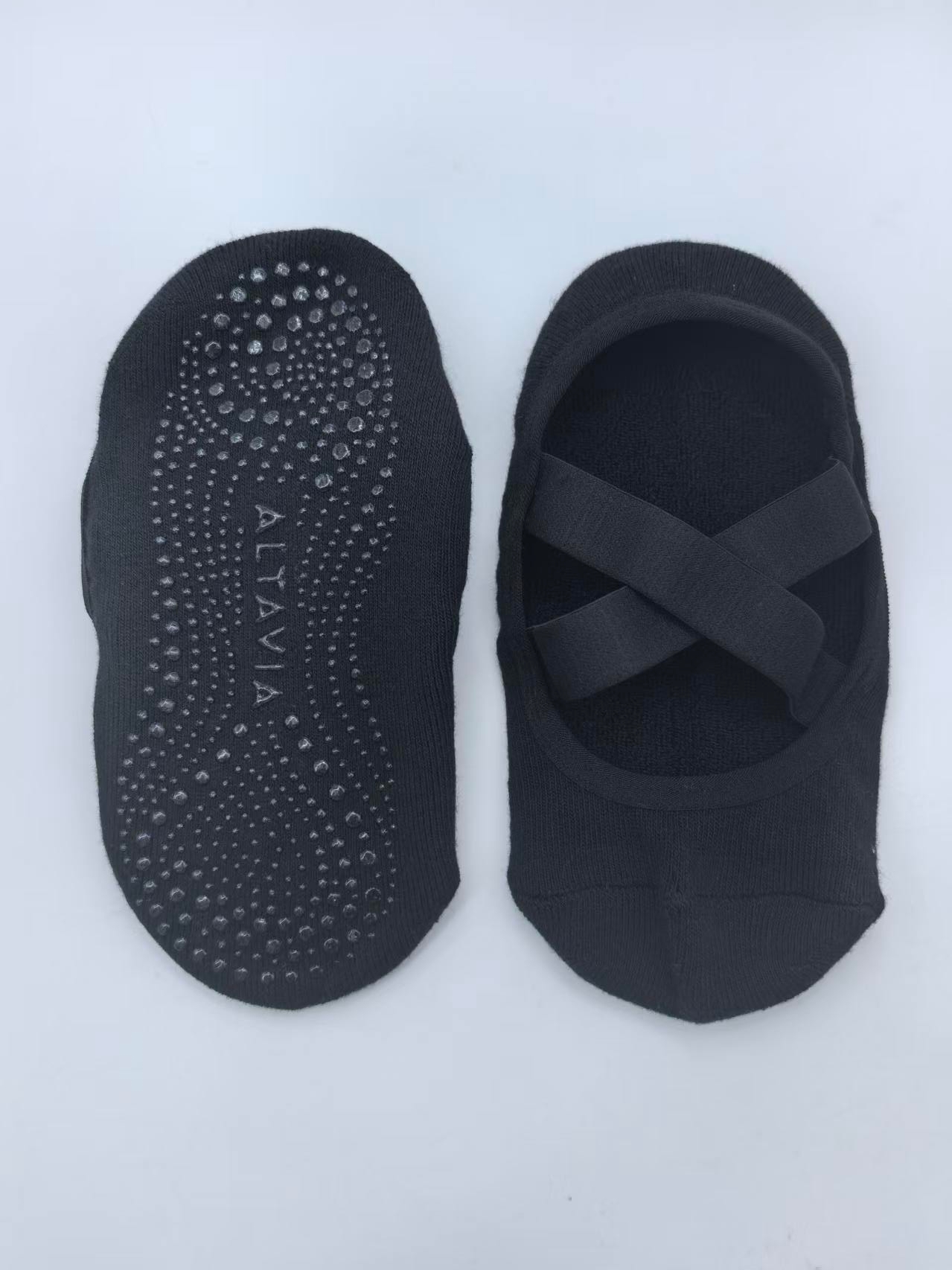
The Hundred turns your palms into pressure points, and a standard surface starts to slip right around rep forty. This grip changes that. It holds steady through the flutter of every beat, so you can keep your shoulders drawn down and your abdominals sunk back without readjusting your hands.
Roll-ups ask for a different kind of traction—slow friction from sacrum to sitting tall. You won't feel that micro-shift of fabric bunching under your lower back. Instead, the surface stays put while your spine peels up, letting you focus on the curve rather than the crease.
Designing Socks That Feel Like a Second Skin, Not an Afterthought
Most socks are treated as an afterthought—a basic layer hidden inside shoes, rarely given real design attention. That thinking misses the point. A sock sits directly against your skin for hours, interacting with movement, moisture, and pressure. When it works, you forget you're wearing it. When it doesn't, every step reminds you. Designing for that kind of invisibility starts with obsessing over knit tension, toe seam placement, and the precise give around the arch. It's not just softness; it's a second skin that moves with you, not against you.
The difference is in materials that breathe and recover. Natural fibers blended with a touch of stretch create a gentle compression that stays put without squeezing. Ribbing at the calf and ankle is calculated, never random—enough to hold, not enough to bind. The toe closure lies flat, so there's no ridge pressing into sensitive skin. Every stitch works toward a single goal: making the sock feel like part of your foot's natural landscape, not a separate object you've pulled on.
True second-skin design also considers temperature and friction over long wear. Thin zones under the forefoot reduce bulk, while subtle cushioning absorbs impact at the heel. The result is a sock that disappears into the experience of walking, running, or simply standing. It becomes an intuitive extension of how you move, not an item you tug at or adjust. That quiet performance is the real benchmark of a well-designed sock.
How Custom Pilates Socks Can Set Your Brand Apart on the Mat
Custom Pilates socks do more than cover feet—they tell a story the moment a client steps onto the mat. When your logo, signature pattern, or even a subtle textured grip design appears on every sock in your studio, the class feels less like a drop-in session and more like an exclusive movement club. That visible consistency turns ordinary grip socks into a quiet badge of belonging, and before long, students start asking where they can buy a pair for themselves.
The real advantage shows up in the details competitors tend to skip. Choose a non-slip sole with a custom shape that mirrors your teaching philosophy—think a low-profile arch band for breathwork-focused studios or a full-coverage grip for high-intensity flow classes. Mix in a few unexpected colorways that clash beautifully with standard black and grey activewear, and suddenly your brand is the one people photograph during savasana. It’s a subtle flex, but it works every time a client glances down mid-plank and sees a reminder of why they chose your space.
Beyond aesthetics, custom socks create a tactile loyalty loop. Hand them to new members as a welcome gift, and the first thing they touch is your brand—not a generic rental pair. When they wear those socks at home or in another gym, they carry your studio’s name into spaces you’ll never set foot in. That kind of passive, everyday exposure beats a logo on a water bottle because socks travel with the body, through sweat and stretch, until the brand becomes part of the practice itself.
The Material Mix That Survives Reformer Work and Washing Machines
Reformer work punishes fabric in ways a yoga mat never will. The carriage, shoulder blocks, and straps create constant friction, while springs demand stretch without sag. A blend that holds up usually starts with nylon or polyester for abrasion resistance, paired with 20-30% elastane for snap-back recovery. The trick is avoiding elastane-heavy mixes that feel buttery on day one but bag out after a dozen washes.
Washing machines are the second stress test. Hot water, aggressive spin cycles, and enzyme detergents chew through cotton-rich knits and weak elastic. Fabrics that survive tend to have a tight, smooth knit and reinforced seams, plus a fiber blend that doesn't grip odor or lint. Look for polyamide base with elastane under 30% and a finish that lets soap rinse clean instead of hiding in the weave.
The real test is repetition. After months of weekly reformer sessions and machine washes on cold, the material should still lie flat at the hem, keep its opacity when stretched, and resist pilling where the straps rub. If a legging or top passes that, it's not marketing, it's a workhorse blend.
Why Private Label Beats Stocking Someone Else's Grippy Socks
Stocking someone else's grippy socks means every sale quietly sends customers toward the original brand. They see the logo, search for it later, and buy direct at full price. You're left holding inventory that competes on identical terms with dozens of other stores. Private label flips that dynamic. The socks carry your name, your color choices, your packaging—and when they impress, the loyalty lands on you, not a supplier who can cut you out tomorrow.
Margins tell an even sharper story. With a third-party brand, you're often locked into MSRP battles and wholesale costs that leave thin room after shipping and returns. Developing your own grippy socks lets you set the price based on actual production cost, bundle them with your other products, or run promotions without breaking a MAP agreement. That flexibility is rare when you're just a reseller.
There's also the matter of fit and feedback. When customers complain about sizing or fabric, a private label lets you adjust the next production run. You can source a softer non-slip sole, add a wider calf option, or switch to recycled yarns without asking permission. Stocking another brand's socks means you're stuck passing complaints upstream and hoping they care enough to change. Private label turns those insights into product improvements that competitors can't copy overnight.
FAQ
They're designed with grip soles and a low-profile cut that works for studio sessions, so you can offer something practical without competing with your main leggings or tops.
Yes, you can add your own branding to the socks and the packaging, including woven labels, hang tags, or printed wraps depending on the supplier.
The grip dots and snug fit make them ideal for mat work and barre, but the breathable cotton blend also keeps them comfortable for running errands after class.
Most manufacturers provide a one-size-fits-most option that covers US women's 5–10, though some can split into small/medium and large if you want a more tailored fit.
Quality silicone or PVC dots stay intact through dozens of machine washes if you turn the socks inside out and avoid high heat drying.
Many suppliers have low minimums for socks, often starting around 200–300 pairs per color, which lets you test designs before scaling up.
Yes, you can usually pick from existing colorways or submit your own Pantone shades, and some manufacturers allow custom knit patterns for a higher minimum.
Ask for a sample first, check the stitch density around the heel and toe, and confirm the grip material is non-slip but not too stiff against bare feet.
Conclusion
Most activewear lines treat socks as a last-minute add-on, but on the Pilates mat that oversight shows up fast. Standard crews slide during Hundreds, bunch around the heel in Roll-Ups, and leave clients tugging at cuffs mid-flow. Private label women's Pilates socks fix this by putting grip exactly where it's needed—across the ball, heel, and toe seams—so movement stays quiet and controlled. Instead of settling for generic grippy socks with someone else's logo, you can offer a pair that carries your brand identity from studio warm-up to final savasana.
The real difference comes down to fit and fabric. A second-skin construction avoids the loose, sloppy feel of mass-produced options, while a nylon-cotton-spandex blend holds its shape through repeated reformer sessions and hot washes. That durability matters when clients expect studio gear to outlast a season, not a month. Custom Pilates socks also give your line a signature touch—color-blocked arch bands, contrast toe caps, or subtle grip patterns that match your leggings and bras. When a client looks down and sees your design holding steady in a teaser or side plank, the brand memory sticks. Private label means you own the specs, the sizing, and the story, so you're not just stocking another company's bestseller; you're building a cohesive activewear collection where even the smallest piece feels intentional.
Contact Us
Contact Person: Alfred Lee
Email: [email protected]
Tel/WhatsApp: +86 13806701496
Website: https://www.hainingsocks.com/