Private Label Bamboo Socks: Your Complete Guide to Launching an Eco-Friendly Sock Line
2026-08-22
Every sock drawer has a story, but few begin with a question as urgent as this: can comfort and conscience share the same thread? The global shift toward sustainable fashion is no longer a whisper—it’s a mandate, and bamboo socks are the soft-spoken heroes of this revolution. Yet for boutique owners and brand builders, the real challenge isn’t finding bamboo yarn; it’s navigating the maze of private labeling without losing your soul—or your margins. Enter KINDWAY, where eco-friendly manufacturing meets hands-on craftsmanship, so your sock line doesn’t just launch—it takes root. In this guide, we’ll walk barefoot through every step, from fiber selection to final stitch, helping you turn a humble pair of socks into a statement your customers will feel with every step.
Why Most Bamboo Socks Feel Scratchy by Month Three (And How to Avoid It)
Bamboo socks often start out buttery soft, luring you in with promises of cloud-like comfort. But by the third month, many pairs turn rough against your skin, leaving you wondering where that silky feel went. The culprit isn't the bamboo fiber itself—it's how the yarn is spun and how the socks are laundered. Most manufacturers blend bamboo viscose with cheaper, coarser cotton or synthetic threads to cut costs. Those short, uneven fibers work their way to the surface after repeated wash cycles, creating tiny abrasive pills. Meanwhile, standard detergents strip the natural smoothness from bamboo, making each step feel like sandpaper.
Another hidden factor is the weave density. Mass-produced bamboo socks often use a loose knit to save material, which allows micro-friction against your heel and toes. Over time, that friction frays the delicate bamboo strands, causing the telltale scratchiness. Heat drying only worsens it, baking the fibers into stiff, brittle strands that irritate sensitive feet. So if your once-cozy socks now feel like a chore to wear, you're not imagining it—the softness was never built to last because the construction prioritized profit over performance.
The fix isn't complicated. Look for socks labeled with a high bamboo percentage—ideally over 80%—and avoid blends padded with polyester. Wash them inside out in cold water using a mild, enzyme-free soap, then air dry or use the lowest heat setting. A tighter knit count also matters: hold the sock up to light, and if you can see clear gaps between threads, it will pill faster. Finally, skip the fabric softener, which coats bamboo fibers with residue that attracts dirt and accelerates roughness. With a little attention to yarn quality and care, your bamboo socks can stay genuinely soft well past month three—and beyond.
The Sock Design Details Reviewers Actually Mention in Five-Star Feedback
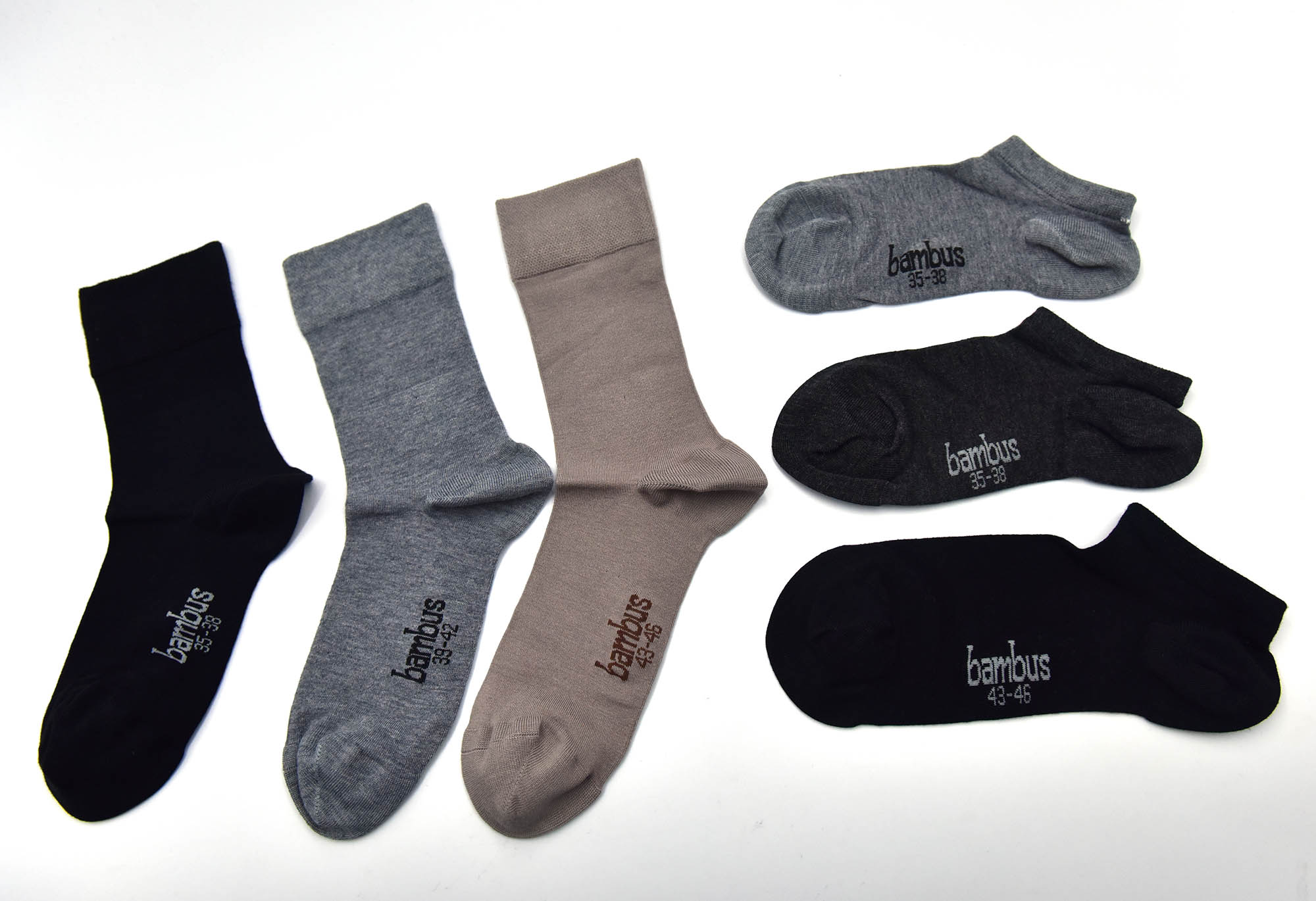
The details that show up again and again in five-star reviews are rarely about the color or the packaging. Reviewers call out the flat toe seam that doesn’t rub against the top of the foot, the little bit of extra cushioning under the ball of the foot, and a heel tab that stays put instead of sliding down into the shoe. Those specifics get mentioned because they directly stop the small annoyances that ruin a long day on your feet.
Breathability comes up just as often. A few mesh panels across the instep keep feet from turning clammy without making the sock feel flimsy, and the merino blend gets praised for drying fast and not holding onto odor after a double shift. The elastic through the midfoot is another quiet favorite—it holds the sock in place without leaving deep marks around the ankle.
After several washes, the comments shift to durability. Reviewers note that the reinforced heel and toe haven’t thinned out, the stitching hasn’t unraveled, and the cuff still hugs the calf instead of sagging. That kind of feedback doesn’t come from a single wear; it comes from people who put the socks through enough miles to know which design choices actually hold up.
How to Vet a Factory Without Flying There
A factory's willingness to walk you through the actual production floor on a live video call tells you more than any glossy brochure. Ask for an impromptu tour at a time that suits their working hours, not a scheduled showcase. Watch for details like whether machines are idle but the place is spotless—that often means a showroom, not a real workshop. Request that they zoom in on production schedules, shipping labels, and raw material tags. If they hesitate or cut the feed, treat that as a signal.
You can also get useful ground truth without boarding a plane by tapping local networks. Hire an independent inspector familiar with your specific product category, not just a generic audit firm. Have them check maintenance logs, first-article inspection reports, and how workers handle defective units. A short conversation with one or two of the factory's existing customers—reachable through LinkedIn or trade groups—often reveals defect rates and communication habits that no certificate will show.
Pricing Bamboo Socks So They Don't Compete With Dollar Store Cotton
Putting a bamboo sock on the rack next to a dollar-store cotton pair and expecting people to see the difference is a losing game. The moment price becomes the only visible variable, bamboo loses because its raw material and knitting costs simply can't drop to fifty cents a pair. Instead, treat bamboo socks as a premium upgrade with a clear reason for the higher number on the tag. Compare them to merino wool or organic cotton athletic socks, not to the bin of grey cotton tubes at the back of the discount shop. A fair entry point is usually between nine and thirteen dollars per pair, which puts bamboo in the same conversation as quality everyday essentials rather than disposable basics.
One practical way to avoid the dollar-store comparison is to change the sales format. Sell bamboo socks in multi-pair bundles or seasonal gift packs, or attach them to a subscription for people who hate shopping for replacements. A single pair can be twelve dollars, but a three-pack at thirty and a five-pack at forty-five shifts the mental math from "one expensive pair" to "a reasonable box of socks." Eco-conscious customers also respond to the idea of buying fewer, better things, so framing the purchase as a deliberate reduction in waste works better than trying to undercut any cheap cotton price point.
Finally, talk about cost per wear instead of the sticker price. A dollar-store cotton pair might survive one season of hard use before the heel thins or the elastic goes slack, maybe twenty wears at best. A properly knitted bamboo pair often lasts well past a hundred washes while keeping its shape and softness. Do the math for the customer: a two-dollar cotton pair at twenty wears costs ten cents per wear, while a twelve-dollar bamboo pair at one hundred fifty wears costs eight cents per wear. The bamboo option ends up cheaper over time, plus it breathes better and doesn't pill as fast. That kind of reasoning pulls people away from the impulse aisle without resorting to price matching.
Biodegradable Packaging That Won't Fall Apart in Transit
Many people assume that biodegradable materials are inherently flimsy, but modern advancements have completely changed that notion. The latest generation of eco-friendly packaging combines plant-based polymers with natural reinforcing fibers like bamboo or hemp, resulting in a material that rivals traditional plastics in strength. This means you no longer have to choose between protecting your product and reducing environmental impact.
The key lies in the structural design rather than just the raw ingredients. By using corrugated layers, interlocking flaps, and moisture-resistant coatings derived from starch or cellulose, these packages maintain their integrity even when stacked, dropped, or exposed to humidity during shipping. Unlike older compostable options that would soften or tear easily, this packaging holds its shape from warehouse to doorstep.
For e-commerce and fragile goods, this durability is a game changer. You get the peace of mind that comes with sturdy transit protection, while customers receive a package that can be composted at home or in industrial facilities after use. It’s a practical solution that proves sustainability and reliability can work hand in hand without compromise.
Brand Messaging That Moves Past 'We Love the Planet'
Empty sustainability slogans have become background noise. Consumers have heard “we love the planet” so many times that the phrase now triggers skepticism rather than trust. It signals a brand that hasn’t done the harder work of figuring out what it actually does differently. The moment a company leans on a generic love letter to Earth, it blends into every other green-washed ad. Real brand messaging has to start somewhere more uncomfortable: admitting exactly which parts of your operation still harm the environment, and which parts you’ve already changed.
The brands that break through are the ones that name specifics. Instead of “we care about oceans,” they say “we cut 40,000 plastic bottles from our packaging last year, and here’s the shipping data to prove it.” Instead of a vague promise to protect forests, they publish the GPS coordinates of the exact land they’ve funded for conservation. This kind of transparency feels almost rude in a marketplace trained on soft claims—and that’s why it works. It forces the audience to take you seriously because you’ve handed them the receipts.
But specificity alone isn’t enough. You also need a point of view that your competitors would hesitate to copy. One outdoor brand stopped saying “respect nature” and started saying “we’re okay with making less money if it means making one jacket that lasts fifteen years.” That’s a stance, not a sentiment. It invites argument, and argument creates memory. If your brand messaging could appear on any company’s website without anyone noticing, it’s time to delete it and start again from a place of actual tension.
FAQ
Look for bamboo viscose or lyocell blended with organic cotton and a touch of elastane. The bamboo gives softness and moisture-wicking, while cotton adds structure. Keep bamboo content around 70-80% so the socks don't lose shape. Avoid generic 'bamboo charcoal' claims unless your supplier can document the process.
Ask for samples from at least three mills and test them side by side. Check the twist of the yarn, toe seam thickness, and whether the heel and toe are reinforced. A good manufacturer will send you a breakdown of fiber sources and dye certifications without being prompted.
Don't slap '100% bamboo' on the label if the socks contain nylon or polyester for stretch. Instead, use transparent phrasing like 'bamboo viscose blend with recycled nylon.' Also verify that any 'biodegradable' claim matches the actual disposal path of the product, otherwise customers may push back.
Wear-test them in real conditions for at least three weeks. Pay attention to pilling on the sole, shrinkage after a warm wash, and whether the cuff loses elasticity. Record the results in a simple spreadsheet and compare against a control pair of cotton socks.
Use a slim cardboard wrap made from post-consumer recycled content, held together with a paper band instead of plastic. Include a small insert with care instructions printed in soy-based ink. Skip the poly mailer; opt for a compostable shipping bag if your fulfillment center can support it.
Anchor your pricing around the cost of a single pair from a mid-tier activewear brand, then offer a slight discount on three-packs. If your landed cost per pair is $4.50, retailing at $14-$16 gives you room for wholesale margins while signaling a step up from basic cotton.
Focus on a signature color palette inspired by natural dyes, and add a subtle contrast stripe on the inside cuff. A reinforced heel and toe in a slightly darker shade can double as a visual cue for durability. Avoid loud logos; instead, use a small woven label with the fiber percentage.
Yes, many manufacturers accept minimum orders of 300-500 pairs per style if you stick to standard sizes. Expect longer lead times for custom colors or packaging. Start with two core colors and one pattern to test the market without overcommitting inventory.
Conclusion
Launching a private label bamboo sock line demands more than slapping a leaf icon on the package. The real work starts with fabric integrity. Most bamboo socks turn scratchy within a few months because factories blend cheap short-staple viscose or skip proper gassing and bio-washing. You avoid that by specifying long-fiber bamboo lyocell, a higher twist yarn, and a pre-shrunk knit. Reviewers in five-star feedback rarely praise ‘sustainability’ alone—they mention toe seams that don’t rub, a heel that stays put, and a cuff that doesn’t sag after washing. So your design checklist should prioritize those tactile details over generic eco claims.
Vetting a factory remotely is possible if you request unedited walkthrough videos, ask for third-party audit reports, and order a small batch with strict tolerances. Pricing needs to reflect the material and construction differences: don’t try to undercut dollar store cotton, instead anchor your price against premium athletic or outdoor socks, and explain the cost per wear. For packaging, choose biodegradable mailers with a moisture barrier liner, not raw cardboard that disintegrates in rain. Finally, move brand messaging from ‘we love the planet’ to concrete stories—like how the bamboo is processed in a closed-loop system, or how the dye method saves 40 liters of water per pair. That kind of specificity builds trust and justifies the price.
Contact Us
Contact Person: Alfred Lee
Email: [email protected]
Tel/WhatsApp: +86 13806701496
Website: https://www.hainingsocks.com/