

Pharmaceutical Cleanroom EPC Supplier: Engineering Sterile and GMP-Compliant Environments for Your Facility
2026-08-01
Building a pharmaceutical facility that meets stringent sterile and GMP standards is no small feat. As a leading Pharmaceutical Cleanroom EPC Supplier, GENO Pharmatech turns complex compliance challenges into seamless, turnkey projects—from design and engineering to validation. Discover how our integrated approach ensures your cleanroom environment is not just compliant, but optimized for productivity and long-term reliability.
Designing Cleanrooms Around Your Actual Workflow, Not a Template
Most cleanroom projects start with a generic layout—rows of benches, standardized airflow, and a one-size-fits-all approach to gowning. But that template rarely matches how people actually work. When you design around real workflows, you end up with a facility that feels intuitive: materials enter and exit through logical, low-traffic routes, equipment isn't crammed into corners, and critical processes happen in the zones with the tightest environmental control. It's less about ticking boxes and more about observing how your team moves, handles samples, and interacts with equipment.
A workflow-first design often challenges conventional wisdom. For example, instead of separating prep and analytical areas simply because a template says so, you might place them adjacent if that's how your process flows, using pass-throughs and carefully staged airlocks to maintain cleanliness without disrupting momentum. The key is to map out every step—from material transfer to waste removal—and let those patterns shape the floor plan. This approach not only reduces contamination risks from unnecessary movement but also shortens training time, because the space itself guides behavior.
Making GMP Compliance Feel Like Second Nature
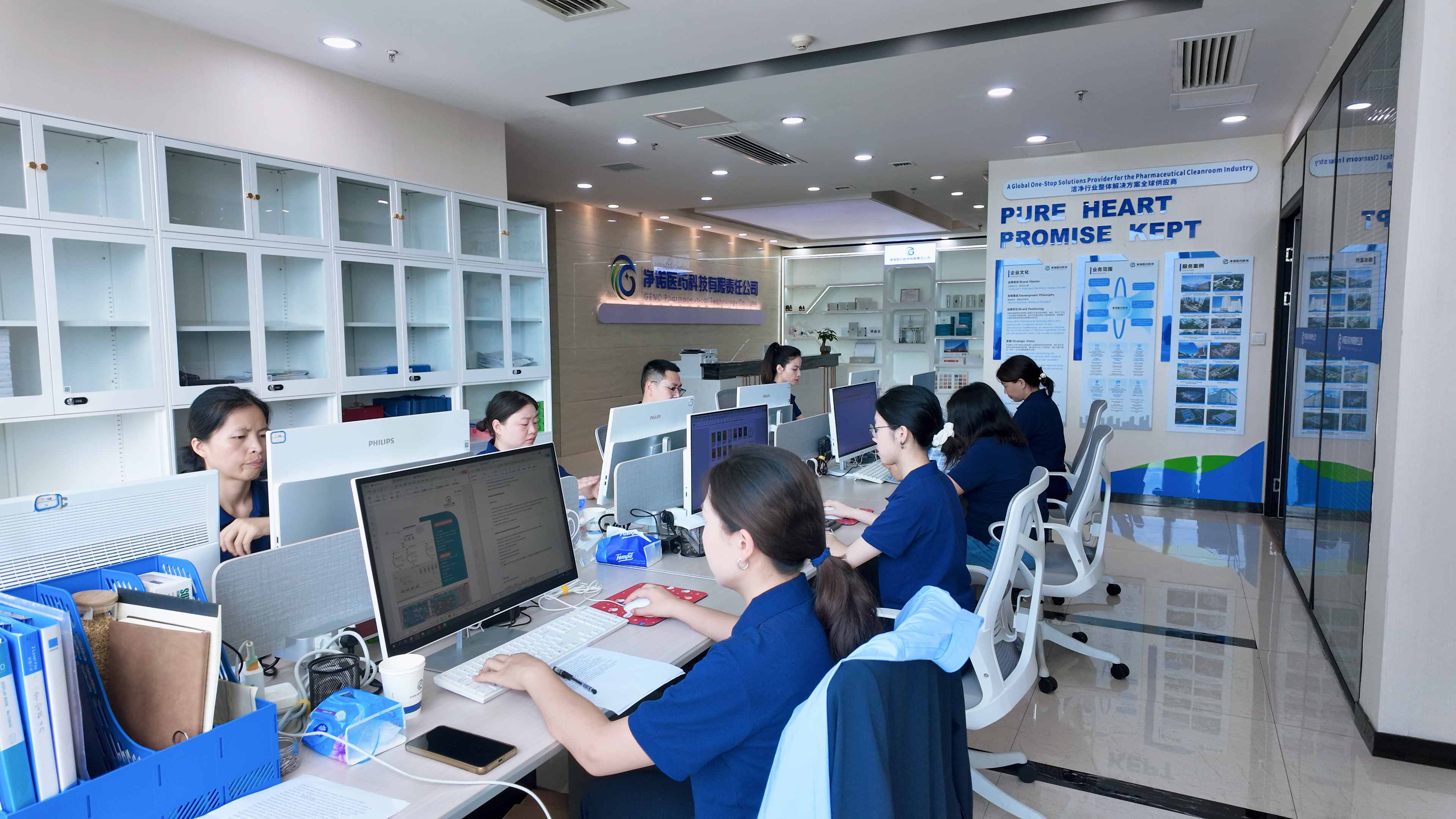
In many organizations, GMP compliance is treated as a checklist—a set of rigid rules that must be followed to avoid findings. But the most robust quality systems emerge when compliance shifts from being an external obligation to an internal instinct. It’s a bit like learning to drive: at first, every action requires conscious effort, but over time, checking mirrors and signaling become automatic. The goal is to embed GMP principles so deeply into daily routines that they feel less like regulations and more like common sense.
This transformation doesn’t happen by chance. It starts with leadership that models the right behaviors, not just because an auditor is coming, but because it’s the only acceptable way to operate. Training moves beyond slide decks to real-world scenarios that connect the “what” with the “why.” When operators understand how a simple documentation error could ripple into patient risk, attention to detail becomes personal. Frequent, low-stakes walkthroughs and peer observations help normalize open conversations about mistakes, turning errors into learning opportunities rather than reasons for blame.
Technology can either help or hinder this shift. When tools are intuitive and seamlessly integrated, they support good habits instead of creating friction. For instance, a well-designed electronic batch record system guides operators through each step naturally, making the right action the easy one. But technology alone won’t succeed without a culture that values micro-habits—like writing things down immediately, checking labels twice, or speaking up at the slightest doubt. Over time, these small, consistent actions compound until GMP compliance isn’t something you remember to do; it’s simply how you work.
Where Every Weld and Gasket Upholds Sterility
In sterile manufacturing environments, the smallest imperfection in a weld or gasket becomes a direct threat to product purity. Every joint, every seal must be executed with extreme precision—free from pits, cracks, or dead spaces where contaminants could lodge. It’s this microscopic attention to surface integrity that keeps the line between sterile and compromised impossibly thin.
Gaskets aren't just about compression; they’re about material memory and chemical compatibility. A poorly chosen elastomer can leach extractables, swell, or degrade after a single CIP cycle, creating invisible pathways for bacteria. The right gasket, installed with the correct load and alignment, forms a static yet living barrier—unyielding to pressure fluctuations and thermal swings while never shedding its own substance into the product stream.
Welds in high-purity tubing are a special breed. Autogenous orbital welding, performed in a controlled atmosphere, fuses the metal without filler, creating a near-glass-like inner surface. Each weld is documented, inspected, and often passivated to restore the chromium oxide layer. In these systems, a weld isn't just a connection—it's a critical component of sterility assurance, where even the color of the heat-affected zone tells a story of oxidation control.
Validation and Qualification That Don’t Derail Your Timelines
Balancing thorough validation with project deadlines often feels like walking a tightrope. The traditional approach to qualification can be rigid, imposing lengthy protocols that consume weeks or months before you can move forward. By rethinking your strategy and embedding risk-based thinking from the start, it’s possible to streamline the process without sacrificing compliance or product quality. Focus on what truly matters—critical parameters that directly impact safety and efficacy—and resist the temptation to over-validate every minor variable. This shift in mindset keeps your team agile, trims unnecessary documentation, and frees up resources to maintain momentum.
Integration is another key lever. When validation activities are treated as separate, sequential steps, delays are almost inevitable. Instead, weave qualification tasks into routine development and engineering runs. Leveraging existing data from design of experiments (DoE) or scale-up batches can reduce duplicate testing. Early collaboration between quality, engineering, and operations teams ensures that equipment and processes are designed with validation in mind, not retrofitted later. This proactive alignment cuts down on rework and accelerates the path from concept to commercial production.
Finally, invest in smart tools and training that enable your people to work faster without corners being cut. Digital validation platforms can automate repetitive documentation, track real-time data, and flag deviations before they become schedule disruptors. Equally important is building a culture where every team member understands how their decisions influence the timeline. When operators and analysts are empowered to identify risks and suggest continuous improvements, validation becomes a living process that adapts rather than a bottleneck that must be endured. The result: you meet your milestones with confidence, knowing that safety and quality were never compromised for speed.
The Unseen Systems That Keep Your Cleanroom Breathing
Most people picture a cleanroom as a collection of shiny surfaces and meticulous gowning procedures. But the real guardian of particle control operates out of sight, behind walls and above ceilings. Massive air handling units pull in outdoor air, pass it through banks of pre-filters and HEPA filters, and then push it downward through perforated ceiling panels. This laminar airflow sweeps particles away from critical work zones, creating a cocoon of cleanliness that never rests.
Beneath the raised floor or through low wall returns, air rushes back to be reconditioned—temperature tweaked, humidity balanced, and spun through another round of filtration. It’s a closed loop, endlessly churning, rarely seen, yet absolutely unforgiving. Even the whisper of a fan belt slipping or a differential pressure gauge drifting out of spec can compromise the entire environment, so these systems are monitored with a vigilance that borders on obsession.
The architecture of airflow isn’t just about moving air; it’s about shaping an invisible shield. Positive room pressure ensures that when a door cracks open, air leaks out rather than letting unfiltered air in. Return air grilles are positioned to trap contaminants exactly where they’re generated, and air change rates—often hundreds per hour—turn over the entire room volume in the time it takes to refill a coffee mug. Without these silent, tirelessly engineered lungs, the cleanroom would simply suffocate.
From Blueprint to Batch: A Partner That Sticks Around
We don’t just show up when the design is polished. Our team digs into the rough sketches, asks the uncomfortable questions, and helps refine concepts before they ever touch a production line. From material selection to tolerance checks, we’re there—not as a vendor, but as an extension of your engineering bench.
When it’s time to scale, the same people who shaped your prototype are the ones troubleshooting the first run. We keep notes, track lessons learned, and push improvements cycle after cycle. No handoffs, no disappearing acts—just a steady presence that grows smarter with every batch.
FAQ
Unlike a standard contractor who might only handle construction or component installation, a pharmaceutical EPC supplier delivers a fully integrated turnkey solution from concept to validation. This means they take complete ownership of design, engineering, procurement, construction, and commissioning under a single contract, specifically tailored for sterility and regulatory compliance. The key difference is the deep integration of HVAC, filtration, pressurization, and monitoring systems into a unified GMP ecosystem, ensuring every element works together to maintain aseptic conditions without gaps in responsibility.
Risk reduction comes from the single-point accountability that an EPC model offers. Instead of managing multiple vendors for design, construction, and equipment, the EPC supplier coordinates all phases, identifying and mitigating interface risks early. For instance, potential conflicts between ductwork routing and process equipment are resolved during design, preventing costly on-site modifications. Moreover, the supplier's experience in qualification and validation means the facility is built with documentation and testing protocols in mind from day one, avoiding regulatory delays.
The biggest challenges are maintaining unidirectional airflow where needed, controlling particulate and microbial contamination, and ensuring pressure cascades remain stable during operation. We tackle these by using computational fluid dynamics (CFD) modeling to optimize air distribution, selecting terminal HEPA/ULPA filters with exact face velocity control, and integrating a responsive building management system that adjusts air handling unit performance in real time. Material selection is equally vital; all surfaces, from wall panels to sealants, must resist chemical disinfectants and prevent outgassing.
Absolutely. A pharmaceutical-savvy EPC supplier brings a validation mindset from the outset. They don't just build; they develop the entire user requirement specification, design qualification, installation qualification, and operational qualification documentation in parallel. Many even assist with performance qualification by providing test protocols and training personnel. This proactive approach transforms a complex regulatory hurdle into a seamless extension of the project, because the facility is built to pre-agreed acceptance criteria that align with FDA, EMA, or WHO guidelines.
Flexibility is engineered through modular wall systems, expandable mechanical platforms, and utility distribution that allows for easy reconfiguration. We often design 'ballroom' or 'suite' layouts with ceiling grids that can accept repositionable filters or lights. Air handling units are sized with extra capacity for future heat loads, and process piping is installed with spare ports. This way, when production scales up or a new product requires a different layout, changes can be made with minimal downtime and without compromising the validated state of the suite.
We embed smart sensors and IoT connectivity from the start to feed a holistic digital twin of the cleanroom environment. Real-time data on particle counts, differential pressure, temperature, and humidity is continuously logged and analyzed, enabling predictive maintenance on filters and fans before a failure occurs. This digital backbone also supports paperless batch records and automated deviation management. For clients, it means fewer manual monitoring rounds, faster investigations if a limit is breached, and a clearer path to continuous improvement under quality by design principles.
The initial build is only a fraction of the total cost of ownership over 15-20 years. An EPC partner that prioritizes energy-efficient HVAC design, durable finishes, and accessible maintenance can slash operational expenses dramatically. For example, an optimized air change rate that still meets class limits can cut fan energy by 30%. Choosing cleanable, non-shedding surfaces reduces the frequency of deep sanitization. We provide lifecycle cost analysis during design to help clients balance upfront investment with long-term savings, ensuring the facility remains economically viable without sacrificing compliance.
Coordination is managed through a rigorous integrated design process using 3D building information modeling. All trades—cleanroom panels, HVAC, electrical, process piping, and equipment—are modeled in a shared digital environment. Clash detection is run continuously, and weekly multidisciplinary reviews ensure that equipment service connections, cleanability gaps, and operator access are all resolved virtually before installation. This eliminates field modifications that can introduce contamination risks and delays.
Conclusion
When you walk into a cleanroom that was designed around how your team actually moves, you feel it instantly. No awkward equipment turns, no dead-end corridors where contamination waits. Instead, every surface, every pass-through, and every air return placement follows your real production flow, not a recycled floor plan. That’s the difference between a generic build and a space where GMP compliance stops being a chore and starts working with you. Our approach locks sterility into the physical details long before the first air test: welds are purged and polished to medical-grade smoothness, gaskets are chemically matched to your process fluids, and every seam is a deliberate barrier, not an afterthought. You won’t spend months chasing particulate sources because the room itself rejects them.
What happens behind the walls is just as intentional. HVAC cascades, pressure differentials, and humidity control aren’t just on a spec sheet—they’re tuned during the build so your cleanroom breathes predictably from day one. And when it’s time for validation, the IQ/OQ protocols slot into your schedule without forcing a shutdown because the documentation package was built concurrently, not retroactively. Beyond handover, the same engineers stay on, not as a sales promise, but as a resource who understands why valve V-02 on air handler three matters to your batch consistency. That kind of continuity turns a construction project into a production asset, where sterile environments aren’t just delivered, but sustained across every cycle.
Contact Us
Contact Person: Amy Yang
Email: [email protected]
Tel/WhatsApp: 008619330882686
Website: https://www.genopharmatech.com/