

OEM 5-Ton Dual-Axle Hydraulic Lifting Trailer Solutions: Maximizing Heavy-Duty Hauling Performance
2026-07-16
Heavy-duty hauling tests every component to its breaking point—unless the equipment is designed to outlast the strain. The OEM 5-Ton Dual-Axle Hydraulic Lifting Trailer from Whole Chain Tech delivers that resilience, merging advanced hydraulic lifting with rugged dual-axle support to transform how you move massive loads. Read on to see how simple reliability becomes a performance powerhouse.
Why a 5-Ton Dual-Axle Hydraulic Lifting Trailer Transforms Heavy Hauling
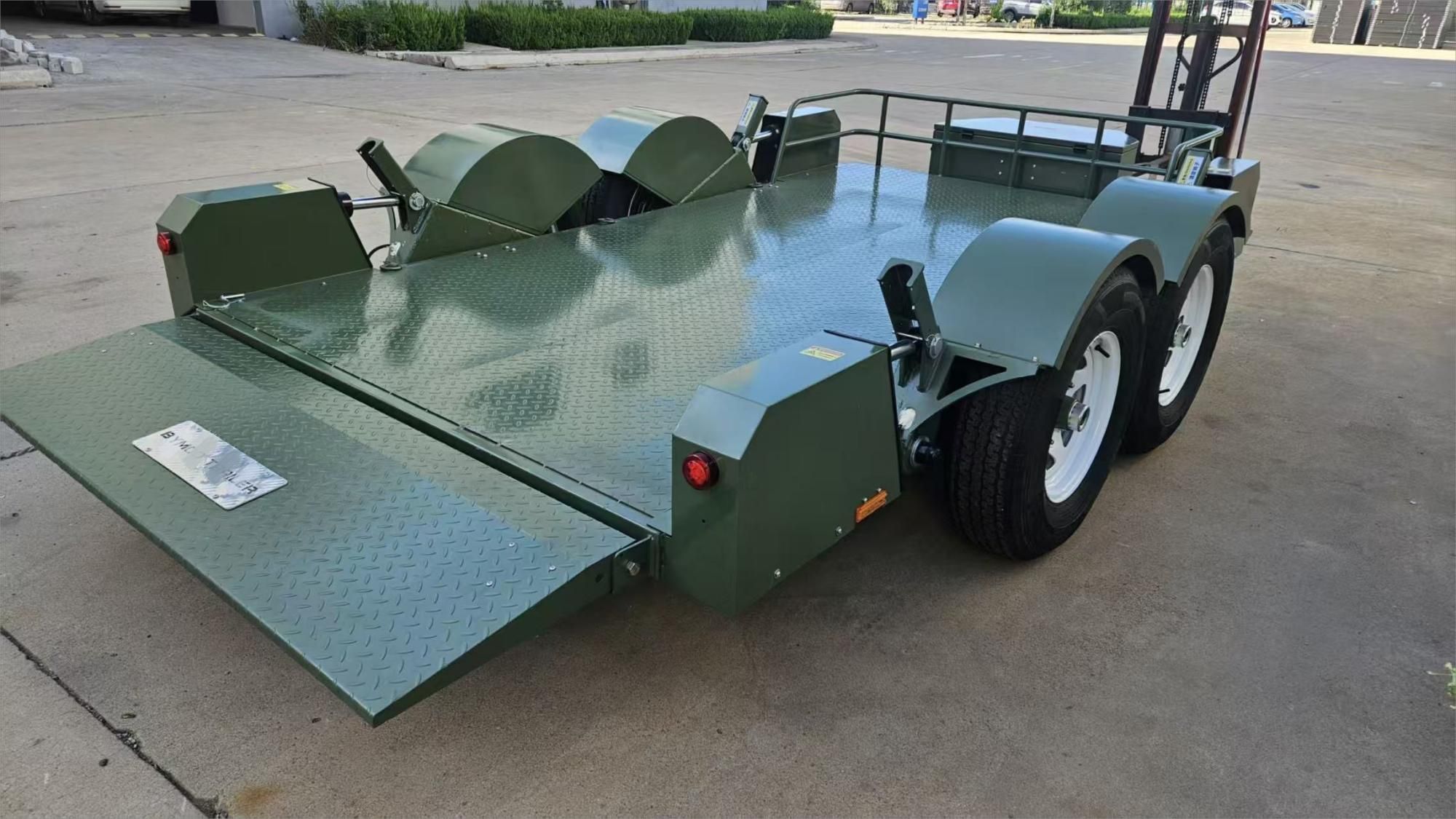
Moving oversized equipment often means wrestling with ramps, unstable loads, or the dreaded tilt-and-pray method. A 5-ton dual-axle hydraulic lifting trailer sidesteps all that struggle. Its bed lowers flat to the ground, letting you roll machinery straight on without a single ramp. The dual-axle design distributes weight evenly, keeping the trailer steady even when you’re hauling a top-heavy load—no more white-knuckle moments on uneven terrain.
The hydraulic system does more than just lift; it lets you fine-tune the bed height on the go. Need to match a loading dock? Raise it. Transporting something delicate? Lower the center of gravity. This flexibility turns a simple trailer into a multi-purpose hauler that adapts to your work site, not the other way around. And because it’s 5-ton rated, you’re not forced to choose between a light-duty toy and an overbuilt, gas-guzzling behemoth—it hits the sweet spot for mid-size machinery, steel beams, and palletized loads.
What really changes the game is how this trailer slashes downtime. No more switching between a forklift and a flatbed, or waiting for a crane. One person can secure a load in minutes, then drive off. The dual-axle setup also means safer highway travel: less sway, better braking, and a smoother ride that protects both your cargo and your truck’s suspension. You’ll get more done in a day not because you’re rushing, but because the trailer works with you, not against you.
The Hidden Engineering Behind Hydraulic Lift Precision and Stability
Achieving pinpoint accuracy in a hydraulic lift isn't just about pumping fluid into a cylinder. The real magic happens in the valving, where proportional valves constantly adjust flow and pressure in response to microsecond-level position feedback. These components work together to counteract load shifts, thermal expansion, and even slight compressibility of the fluid — factors that could easily turn a smooth lift into a jerky ride if left unchecked.
Precision also depends on the structural loop: the frame, guide rails, and the cylinder mounting itself. Engineers carefully model deflection under load, then preload bearings and reinforce critical joints so the platform stays perfectly aligned throughout its stroke. Without this rigid backbone, even the most sophisticated control system would struggle to hold position, especially when reaching the top of a tall mast where leverage amplifies every micron of slop.
Stability under dynamic conditions — like sudden stops or uneven loads — introduces another layer of hidden engineering. Counterbalance valves are tuned not just to hold the load, but to smooth out pressure spikes by allowing a controlled descent if the load shifts unexpectedly. In parallel, accumulators and dampening orifices act like shock absorbers for the hydraulic circuit, quietly ironing out the pulsations from pump output and keeping the lift motion fluid, regardless of how the operator works the controls.
Built to Outlast: Materials and Design That Defy Wear and Tear
Durability isn’t just a feature—it’s a quiet promise. The materials chosen here go beyond surface-level toughness; they absorb shock, resist corrosion, and age with character rather than crumble under pressure. Think of the dense, rubberized edges that take the brunt of daily drops, or the tightly woven fabrics that shed moisture before it can seep into vulnerable seams. Every element is picked not just for how it looks on day one, but for how it holds up years later.
The design does more than join materials—it shields them. Strategic seam placement redirects stress away from weak points, while reinforced corners and internal bracing turn potential failure zones into strength reservoirs. Instead of relying on a single thick layer, multi-stage construction distributes force across a structure that flexes without fracturing. This isn’t over-engineering for its own sake; it’s intentional architecture that lets the product survive real-world punishment without adding unnecessary bulk.
Wear and tear isn’t avoided—it’s accounted for. Scratch patterns, patina, and subtle fading are anticipated, turning marks of use into a personal finish. Replaceable components and easy-access repair points mean that high-contact parts can be refreshed long before the core ever fails. It’s a quiet confidence: the design expects to be used, and it’s built to handle that honesty without apology.
Maximizing Payload Without Sacrificing Road Manners
Behind the composed ride quality of a capable hauler lies a meticulously tuned suspension system. Modern adaptive dampers continuously adjust to road conditions and load distribution, while progressive-rate coil springs or rear air bellows maintain ride height regardless of cargo weight. This ensures that even when approaching maximum payload, the vehicle tracks straight, absorbs expansion joints without harshness, and resists the wallow that plagues lesser setups.
Weight is the silent enemy of both payload and poise. By strategically deploying high-strength steel in the frame and aluminum in body panels, engineers shave off unnecessary mass without compromising structural integrity. This weight savings directly translates into extra cargo capacity while keeping the center of gravity low, allowing the vehicle to corner with unexpected flatness and respond to steering inputs with precision—traits often lost in heavy-duty designs.
Electronic driver aids have evolved beyond simple traction control. Load-sensing steering systems vary assistance based on vehicle mass, providing light effort at low speeds and reassuring heft on the highway. Meanwhile, integrated trailer sway control and roll mitigation algorithms work in the background, subtly braking individual wheels to keep the entire rig composed through curves and crosswinds. The result is a driving experience that feels natural and secure, not lumbering and disconnected.
Custom OEM Configurations That Fit Your Fleet Like a Glove
Every fleet has its quirks, and off-the-shelf solutions rarely account for them. We dive deep into your operational DNA—route patterns, load profiles, driver workflows—to craft OEM configurations that align perfectly with your reality. It's not about forcing your fleet into a standard mold; it's about shaping the vehicle around your needs, right down to the wiring harnesses and control modules.
Our approach skips the one-size-fits-all checklist. Instead, we collaborate with your engineering teams to spec components that actually matter: custom axle ratios for your unique terrain, reinforced chassis for punishing duty cycles, or bespoke telematics integration that feeds directly into your existing fleet management tools. The result is a vehicle that arrives job-ready, without the usual tinkering and retrofits.
From specialized PTO interfaces to cabin ergonomics tailored to driver feedback, every detail is considered. We prototype and validate these configurations in real-world conditions, ensuring they don't just fit on paper but excel in the field. The payoff? Lower total cost of ownership, faster onboarding of new vehicles, and a fleet that feels purpose-built—because it is.
Real-World Scenarios Where This Trailer Outperforms Standard Models
On a muddy construction site, standard trailers often sink up to their axles, turning a simple delivery into a day-long recovery operation. This trailer’s extra ground clearance and aggressive all-terrain tires let it crawl through muck that would strand anything else, keeping materials moving even while the rest of the site shuts down for weather.
Narrow farm lanes with tight turns are a headache for conventional trailers, which need wide swings to navigate gates and obstacles. The shortened frame and articulating tongue on this model let it pivot sharply, threading through rows of crops or squeezing into tight storage sheds without scraping fences or losing a load.
Out on the highway, standard trailers can burn through tires and fuel on long hauls, especially under heavy loads. The independent suspension and low-drag profile on this one cut rolling resistance so noticeably that you’ll top off less often, and you’ll arrive with the cargo still securely tied down instead of having shifted from constant road vibration.
FAQ
It combines a robust dual-axle foundation with a high-capacity hydraulic lift system, allowing for seamless loading and unloading of machinery or bulk materials while maintaining stability under full 5-ton loads.
The system uses precise, rapid-lift hydraulics that can raise the trailer bed to various angles, eliminating the need for external ramps and cutting down on loading times by nearly half compared to conventional setups.
Absolutely. Its dual-axle design distributes weight evenly and reduces ground pressure, and with optional reinforced suspension and all-terrain tires, it confidently handles mud, gravel, or sloped surfaces.
You can specify bed dimensions, side panel configurations, tie-down points, and even integrate toolboxes or auxiliary fuel tanks—all built to order so the trailer matches your exact workflow requirements without unnecessary modifications.
Two axles provide a broader stance and better weight distribution, minimizing sway during transit and reducing wear on tires and brakes. Combined with standard heavy-duty leaf springs, it ensures a controlled, level ride even when carrying top-heavy loads.
Construction, landscaping, agriculture, and equipment rental firms use it daily for moving excavators, pallets of sod, bulk feed, or scissor lifts—any scenario that demands reliable, high-lift capacity without calling in a separate crane or loader.
It's designed with a standard heavy-duty ball hitch or optional pintle ring to suit most full-size pickups and medium-duty trucks. As long as the tow vehicle is rated for 5 tons with a compatible brake controller, the connection is straightforward and secure.
Conclusion
The OEM 5-ton dual-axle hydraulic lifting trailer redefines heavy hauling by merging raw strength with smart engineering. Its dual-axle configuration and advanced hydraulic lift system deliver pinpoint precision and unshakeable stability, even under maximum load. Built from high-tensile steel and corrosion-resistant alloys, this trailer laughs off daily abuse—welded joints and reinforced stress points ensure it survives years of punishing cycles without fatigue. The hydraulic lift mechanism, with its seamless synchronization and fluid-tight seals, maintains control whether you're dumping aggregate, positioning equipment, or navigating uneven terrain. Operators report noticeably less driver fatigue and faster cycle times, thanks to intuitive controls and a lift geometry that keeps the centre of gravity low and balanced.
Beyond brute durability, the trailer shines in real-world versatility. Custom OEM configurations—from deck height and sidewall profiles to coupler styles and braking systems—let fleets tailor the platform precisely to their workflows, eliminating compromises. The thoughtful design handles aggressive payloads without sacrificing highway manners; the dual axles distribute weight evenly, preserving tyre life and ensuring predictable braking and tracking at speed. In fields, quarries, or construction sites, this trailer outperforms standard models by tackling soft ground without bogging, thanks to optimized ground clearance and flotation-friendly tyre options. Whether it's daily muck away or seasonal harvest hauling, it becomes an organic extension of the operation, boosting productivity while keeping maintenance headaches firmly in the rearview mirror.
Contact Us
Contact Person: Ethan
Email: [email protected]
Tel/WhatsApp: +86 13963964935
Website: https://www.wholechaintech.com/