
ODM Non-woven Geotextile for Enhanced Soil Stability and Drainage
2026-09-06
A weak foundation can undo years of planning in a single rainy season. That’s where ODM non-woven geotextiles step in—not as a generic fix, but as a tailored layer of defense for soil stability and drainage. Whether you’re battling erosion on a steep slope or chasing faster water flow under a new roadway, the right fabric makes all the difference. At JInseed Geosynthetics Solution, we don’t just cut and ship—we engineer each roll to your project’s exact pore size, tensile strength, and permeability needs. In the next few minutes, you’ll see why off-the-shelf geotextiles often miss the mark, and how a custom ODM approach turns a simple non-woven sheet into the quiet backbone of lasting infrastructure.
When Subgrade Meets Aggregate: The Separation Role You Can’t Skip
On most road jobs, the subgrade is soft clay or silt, and the aggregate base is clean crushed stone. Put them together without a separator, and within a few years the stone gets pushed down into the mud, fines migrate up, and the pavement starts to rut. The fix isn’t thicker stone—it’s a geotextile or similar layer that holds each material in its own place while still letting water pass.
A separation layer does more than keep particles from mixing. It stops the aggregate from punching into a weak subgrade under repeated loads, which means you can often reduce the total base thickness. On sites with high groundwater or frequent rain, it also prevents the subgrade from turning the lower stone into a slurry, preserving drainage and load distribution.
The trick is matching the separator to the site conditions. Woven fabrics handle high strength and low elongation, while nonwovens are better for filtration and puncture resistance from sharp aggregate. Skimping here—or skipping it entirely—almost guarantees premature failure at the interface, the one place nobody inspects until the potholes show up.
Drainage Without Clogging: How Pore Structure Keeps Water Moving
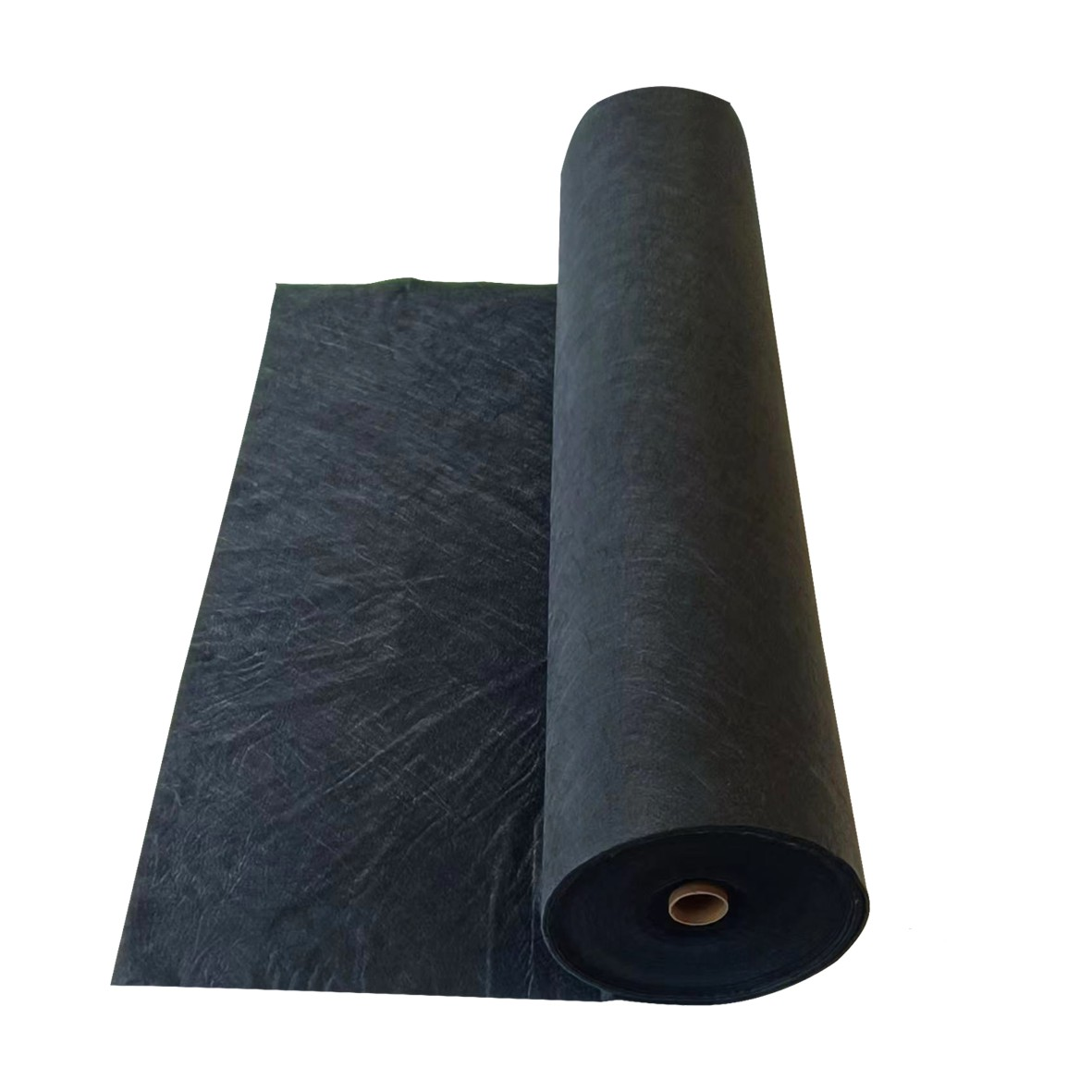
In a well-draining system, the secret isn't just about having holes—it's about how those holes are arranged and connected. A pore network with too many narrow throats acts like a sieve that traps fine particles almost immediately, while a structure dominated by large voids may let water rush through but offers little mechanical filtration. The sweet spot lies in a graded architecture: larger pores feed into progressively smaller ones, creating a pressure gradient that keeps silt and debris suspended in the flow rather than settling into blockages. This is why crushed aggregate bases and open-graded asphalt rarely clog, even after years of stormwater loading.
What often gets overlooked is the role of pore surface texture and tortuosity. Smooth, round pores encourage laminar flow and particle deposition, whereas rough, angular channels force water to tumble and swirl, dislodging would-be clogs before they can consolidate. Some engineered geotextiles exploit this by using fibers with irregular cross-sections, increasing turbulence at the micro scale without reducing overall permeability. Field tests on permeable pavers show that a well-designed pore structure can maintain 80% of its infiltration rate after a decade, while poorly graded systems may lose half their capacity in two years. The difference comes down to how the void space manages not just water volume, but water energy.
Slope Reinforcement That Works With the Landscape, Not Against It
Rigid concrete walls often do the job of holding back soil, but they create a harsh scar across the land. A different approach starts with the slope itself, weaving strength into the existing topography. Instead of fighting the angle with a single massive structure, designers now use systems that let the earth keep its shape while adding roots, brush layers, and low-profile anchors. The result is a reinforced surface that looks less like an engineered barrier and more like a thickened piece of the original hillside.
Live materials pull real weight here. Willow cuttings, native grasses, and deep-rooted shrubs are packed into terraced lifts or tucked behind biodegradable mats. As these plants establish, their roots knit the soil together, creating a self-healing layer that gets stronger each season. A slope treated this way doesn't just resist erosion—it actively rebuilds itself after heavy rain. The reinforcement is never separate from the landscape; it becomes part of it.
For steeper cuts or weak soils, hidden structural elements do the heavy lifting while the surface stays soft. Geogrids, soil nails, and rock-filled gabion baskets can be buried and then covered with topsoil and seed mixes matched to the local plant community. The visible face reads as a natural embankment, not a construction site. In many cases, neighbors and passersby never realize the slope was stabilized at all—which is exactly the point.
What Changes When You Swap Woven for Non-Woven Under Load
Swapping woven for non-woven under load changes how stress travels through the material. Woven fabrics rely on the interlocking of warp and weft yarns, which gives them a predictable, grid-like distribution of tension. When you apply force, those yarns pull against each other at the crossings, creating localized high-stress points. Non-wovens, by contrast, are made from fibers bonded randomly through heat, chemicals, or entanglement. That randomness means the load doesn't follow a neat path—it spreads unevenly, and the failure point often appears where fiber density is lowest.
Another key shift is in how the material deforms before breaking. Wovens tend to elongate along the yarn direction, and you can often see the weave tighten before it gives way. Non-wovens, especially those with short fibers, don't have that same structural give. They may stretch less, but they tear more abruptly because the bonded points act like weak anchors. Under a sustained load, a non-woven can also show more creep—slow, permanent stretching—since there's no woven skeleton to hold the shape. You might notice this in things like geotextiles or filter fabrics, where a swap can mean the difference between a gradual sag and a sudden split.
Practical consequences depend on the load type. For dynamic or repeated loading, a woven material can recover better because the fibers are mechanically locked. A non-woven, once crushed or stretched past its bond strength, loses integrity fast. But under uniform static pressure, some non-wovens do fine—like cushioning layers that just need to distribute weight, not resist directional pull. The real warning is for anyone assuming the two are interchangeable: the failure mode changes from a slow, visible tear along a seam to a burst or a hole that appears without much warning.
Field Cuts and Overlaps: Small Choices That Decide Long-Term Stability
When you're planning a field cut for a new season, the temptation is to just follow the old map or let the GPS auto-steer do its thing. But the places where one pass meets another — the overlaps — are where compaction, seed waste, and uneven nutrient distribution sneak in. A few inches of double planting along a seam might not show up in the yield monitor that week, but over three or four rotations you'll see ruts forming, weed pressure shifting, and pH pockets that never really recover. The small choice of how much overlap to allow, whether to offset the next cut by half a row or to reset the boundary from a permanent corner marker, quietly sets the baseline for everything that follows.
Another detail that gets ignored until it's too late is the overlap between different field operations, not just the planter. A sprayer pass that overlaps by eight inches is not the same as a combine overlap; the sprayer's weight and tire pattern leave a different footprint. If you don't record where the cuts actually happened — not where the screen said they should happen — you'll spend the next year chasing phantom strips of stunted crop. The most stable fields I've walked have a simple habit: someone wrote down the actual cut width and overlap margin on a note taped inside the tractor cab, then adjusted it every season based on what the soil showed. No fancy variable-rate prescription fixes a baseline that's off by a wheel width.
Choosing the Right Weight: Matching Fabric to Soil Type and Rainfall
Fabric weight isn't a one-size-fits-all decision. It starts with the soil you're dealing with. Sandy, loose soils let water drain quickly, so a lighter fabric works fine: it keeps weeds down without trapping excess moisture that could encourage rot. Clay-heavy ground, on the other hand, holds water and tends to compact. There, a heavier fabric does double duty—it blocks weeds and helps stabilize the surface, reducing the muddy mess after a downpour.
Rainfall patterns shape the choice just as much. In dry regions, a mid-weight fabric with good breathability prevents the soil from baking while still allowing occasional rain to seep through evenly. If you're in a place with frequent heavy storms, go heavier. The extra density slows water runoff, letting it soak in gradually instead of washing away topsoil. Watch for puddling—if water stands on top for more than a few minutes after a storm, the fabric is likely too dense for your conditions.
A practical test before committing: lay a sample over your soil, pour a gallon of water, and time how long it takes to disappear. Under 30 seconds? You can safely step up to a heavier weight. Over two minutes? Lighten up. Matching the fabric to both what's under it and what falls from the sky keeps your beds healthier with less fuss.
FAQ
ODM means the fabric is manufactured to a buyer's specifications rather than sold as a one-size-fits-all stock item. For this type of geotextile, that often involves adjusting fiber blend, weight, roll dimensions, or tensile strength so it matches the specific soil and drainage conditions on site.
Under roads, pavements, and embankments. It acts as a separator between soft subgrade and aggregate layers, preventing them from mixing and losing structural strength. Over time, that reduces rutting and settlement, so the surface stays level with far less maintenance.
Yes, the needle-punched fiber network creates thousands of small pathways for water, but the tight pore structure still traps silt and clay particles. That balance between flow rate and soil retention is what keeps drainage trenches and behind-wall systems from clogging prematurely.
Common examples include landfill liners, French drains, erosion control on slopes, separation under railway ballast, and protection layers around waterproofing. Customization becomes valuable when the soil is unusually fine, the water table is high, or the design calls for a specific grab strength.
Not much. The material is lightweight, easy to roll out, and can be cut with a utility knife. Crews usually need to clear sharp objects, overlap adjacent rolls by 12–18 inches, and avoid excessive wrinkles. That simplicity keeps labour costs down compared to compacted clay or graded aggregate alternatives.
Underground, UV exposure is not a concern, and polypropylene or polyester fibers resist biological decay and most soil chemicals. A properly specified geotextile can easily remain functional for decades. For temporary exposed use, a UV-stabilized variant is recommended because sunlight degrades untreated polymers over time.
When water flow matters more than tensile reinforcement. Non-woven fabrics have a higher permeability and a felt-like structure that filters efficiently, which is ideal for drainage. Woven fabrics are typically stronger but less porous, so they’re used where load transfer and reinforcement dominate.
Conclusion
From the moment a road or foundation is placed over soft ground, the layer between subgrade and aggregate does more than just sit there. ODM non-woven geotextile keeps soil particles from migrating upward into the stone, which is exactly where structural failure begins when that separation is skipped. Its pore structure is deliberately open enough to let water pass but tight enough to resist clogging, so drainage continues long after installation. On slopes, the fabric wraps around soil blocks or lies beneath erosion-control mats without fighting the natural contour, reinforcing the ground while letting vegetation establish.
Swapping a woven for a non-woven under load changes behavior: the non-woven stretches and conforms to uneven subgrade, distributing stress rather than concentrating it at one point. Field cuts and overlaps are not afterthoughts—too short an overlap or a jagged edge can create a weak seam that unravels over time. And weight selection matters more than most assume: a heavier fabric in clay with heavy rainfall may hold water longer than desired, while a lighter one in sandy soil under intense storms can tear during placement. Matching the gram weight to soil type and expected rainfall keeps the system stable without overbuilding.
Contact Us
Contact Person: Jerry Qiu
Email: [email protected]
Tel/WhatsApp: +65 84265294
Website: https://www.jinseed-geo.com