

ODM Hard-Seal Ball Valve Company: Engineering Precision for Demanding Applications
2026-05-10
When process conditions demand zero leakage and absolute reliability, not just any valve will do. Hidden behind the world’s most aggressive pipelines and high-pressure systems, ZMV has spent decades crafting hard-seal ball valves that refuse to compromise. In this post, we pull back the curtain on how one ODM specialist is redefining precision engineering for applications where failure isn’t an option.
Precision Machined for Zero Leakage Performance
In high-stakes fluid systems, achieving zero leakage isn’t a matter of afterthought seals or gaskets. It starts with the basic geometry of the mating parts. When surfaces are machined to align perfectly, down to the sub-micron level, the potential for a leak path simply doesn’t exist. This isn’t just tight tolerancing; it’s a design ethos where every cut, every pass of the tool, is aimed at eliminating gaps that could compromise the system’s integrity.
Conventional CNC boundaries are pushed aside by combining multi-axis grinding with diamond lapping techniques. The result is a surface finish so fine that it creates an almost molecular-level seal when components are assembled. Flatness is kept within two helium light bands, and roundness deviations are measured in millionths of an inch. Under dynamic loads and thermal swings, these surfaces maintain their lock-tight relationship, refusing to let even gas molecules slip past.
In environments where a single drip can mean downtime, contamination, or danger, that level of precision offers more than performance—it provides certainty. These parts routinely operate in ultra-pure water systems, aggressive chemical plants, and high-vacuum aerospace applications, where the difference between failure and flawless function is measured in the imperceptible. By removing the reliance on soft seals that degrade, a harder, more durable solution emerges that stands up to years of service without a whimper.
Tailored Valve Solutions from Concept to Completion
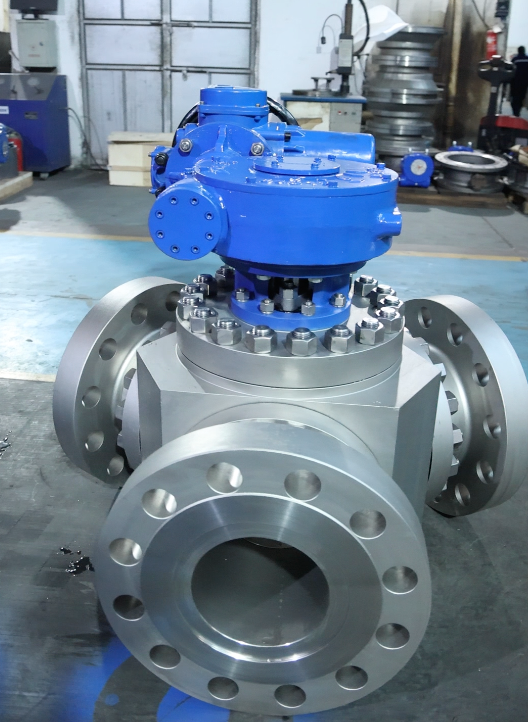
Every project starts with a unique set of requirements—no two fluid systems behave exactly alike. That’s why we don’t just hand you a catalog and hope something fits. From the first sketch on a whiteboard to the final torque check on site, our team works alongside yours to understand the pressures, temperatures, media, and mission-critical demands of your application. This isn’t about picking a part number; it’s about shaping a solution that performs flawlessly from day one.
The journey from concept to completion often exposes gaps that generic products can’t bridge. Maybe it’s a tight envelope that demands a custom actuator mount, a strange chemical cocktail requiring exotic alloys, or a control profile that standard trim sets simply can’t deliver. We thrive on those challenges. Our engineers take a holistic approach—considering not just the valve itself, but how it integrates with the pipework, the control system, and the people who will operate it. The result is a package that feels purpose-built, because it is.
We don’t disappear after the order ships. Commissioning support, performance validation, and long-term service are part of the deal. Because even the finest valve won’t matter if it isn’t installed right or maintained properly. Whether you need a single custom isolation valve for a pilot plant or a full suite of automated control valves for a production line, our process is designed to carry the load from that first conversation to the moment your system runs exactly as intended—quietly, safely, and without compromise.
Engineered to Thrive in Extreme Operating Conditions
Every component in this system was built from the ground up to handle conditions that would sideline lesser designs. Instead of relying on generic ruggedization, we focused on the real-world stressors that operators face—whether that's salt spray in offshore rigs, rapid thermal swings in desert deployments, or the constant vibration of heavy machinery. The result is hardware that doesn’t just survive; it performs consistently when the environment throws everything it has at you.
Key to this resilience is a series of uncompromising material choices. Corrosion-resistant alloys are paired with advanced polymer seals that maintain flexibility from -40°F to over 300°F, while custom-machined conductors eliminate the micro-fractures that plague standard connectors. Every unit undergoes a battery of tests that go well beyond typical industry requirements: sustained pressure cycling, salt-fog exposure for weeks on end, and direct ice accumulation are part of the standard validation protocol.
What sets this approach apart is the refusal to treat extreme conditions as an afterthought. By embedding survival parameters into the initial design phase—rather than adding protective coatings or reinforcing housings later—we’ve eliminated common failure points before they could form. The payoff on sites is immediate: less downtime, fewer field replacements, and a level of dependability that teams quickly take for granted because the equipment simply does its job, day after punishing day.
Advanced Metallurgy for Long-Lasting Reliability
Behind every durable component lies a meticulous selection of alloys and heat treatment processes. Our engineers refine grain structures at the microscopic level, controlling phase transformations to resist wear, fatigue, and corrosion far beyond conventional limits. This isn't just about using strong materials—it's about orchestrating how they behave under real-world stresses.
We push boundaries by integrating trace elements that stabilize microstructures over thousands of thermal cycles. The result is a metallurgical framework that self-accommodates stress, preventing crack propagation before it begins. Customers see the difference in components that maintain precise tolerances year after year, even in aggressive chemical or high-temperature environments.
Every batch undergoes rigorous validation through electrochemical potentiodynamic testing and cyclic load analysis. This data-driven approach ensures that what leaves our facility isn't merely compliant with specs—it predictably exceeds operational life expectations. The metallurgy isn't just advanced; it's crafted for quiet, uninterrupted performance when it matters most.
Rigorous Testing Protocols Ensure Flawless Operation
From the earliest design phase, every component is subjected to stress tests that go beyond typical usage. We push things until they break—repeatedly—so we understand precisely where the margins lie. Only when a module survives conditions far more demanding than any user will ever create does it earn a place in the final assembly.
Once integrated, the entire system enters a gauntlet of long-duration runs, rapid cycling, and environmental swings. Fault injection is standard practice here; we deliberately introduce unexpected inputs to see how the system reacts. No assumption goes unchecked, no corner case left unexplored.
The result is a product that behaves predictably under pressure, not because we hope it will, but because we’ve witnessed it hold steady through every trial we could devise. This isn’t about meeting a checklist—it’s about earning the confidence that comes from surviving the unexpected.
Trusted by Critical Industries Worldwide
When systems can't fail, operators look for proven resilience. Our solutions sit quietly inside nuclear plants, air traffic control towers, and offshore rigs—places where a single glitch can cascade into headlines. That trust wasn't given; it was earned through decades of sweating the small stuff, passing audits others dread, and designing out single points of failure until even our skeptics became our strongest references.
You won't see our name on ruggedized boxes, but you'll feel the absence when something works without drama. From hospital power grids that keep life support humming during blackouts to railway signaling that coordinates thousands of tons of moving metal, the common thread is an engineering philosophy that treats every deployment like it's the one that must never fail. We don't chase trends—we refine what already works until it works in the dark, underwater, or at minus forty.
That's why engineers in forty-plus countries specify our components without flashy pitches. It's not about feature lists; it's about the midnight call that never comes. Our hardware and software have seen more tornadoes, sandstorms, and salt spray than most will in a lifetime—and after each, they simply keep counting, switching, and protecting. For industries where downtime isn't about inconvenience but liability, that quiet consistency is the only metric that matters.
FAQ
ODM refers to our specialization as an Original Design Manufacturer, meaning we engineer and produce custom hard-seal ball valves tailored to specific client needs.
Hard-seal ball valves use metal-to-metal contact, offering superior durability, higher temperature tolerance, and resistance to abrasive media compared to soft-seal variants.
Our products excel in extreme conditions found in oil and gas, chemical processing, power generation, and high-pressure hydraulic systems.
We employ advanced CNC machining and rigorous testing protocols to ensure each valve meets precise tolerances, minimizing leakage and extending service life.
Absolutely. Our hard-seal construction, often using materials like tungsten carbide or ceramic coatings, withstands temperatures exceeding 500°C.
Yes, as an ODM, we thrive on tailor-made solutions—from special alloys to non-standard sizes—ensuring optimal fit for specific applications.
We comply with international standards such as API 6D, ISO 9001, and ATEX, reflecting our commitment to quality and safety.
The metal sealing surface, combined with live-loaded packing and precise shut-off capability, significantly reduces the risk of leaks, meeting stringent environmental regulations.
Conclusion
At ODM Hard-Seal Ball Valve Company, every component reflects a relentless pursuit of precision—machined to tolerances that virtually eliminate the possibility of leakage, even after years of cycling. Our valves are not off-the-shelf commodities; they emerge from a collaborative engineering process that begins with client requirements and advances through material selection, design refinement, and prototyping until the final product aligns perfectly with its intended duty. By merging advanced metallurgy with meticulous machining, we create ball valves that withstand corrosive chemicals, cryogenic temperatures, and high-pressure shocks without sacrificing ease of operation. The result is a valve that performs as reliably in the Arctic as it does in a desert refinery, shrugging off erosion and thermal fatigue that would cripple lesser designs.
Behind every ODM valve lies a testing regimen that simulates the harshest field conditions—pushing prototypes through cycle counts, thermal swings, and fugitive-emission verification until they consistently demonstrate flawless operation. This commitment has earned the confidence of power-generation providers, offshore drillers, and pharmaceutical manufacturers who cannot afford unplanned downtime. From custom trunnion-mounted configurations to floating-ball designs with exotic coatings, our solutions are trusted not because we promise perfection, but because we prove it long before installation. When a process demands zero-margin tolerance and unwavering safety, engineers worldwide turn to ODM for hard-seal ball valves that set the bar for endurance and precision.
Contact Us
Contact Person: Lucas Lin
Email: [email protected]
Tel/WhatsApp: 8613968913000
Website: https://www.zhengmaogroup.com