

ODM Foldable Water Bottle Delivers Practical Hydration for Travel and Daily Commutes
2026-11-22
Most travel bottles force a choice: stay compact or stay hydrated. The ODM foldable water bottle from Qunhao takes a more practical route. It collapses when your bag space disappears, opens up when thirst hits during a commute, and fits into the rhythm of daily travel without adding bulk. This isn’t another rigid bottle pretending to be portable—it’s hydration designed around the way you actually move.
The moment a rigid bottle stops fitting your everyday carry
You don't notice it the first time you leave the house. It happens the second or third time, when the bag is already holding a laptop, a charger, and the random things that accumulate by Thursday. The rigid bottle has one fixed shape, and it refuses to negotiate with the curve of your shoulder or the narrow pocket meant for something smaller. It either fits sideways and makes the zipper protest, or it fits upright and turns the whole bag into an awkward barrel against your back.
That's the quiet breaking point. A rigid bottle doesn't bend when your plans change. It won't flatten in a seat pocket, it won't slide under an airplane seat without rolling back out, and it definitely won't share space with a paperback and a rain shell. You start choosing where to go based on whether the bottle will make the trip easier or just heavier. The moment it stops being a convenience and starts being a condition, you've outgrown it.
What takes its place usually isn't another hard cylinder. It's something that gives a little, packs flat, or tucks into the gap between your stuff instead of demanding the center. The everyday carry gets lighter not because you removed water, but because you removed the argument about where the water has to live.
What a foldable bottle actually does differently on packed train and bus mornings
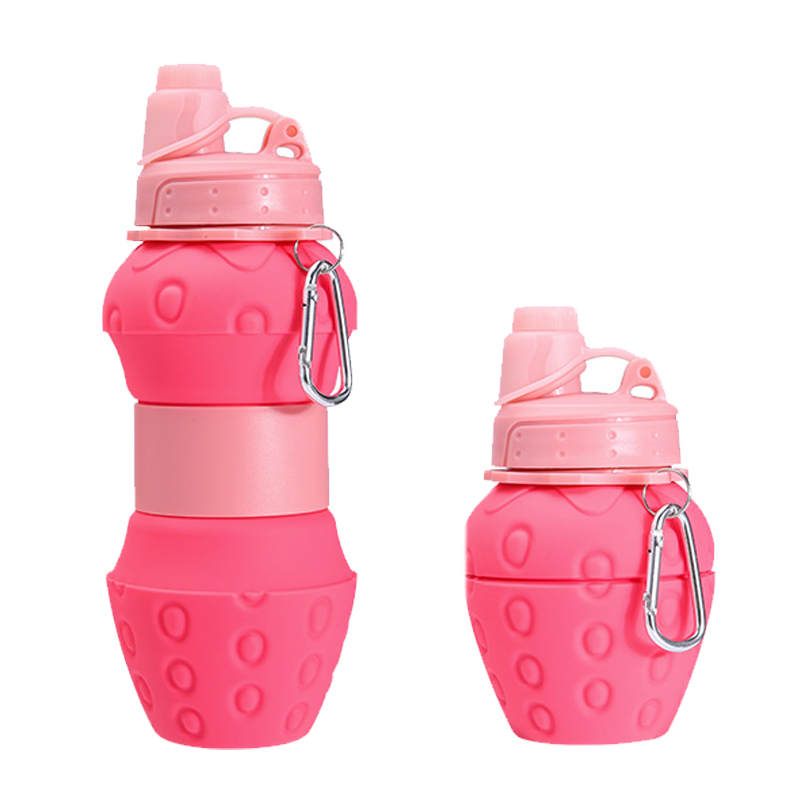
The difference starts before you even get on. A rigid bottle keeps its shape no matter how full it is, so on a packed train it tends to dig into your ribs through a backpack or take up the same stubborn amount of room in a tote. A foldable one, especially when empty or half-filled, collapses into whatever gap is actually available. It gets narrower as you drink, so by the time you are wedged between two people, it is not a hard cylinder pressing against your spine.
On a bus, the small stuff matters more. Hard bottles roll when the driver brakes, and they often do not fit the shallow mesh pockets on seat backs. A foldable bottle with a soft body usually sits lower and stays where you put it because the material grips the fabric instead of sliding. If you finish it mid-route, you can flatten it and slide it into a jacket pocket, which means both hands are free when the aisle suddenly fills up.
By the end of the commute, the difference is about not having to manage one more object. You can tuck the empty bottle away instead of carrying it by the cap or dropping it into a bag where it clatters. That sounds minor, but on a morning where every inch of space and every free hand counts, a bottle that shrinks on demand changes how easily you move through the crowd.
Packing light without giving up easy access to water
A lot of packers bury their bottle deep inside the main compartment, then stop every time thirst hits to dig it out. A softer approach is to keep water within reach: clip a collapsible flask to a shoulder strap or use a stretch cord on the waist belt. It takes almost no room when empty, but stays easy to grab when full, so you don't have to drop the pack just for a sip.
Cutting bottle count doesn't mean cutting hydration. One lightweight filter and two roll-up soft flasks weigh less than a pair of rigid bottles and give you more options. Fill one after airport security, leave the other dry, and top up at fountains or taps along the way. That keeps the overall pack weight from swinging with every refill.
If the local tap water is safe, carry a small soft flask and refill at cafes, stations, or park fountains as you move. A slim sleeve on the outside of a shoulder strap makes the grab one-handed, with no need to undo the sternum strap or take the bag off. Packing light here isn't about carrying less water—it's about shortening the distance between you and the next sip.
Keeping a collapsible bottle clean and free of plastic aftertaste
The easiest way to stop a collapsible bottle from holding onto that faint plastic smell is to treat it like a cup you actually care about. Rinse it with warm water and a drop of mild dish soap right after each use, then leave it uncapped and upside down on a dish rack. If the neck is narrow, a soft bottle brush helps you reach the creases where residue likes to hide. The real trick is not letting water sit inside for hours after a hike or commute, since trapped moisture is what turns a neutral bottle into something that tastes like a new shower curtain.
For a deeper reset, fill the bottle halfway with warm water, add a tablespoon of baking soda or a splash of white vinegar, and shake it gently before letting it soak for twenty minutes. After that, rinse thoroughly and let it air dry completely with the cap off. If a stubborn aftertaste clings to the silicone or TPU body, you can also place the bottle in direct sunlight for an afternoon, which helps off-gas some of the manufacturing odors. Just avoid abrasive scrubbers and harsh bleach, since they can scratch the flexible walls and create even more places for flavors to stick.
Storage matters just as much as washing. Keep the bottle fully expanded rather than collapsed, with the cap loose enough for air to circulate. If you collapse it while it is still slightly damp, you are basically sealing in the exact conditions that cause off-tastes. A dry, open bottle stored away from strong-smelling foods will stay neutral far longer, so the next sip tastes like water instead of the inside of a gear closet.
Durability details that matter when a bottle gets crushed inside a bag
A bottle that feels solid in your hand can fail quickly once it's wedged under a laptop and a pair of shoes. The stress inside a bag isn't a sharp drop onto concrete; it's slow, uneven pressure that concentrates on the weakest curve of the body. Look closely at the waist and shoulder areas. Thin-walled stainless or hard plastic often dents there first, and on vacuum-insulated bottles that dent can be enough to break the inner shell. Once that gap closes, the bottle won't just look beat up—it stops holding temperature the way it should.
The cap and threads matter more than most people expect. When the body flexes under weight, that force travels upward, trying to peel the lid off or shift the seal. A shallow thread pattern with a hard plastic cap may hold in a drop test but start weeping after an hour at the bottom of a pack. A deep thread, a thick silicone gasket, and a lid that doesn't rely on a small flip-lock are better signs. If the gasket sits in a groove that keeps it from rolling out of place, you're far less likely to find a wet bag.
The bottom edge is another spot worth checking before you buy. Many bottles use a separate base cap or a rolled seam, and that joint can become the first failure point when the bottle gets pressed against a charger brick or a set of keys. A reinforced or one-piece base spreads the load instead of letting it settle on a seam. If you regularly toss your bottle into a full backpack, that detail will matter more than any drop rating printed on the box.
Choosing between a folding bottle and a traditional hard-sided one
A folding bottle earns its place the moment space becomes the actual constraint. It collapses to a fraction of its filled size, so you are not carrying an empty rigid shell around after the last sip. The trade-off shows up in handling, though: the pliable body makes one-handed drinking slightly less stable, and it will never stand upright on a crowded desk with the same quiet confidence as a hard bottle.
A traditional hard-sided bottle stays relevant because it takes rough treatment without changing shape. You can drop it into a pack, clip it to a strap, or fill it with ice without worrying about punctures or creases. Its downside is exactly what the folding bottle solves: it keeps taking up the same room whether full or empty, which can feel like unnecessary bulk on a long walk or a short trip.
The deciding factor often comes down to what happens after the drink is finished. If you want to pack it away and forget about it, the folding option makes more sense. If you would rather have a dependable container that survives being dropped, left in a hot car, or refilled constantly, the hard-sided bottle is still difficult to beat.
FAQ
It collapses to roughly the size of a phone when empty, so it disappears into a work bag or jacket pocket instead of swinging from a backpack strap.
Yes, because you can carry it empty through security and fill it at a water station after the checkpoint. You skip the overpriced airport bottles without adding bulk to your carry-on.
The flexible body uses abrasion-resistant materials and reinforced seams at the fold points. It is made to handle repeated squeezing and refilling without cracking like a hard bottle might.
The lineup usually starts around 500ml and goes up to a liter, which covers a morning train ride or a longer day out without being heavy.
Most versions are designed for cold or room-temperature liquids, though some ODM builds use heat-safe silicone for warm beverages. Check the specific spec if you plan to carry coffee.
The wide mouth lets you reach the bottom easily, and many models are top-rack dishwasher safe. For deep cleaning, a bottle brush and warm soapy water do the job.
Anyone who moves between meetings, transit, and gym sessions and does not want a rigid bottle taking up desk or bag space all day. It is also handy for travelers who pack light.
Conclusion
A rigid bottle tends to be the first casualty of a crowded commute. It fits in the morning, then becomes an awkward lump against your side once a jacket, lunch, and a laptop join the bag. The ODM foldable water bottle changes that equation because it shrinks as you drink. On a packed train or bus, you are not forced to hold a half-empty cylinder at chest height or jam it into a pocket that cannot close. Instead, the bottle collapses into a compact shape that slides next to a book or under a strap, and it still opens easily when you need a sip. Packing light no longer means rationing water or relying on overpriced station kiosks. You get quick access without carrying the bulk.
Practical use also comes down to taste and durability. A collapsible bottle can pick up a plastic smell if it stays sealed while damp, so rinsing with warm soapy water and letting it dry uncapped usually keeps it neutral. Baking soda or a diluted vinegar soak helps after flavored drinks. Durability matters once the bottle disappears under heavier items; reinforced seams and a flexible body absorb pressure instead of cracking, while a covered spout keeps dirt away even when the bag gets jostled. The choice between a folding bottle and a hard-sided one is less about which is better and more about where you are going. Hard bottles still make sense for desk use or rough trails, but for daily commutes, short trips, and one-bag travel, the ODM folding bottle removes a surprising amount of friction from ordinary movement.
Contact Us
Contact Person: Cecilia
Email: [email protected]
Tel/WhatsApp: 8619057488653
Website: https://silwatbottle.com