

ODM Commercial Ozone Generator Buying Guide for Industrial Use
2026-09-20
Most industrial ozone generator buying guides read like spec sheets with extra steps. But if you're sourcing an ODM system for wastewater, surface sanitation, or chemical oxidation, the real decisions happen well before you compare grams per hour. That's where this guide diverges: it focuses on how to evaluate a commercial ozone generator as a long-term industrial asset, not just a box with a corona discharge cell. Along the way, you'll see why working with a manufacturer like LUFUTATECH changes the conversation from vendor quotes to engineering partnership. Let's dig into what separates a reliable ODM ozone solution from a costly trial-and-error purchase.
ODM Partnerships: What Industrial Buyers Need to Know Before Signing
Before you put pen to paper, dig into the factory's actual production floor—not the glossy brochure. Ask to walk the line unannounced, watch how they handle a mid-run component shortage, and request a sample batch built with your exact BOM, not a pre-approved demo unit. If they hesitate on any of these, that hesitation is your first red flag.
The contract is where most ODM deals quietly fall apart. Spell out who owns the tooling, the firmware source code, and any derivative design tweaks that happen during production. A vague clause about "joint IP" usually means you lose leverage later. Also pin down what happens to unsold inventory and pre-paid molds if you terminate early—many buyers forget to ask until it's too late.
Don't assume quality stays consistent after the first shipment. Agree on a third-party inspection schedule, raw material traceability rules, and a clear penalty structure for silent substitutions. A partner who pushes back on unannounced audits or tries to lock you into their in-house testing lab is telling you something important about how they'll behave once the contract is signed.
Ozone Output Ratings Decoded: Don't Let Spec Sheets Mislead You
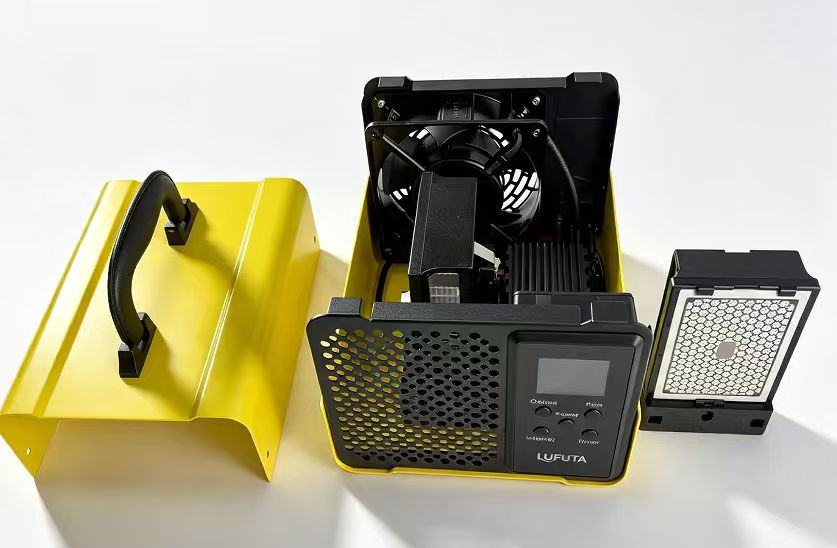
That bold ozone output figure on the spec sheet is usually captured under near-perfect lab conditions: pure oxygen feed, low flow rates, and a controlled temperature. Swap in ambient air or bump up the humidity, and the actual yield can drop by half or more. So when a machine says 5000 mg/h, ask yourself what that number would look like at 25°C with 50% relative humidity and the air source you actually have.
Units and phrasing are another place where sheets get slippery. A "maximum output" isn't the same as what you'll get hour after hour, and a mg/h rating means little if the concentration at that flow rate is never disclosed. Some manufacturers even switch between oxygen and air numbers without making it obvious—so two devices both claiming 3000 mg/h might perform very differently once installed.
The fix is to request test data that matches your real-world setup, not a glossy brochure curve. If a supplier hesitates to share conditions like flow, feed gas, and temperature, treat the printed number as marketing, not engineering.
Matching Generator Size to Real-World Demand Without Overspending
Oversizing a generator feels safe until the fuel bills arrive. A unit that rarely runs above thirty percent load wastes money, wet-stacks a diesel engine, and still leaves you paying for capacity you never touch. The smarter move starts with a realistic load audit: list every device that must stay online during an outage, note its running watts, then check the surge watts for motors and compressors. That gap between running and starting demand is where most sizing mistakes hide.
Instead of adding a blanket twenty percent for future needs, put a number on that growth. If you know a second freezer or a larger pump is coming within eighteen months, include it. If it is just a vague maybe, leave it out. Buying capacity for a hypothetical expansion often costs more than renting a temporary unit later. The goal is to match the generator's sweet spot, typically sixty to eighty percent load, to your actual pattern of use, not to a worst-case scenario that happens once a decade.
Also think about how the generator will actually run. A home backup that only supports lights, a refrigerator, and a well pump has very different needs from a food truck running a fryer and a ventilation hood for hours every day. Portable inverter generators shine for light, intermittent loads, while a stationary diesel or propane unit makes sense for continuous heavy draw. Match the fuel type, cooling system, and duty cycle to the real demand curve, and you avoid both the pain of an underpowered shutdown and the slow bleed of an oversized, underloaded engine.
Construction Materials That Survive Corrosive Industrial Air Streams
Inside chemical plants, pulp mills, and metal finishing facilities, exhaust ducts and scrubber housings face a steady diet of acid aerosols, wet chlorine, and sulfur-laden vapor. Ordinary galvanized steel or concrete disintegrates as the corrosive stream condenses on surfaces and seeps into pores. The materials that actually hold up in these conditions tend to share a few traits: a tightly bound oxide layer, chemical inertness, or a non-porous barrier that stops electrolyte from reaching the substrate.
High-nickel alloys such as Hastelloy C-276 and Inconel 625 are common choices for ductwork and dampers because they resist pitting in chloride-rich environments. For less extreme temperatures, fiberglass-reinforced plastic (FRP) with a corrosion-resistant resin liner offers a lighter, lower-cost alternative. In areas where abrasive particles ride along with acid mist, fluoropolymer-coated steel or acid-resistant brick with chemical-resistant mortar can handle both erosion and chemical attack.
A specification that ignores joints, field welds, and thermal expansion will fail no matter how exotic the base material. Sealants and gaskets must match the chemical resistance of the duct or vessel itself, and transitions between different materials create galvanic or crevice corrosion risks. The long-term survivors are usually systems designed as a complete package—not just a plate of expensive alloy bolted into a corrosive stream.
Safety Interlocks and Ventilation: Non-Negotiables for Ozone Rooms
Ozone rooms are unforgiving spaces if the basics slip, and the two systems that keep people alive are rarely discussed together. A door interlock that cuts ozone generation the moment a latch turns is not optional; it must be hardwired, not software-dependent. In practice this means magnetic reed switches or mechanical contacts wired in series with the ozone generator's power relay. If anyone opens the room during a cycle, the generator stops instantly and a purge fan ramps up, but the real test is whether that sequence still works when someone has disabled a warning light or overridden a timer for convenience. Many older installations rely on a single point of failure—one switch, one relay—and that is exactly where accidents begin.
Ventilation also cannot be treated as an afterthought. Ozone is heavier than air, so it pools near the floor if the exhaust pickup is poorly placed. A properly designed room pulls air from low points and discharges through an ozone destruct catalyst or a vent stack well away from occupied areas. Negative pressure is essential; even a small gap under the door should draw fresh air inward, not let ozone seep into adjacent spaces. Air exchange rates matter less than placement and pressure differential. A room with six air changes per hour can still be dangerous if the supply and exhaust are both near the ceiling, leaving an invisible layer of ozone at breathing height for anyone kneeling or working low.
Interlocks and ventilation have to be tested together, not separately. Run the generator with the room sealed, then open the door halfway and watch whether the ozone monitor near the doorway drops immediately. If the fan doesn't maintain negative pressure within seconds, or if the door switch only pauses the generator while ozone continues to off-gas from materials, the room fails. The non-negotiable standard is simple: no one enters until the ozone concentration inside is below 0.1 ppm, and the only way to trust that number is to have a calibrated sensor mounted at the breathing zone, tied to a visible display outside the room. Anything less is hoping, and ozone rooms do not forgive hope.
Beyond the Purchase Price: Maintenance, Electrodes, and Long-Term Costs
Too many buyers stop calculating costs the moment they sign the invoice, yet that initial figure rarely reflects what the equipment will actually demand over its usable life. Maintenance schedules sneak up quickly, and parts that seem minor—like replacement electrodes—can quietly become a recurring line item that rivals the original price if ignored.
Electrodes, in particular, deserve more attention than they typically receive. Their lifespan depends on factors most manuals only hint at: how often the device runs, the conductivity of the materials being tested or treated, and whether cleaning protocols are actually followed. A cheap upfront unit paired with expensive or short-lived electrodes often ends up costing far more than a mid-range device built around durable, easily sourced consumables.
Long-term costs also hide in downtime and calibration. A device that drifts out of spec between service intervals forces you to repeat work or question results, which carries a price no spreadsheet easily captures. Before committing to a purchase, ask for real-world maintenance logs, electrode replacement intervals from current users, and the cost of common wear items—not just the sticker price.
FAQ
Look beyond price and focus on manufacturing capability, quality certifications, customization flexibility, and after-sales support. A supplier with in-house engineering can usually adjust output ranges, control logic, and materials to match your process, while a weak support team will leave you stuck when production stops.
Capacity must be matched to the actual demand, not guessed. Calculate the required ozone dose based on water or air volume, target residual, and contact time. Oversizing wastes energy and can damage equipment, while undersizing leads to incomplete treatment and failed compliance.
Ozone leak detection with automatic shutdown, ventilation interlocks, ozone-resistant seals and tubing, proper grounding, and thermal overload protection should all be standard. If a supplier treats these as optional extras, walk away.
Yes. Beyond the generator itself, budget for oxygen concentrators or dryers, cooling water or air handling, installation, electrical upgrades, consumable replacement parts, and periodic recalibration. Many buyers forget these and later blame the equipment.
At minimum, look for CE and ISO 9001 for general manufacturing quality. Depending on the application, you may also need UL listing, NSF/ANSI 50 for potable water treatment, or ATEX for hazardous environments. Always ask for current certificates and verify them.
Yes. Reputable ODM suppliers can adjust gas flow rates, ozone concentration windows, control interfaces including PLC and remote monitoring, enclosure materials for corrosive environments, and even physical dimensions to fit your existing line.
Plan for monthly checks of cooling fans, filters, and tubing. Dielectric tubes or ceramic electrodes typically need cleaning or replacement every 12 to 24 months depending on runtime and feed gas quality. Oxygen concentrators require filter changes and valve inspections at least twice a year.
Focusing only on rated power while ignoring ozone concentration at the outlet, overlooking ambient temperature and humidity effects, using poor quality feed gas without drying, and leaving no room for capacity expansion are four mistakes that cause long-term headaches.
Conclusion
Industrial ozone generators purchased through ODM channels demand scrutiny far beyond glossy datasheets. Before signing an ODM partnership, verify the manufacturer's willingness to share actual electrode life data and third-party ozone output curves under your specific humidity and temperature conditions. Spec sheets often list maximum output at ideal gas flow and purity, which rarely matches real-world compressed air or oxygen concentrator performance. Instead of paying for oversized capacity, map your peak demand intervals and choose a generator whose continuous rating covers 80–90% of that load; short bursts can be handled by dual-unit staging or storage. Construction materials matter more than wattage—look for 316L stainless steel or quartz dielectric tubes and PTFE seals that resist nitric acid condensation from corona discharge in dirty air streams.
Safety interlocks and ventilation are not optional extras; they are the difference between a compliant ozone room and a liability. Demand hardwired door switches that kill power to the ozone cell, plus exhaust fans interlocked with ozone monitors to maintain room levels below 0.1 ppm during servicing. Maintenance costs often dwarf the purchase price: compare replacement electrode kits, dielectric cleaning cycles, and the labor hours required for routine descaling. Some ODM vendors offer low upfront pricing but lock you into proprietary electrodes with six-month replacement intervals. A smarter buying guide weighs total five-year cost of ownership, including downtime, spare part lead times, and whether the ODM partner provides remote diagnostics or just a manual.
Contact Us
Contact Person: Paul Luo
Email: [email protected]
Tel/WhatsApp: 0086-19966314501
Website: https://www.lufutatech.com