

ODM Butterfly Valve Company: Innovating Custom Flow Control Solutions for Modern Industries
2026-05-07
Flow control is the unsung hero of industrial efficiency, yet off-the-shelf valves often force compromises. When standard butterfly valves can't handle corrosive media, extreme temperatures, or tight installation spaces, custom engineering becomes essential. At ZMV, we don't just manufacture valves—we co-create ODM solutions that turn fluid handling challenges into competitive advantages. This article explores how tailored butterfly valve design is reshaping reliability across modern industries.
Tailored Butterfly Valve Designs Engineered for Uncommon Applications
Butterfly valves are often associated with standard industrial setups, but when applications stray from the mundane, cookie-cutter designs fall short. In scenarios involving corrosive chemicals, extreme temperatures, abrasive slurries, or hygienic processes, tailored solutions become essential. Engineers craft these specialized valves by selecting exotic materials like Hastelloy or titanium, integrating unique sealing geometries, and factoring in precise flow coefficients that off-the-shelf products simply cannot match.
The real value emerges in how these customizations address niche operational demands without compromising longevity. For instance, a butterfly valve destined for a cryogenic system might incorporate extended bonnets and live-loaded packing to prevent stem leakage at -196°C, while one installed in a pharmaceutical line would feature crevice-free body liners and electropolished surfaces to eliminate bacterial harborage. Each design choice is a direct answer to a set of constraints that conventional valves ignore.
Beyond material and geometry, actuation and sensing add another layer of bespoke engineering. High-vibration environments on offshore platforms call for reinforced shaft bearings and smart positioners with predictive diagnostics, whereas nuclear service demands actuators qualified to IEEE standards with rapid fail-safe response. These aren’t just modifications—they’re fundamental rethinks of how a butterfly valve should behave when the cost of failure is measured in more than downtime.
Streamlined Flow Management Through Precision Customization
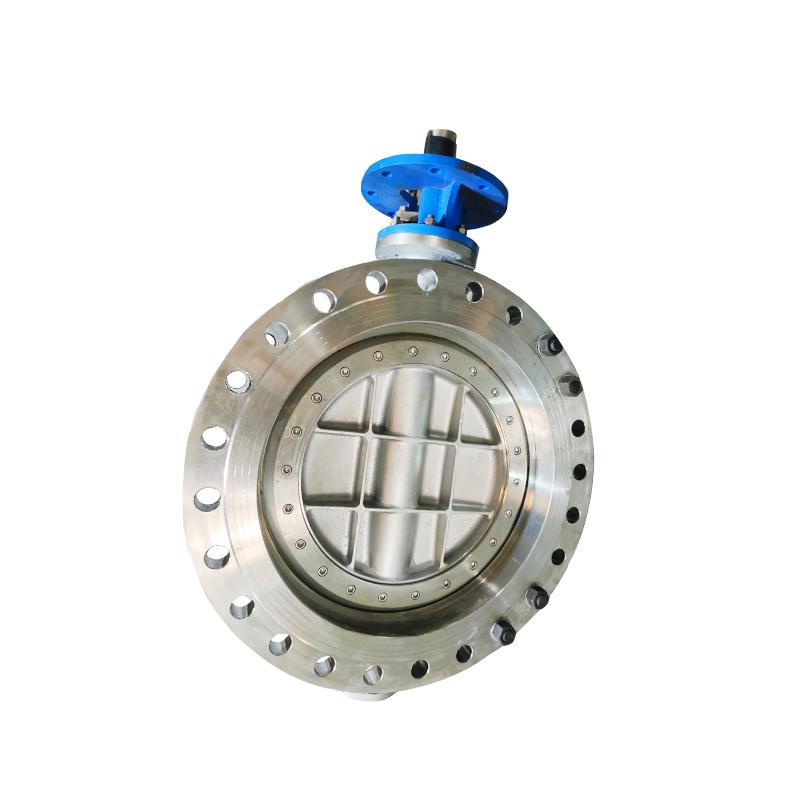
Precision customization transforms chaotic workflows into graceful, predictable streams. By meticulously tailoring each step to specific operational needs, bottlenecks dissolve and handoffs become seamless. This approach eliminates the friction of one-size-fits-all systems, letting teams focus on what truly matters.
Fine-tuning triggers and thresholds ensures that information flows precisely when and where it is needed. Automated routing, conditional alerts, and adaptive queues adjust dynamically, preventing overload while maintaining momentum. The result is a quiet efficiency that feels almost invisible yet dramatically lifts throughput.
Over time, refined flow patterns emerge from continuous adjustment, revealing opportunities for further simplification. Managers gain a panoramic view of movement without micromanaging, because the system itself enforces the right priorities. This blend of flexibility and control turns everyday operations into a sustained rhythm of progress.
How ODM Expertise Transforms Industrial Fluid Handling
Original design manufacturing brings a fresh perspective to industrial fluid handling by stepping beyond off-the-shelf limits. Instead of forcing operations to adapt to generic pumps and valves, ODM teams dig into the nitty-gritty of a facility's actual flow patterns, chemical exposures, and pressure cycles. They engineer hardware from the ground up to match those specific demands, which often means fewer compromises on performance and a direct path to resolving chronic inefficiencies.
This hands-on approach also opens the door to material and design innovations that simply aren't on standard catalogs. For example, an ODM partner might introduce a proprietary seal geometry that slashes maintenance intervals by half, or swap in a composite housing that laughs off corrosive media where stainless steel would pit. The result is equipment that not only handles the fluid but actively improves uptime and safety, all while cutting total lifecycle costs.
Over time, the collaboration between a facility and an ODM becomes a continuous feedback loop. As production shifts or new fluids enter the mix, the specialist refines each component without the friction of searching for yet another vendor. That ongoing refinement turns fluid handling from a nagging headache into a controlled, predictable process, with a system that's truly built around the operation's rhythm.
Advanced Materials and Coatings for Demanding Environments
When equipment faces extreme temperatures, corrosive chemicals, or relentless mechanical wear, standard materials quickly reach their limits. Advanced materials and coatings step in to push those boundaries, often combining carefully engineered alloys, ceramics, and composites with surface treatments that alter properties at the microscale. The goal is not simply to withstand harsh conditions but to maintain performance over extended periods without frequent intervention. This has driven the development of solutions like nanocrystalline metal coatings that resist galling in high-vacuum environments and diamond-like carbon films that offer low friction alongside remarkable hardness.
In many industries, the shift toward these specialized materials is less about incremental improvement and more about enabling entirely new capabilities. Consider gas turbine engines: thermal barrier coatings applied to turbine blades allow them to operate at temperatures above the melting point of the underlying superalloy. Meanwhile, in chemical processing plants, polymer linings and thermally sprayed ceramics protect vessels against acids that would dissolve conventional stainless steel in hours. The nuanced part is that the coating is rarely a standalone fix; it must be integrated with the substrate’s coefficient of thermal expansion, bonding method, and expected stress profile—otherwise, delamination or cracking can create bigger problems than the original wear.
The selection process itself has become a multidisciplinary challenge, involving not just materials science, but also operational data and lifecycle cost modeling. A coating that outperforms in the lab might fail prematurely if application parameters drift outside a narrow window. That’s why field testing and real-time monitoring are increasingly part of the equation, especially in sectors like offshore energy, where access for repairs is prohibitively expensive. Instead of waiting for scheduled shutdowns, operators use embedded sensors to track coating integrity and material loss, making informed decisions about when to recoat or replace. This move toward predictive, performance-based maintenance is quietly reshaping what defines a “demanding” environment—turning once-exceptional conditions into manageable variables.
Seamless Integration with Modern Automation Systems
Modern automation systems rarely operate in isolation, so the real test of any new tool is how easily it slots into the existing tech stack. Our approach skips the typical configuration headaches by leaning on open protocols like MQTT and OPC UA, letting devices and software exchange data right out of the box. Whether you're pulling sensor readings from a decades-old PLC or piping events to a cloud dashboard, the connection remains stable without constant hand-holding.
We put a lot of effort into making the interface feel less like a translation layer and more like a natural extension of what your team already uses. Custom mapping tools let you align data fields across different platforms with a few clicks, and the system automatically adapts to schema changes downstream. In practice, that means line operators see real-time adjustments on their HMIs without anyone touching a script.
Security doesn’t take a backseat either, even when tying together multiple vendors. Each connection enforces certificate-based authentication and encrypted tunnels, so data flows stay protected without bogging down throughput. The result is a setup that acts as the quiet backbone of the floor—rarely noticed, but keeping everything from batch records to predictive maintenance alerts in sync.
Proven Reliability in Critical Processes Across Sectors
When a production line halts unexpectedly or a patient monitoring system falters, the consequences ripple far beyond immediate costs. In sectors where continuity is not just a goal but a mandate, reliability becomes the silent backbone. It’s less about promising zero failures and more about designing feedback loops that catch anomalies before they escalate. For instance, embedded diagnostics in high-speed packaging machinery don’t just flag a jam—they predict wear patterns and adjust torque parameters mid-cycle, often without operator awareness. This kind of quiet resilience is what turns a trusted process into an institutional reflex.
Cross-pollination between industries has sharpened these reliability practices. The same logic that keeps a pharmaceutical cold chain within ±0.2°C across continents also governs turbine synchronization in remote power grids. Take sterilisation-grade filtration in bioprocessing: membrane integrity tests once validated only at batch end are now run continuously via pressure decay analysis, borrowing from aerospace fuel system checks. These shared methodologies blur sector boundaries, creating a common language of dependability that engineers adapt rather than reinvent.
True resilience, however, lives in the margins—the undocumented tweaks from night-shift technicians, the post-incident reviews that rewrite standard procedures. Formalised but never fossilised, reliability engineering thrives on a culture where a near-miss is treated as a gift. It’s not the glossy uptime statistics that matter most, but the accumulation of small, tested certainties that let critical systems breathe long after the commissioning scripts have run their course.
FAQ
It's their relentless focus on tailoring each valve to the specific demands of a project rather than offering off-the-shelf products. They combine deep engineering expertise with flexible manufacturing, so clients get solutions that perfectly match their system's pressure, temperature, and media requirements without overpaying for unnecessary features.
The process starts with a detailed consultation to understand the fluid dynamics, installation environment, and operational goals. Their engineers then develop a unique valve configuration, often using modular components and proprietary sealing technologies, and they validate performance through rigorous simulation and testing before moving to production.
While they serve a broad range, we see the most impact in water treatment, chemical processing, and HVAC systems. For instance, their high-cycle valves excel in automated production lines, and their corrosion-resistant designs are indispensable in desalination plants and aggressive chemical handling.
The standout aspects are the zero-leakage seat design, a streamlined disc that minimizes pressure drop, and the ability to choose from a wide array of actuation options—manual, electric, pneumatic, or hydraulic. They also offer smart positioners for real-time monitoring, which is a game changer for predictive maintenance.
The choice depends on the application. For general water systems, ductile iron with epoxy coating is typical. In harsher environments, we use stainless steel, duplex alloys, or even titanium for the body and disc, paired with seats made from PTFE, Viton, or EPDM to handle extreme temperatures and chemical attacks.
They embed inspection from raw material receipt through final assembly. Every valve undergoes hydrostatic and pneumatic leak testing, and a sampling is subjected to cycle-life verification. Their facility also follows ISO 9001 protocols and often exceeds API 609 and AWWA standards for added reliability.
Beyond the standard warranty, they provide on-site commissioning assistance, maintenance training for plant personnel, and condition monitoring accessories that integrate with existing control systems. If a valve ever acts up, their engineers can typically diagnose the issue remotely and dispatch parts or a technician fast.
By reducing energy losses through optimized flow paths and tight shutoff, these valves lower pumping costs. The low-maintenance seat design extends service intervals, and having a single source for custom-engineered valves cuts procurement lead time and eliminates the need for field modifications.
Conclusion
ODM Butterfly Valve Company has carved out a niche by moving far beyond standard valve offerings, focusing instead on highly customized designs that address the specific, often unconventional challenges faced by modern industries. Their tailored butterfly valve solutions are not just modified off-the-shelf products; they are engineered from the ground up to handle unique pressure, temperature, and media requirements that typical valves cannot withstand. This commitment to precision customization streamlines flow management by ensuring that every component—from disc geometry to seat design—is optimized for the exact operating conditions, eliminating inefficiencies and potential failures. By applying deep expertise in industrial fluid handling, ODM transforms complex process requirements into tangible, reliable hardware that seamlessly integrates into existing systems, enhancing overall performance without the need for extensive reengineering.
What truly sets ODM apart is their use of advanced materials and coatings that thrive in demanding environments—be it corrosive chemicals, abrasive slurries, or extreme temperatures—coupled with a forward-thinking approach to automation. Their valves integrate effortlessly with modern automation systems, supporting smart factories with real-time monitoring and control capabilities. This fusion of robust physical design and digital readiness ensures proven reliability in critical processes across diverse sectors, from pharmaceutical manufacturing to power generation. Customers consistently report reduced downtime and maintenance costs because each valve is purpose-built to perform flawlessly under the toughest conditions, backed by a collaborative design process that prioritizes long-term operational success over short-term gains.
Contact Us
Contact Person: Lucas Lin
Email: [email protected]
Tel/WhatsApp: 8613968913000
Website: https://www.zhengmaogroup.com