

Levelling Agents Within the Industry: Why They're Essential for Superior Finishes
2026-07-28
Achieving a flawless, smooth finish in coatings and paints is no accident—it’s a science driven by the right additives. Levelling agents have become indispensable across the industry, transforming surface defects into sleek, professional results that catch the eye. Yet, not all levelling agents are created equal. At HAISEN, we understand the subtle chemistry that turns an ordinary layer into a mirror-like surface. In this post, we’ll pull back the curtain on why these agents matter, how they work, and what makes them truly essential for superior finishes. Whether you’re battling orange peel, craters, or brush marks, the role of a quality levelling agent might just be the missing piece in your formulation puzzle.
What Levelling Agents Actually Do Beneath the Surface
It's tempting to think levelling agents simply glide over a wet coating, smoothing out bumps like an invisible spatula. But their real work happens on a molecular scale, long before any brush stroke disappears. As a liquid film settles, tiny imbalances in surface tension create a microscopic tug-of-war—pulling resin and solvent in competing directions. Levelling agents intervene by rebalancing this internal stress. They migrate to the surface, lowering the overall tension, yes, but more importantly, they even out tension gradients across the film. This suppresses the Marangoni-driven flows that would otherwise carve ridges, craters, and orange peel into the finish.
What many overlook is how these additives shape the film's memory of its own drying process. As solvents evaporate, the coating becomes a battleground of density and concentration shifts. A well-chosen levelling agent doesn't just stay on top—it subtly alters the rheology deeper down, slowing skin formation so the bulk liquid has time to flow and heal defects. Without this subsurface intervention, the top layer would lock in textures too early, trapping unevenness permanently. The result is a coating that stays open long enough to self-correct, not because it's thinner, but because the levelling agent has quietly choreographed the entire drying profile from beneath the surface.
The quietest trick? Levelling agents can disarm the hidden triggers of surface defects. Dust specks, slight substrate contamination, or even minor formula incompatibilities can nucleate a crater by creating a local tension spike. A reactive levelling agent works by surrounding these troublemakers, neutralizing their ability to pull liquid away. Through controlled incompatibility—often by having a slightly lower surface tension than the bulk—the agent deliberately floats toward problem spots, forming a shield that prevents the coating from tearing itself apart. It's not just about smoothing what's there; it's about stopping disruptions before they even get started.
The Hidden Impact on Coating Durability and Appearance
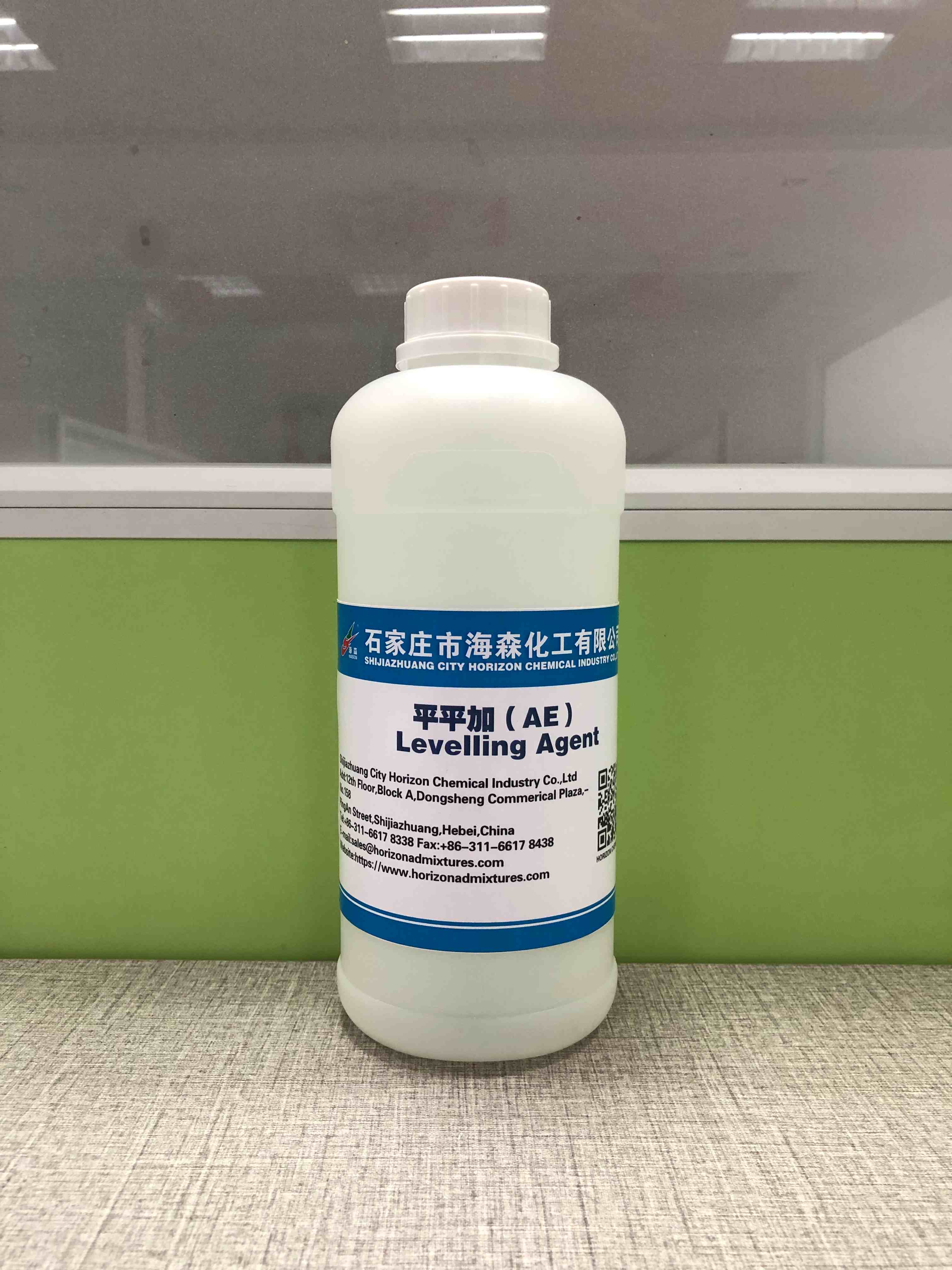
Many assume that a coating's longevity hinges solely on its chemical composition. But what happens beneath the surface often escapes notice. Microscopic stresses from uneven film formation, subtle moisture entrapment, and overlooked substrate interactions silently chip away at both resilience and visual appeal. These hidden factors can transform a seemingly robust coating into a dull, peeling facade sooner than expected.
Environmental fluctuations play a more sinister role than commonly recognized. Temperature swings cause expansion and contraction mismatches between layers, creating hairline fractures that deepen over time. UV radiation, instead of simply fading colors, can break down internal bonds in ways that cloud the finish from within. Each cycle weakens the invisible architecture that holds the coating together.
Application technique also leaves lasting fingerprints. Over-thinning, inconsistent spray patterns, or rushed curing may not show immediate defects. Yet these practices embed latent instability, leading to erratic gloss loss, cratering, or peeling months or years later. The true cost emerges not during application, but in the gradual betrayal of a surface that could have endured much longer with mindful execution.
Choosing the Right Chemistry for Your Specific Resin System
When selecting a chemistry for your resin system, it’s not just about picking a hardener that “works.” It’s about understanding the subtle interplay between the resin backbone, the curing agent, and the final application environment. A system that excels in a high-temperature aerospace composite may crumble in a wet, chemical-rich industrial setting. Start by mapping out the entire lifecycle of the part: the processing conditions, the mechanical and thermal demands, the exposure to moisture or solvents, and even the post-cure requirements. That’s the only way to avoid a mismatch that leads to brittleness, delamination, or premature failure.
One common pitfall is over-focusing on a single property, like Tg or tensile strength, while ignoring how the curing reaction itself influences the final network. Different hardeners—aliphatic amines, cycloaliphatics, anhydrides—bring their own cure kinetics and viscosity profiles, which in turn affect wet-out and void formation. For example, a slow-curing, low-viscosity system might be perfect for thick laminates where you need time to work the air out, but a disaster for a rapid pultrusion process. The key is to match the chemical reactivity not just to the resin, but to the entire manufacturing workflow, including pot life, mixing ratios, and curing ovens.
Don’t underestimate the long-term chemical compatibility either. Even a fully cured part can soften, swell, or crack when immersed in acids, oils, or hydraulic fluids if the crosslink density and monomer selection aren’t aligned with that environment. It’s often the small details—like the presence of unreacted amine groups or a poorly balanced stoichiometry—that create sites for chemical attack. Engaging with formulators who can custom-tweak the backbone or accelerate certain reactions often yields a system that not only meets but exceeds the specification sheet. In the end, the right choice isn’t about what works in theory; it’s what holds up in the real world, cycle after cycle.
Why Application Method Dictates Levelling Performance
The way a coating is applied plays a decisive role in how smoothly it flows out and levels. Even the most expertly formulated product can fail to deliver a flawless finish if the application technique is inconsistent. For instance, spraying creates a fine mist of droplets that must coalesce evenly on the surface. If the spray pattern is too coarse or the distance is off, the film thickness varies, leaving ridges and valleys that the coating struggles to even out before drying. Similarly, with a roller, too much pressure or the wrong nap length can introduce stipple marks and air bubbles that become permanent defects.
Brush application adds another layer of complexity, as it relies heavily on the user's skill. Incorrect brush loading, overworking the material, or using a brush with overly stiff bristles can leave pronounced brush marks. These irregularities disrupt the surface tension equilibrium needed for optimal levelling. In all cases, the application method determines the initial texture, wet film thickness, and the presence of entrapped air or contaminants—all factors that either aid or hinder the coating's ability to self-smooth before setting.
Moreover, the speed at which the coating is applied affects solvent evaporation rates and open time. A fast, heavy application may trap solvent, delaying cure and causing sagging, while a thin, hurried pass might skin over too quickly, locking in imperfections. Ultimately, selecting the right application method and executing it with precision are just as critical as the coating's own levelling additives. The two must work in harmony to achieve that sought-after glass-like finish.
Avoiding Common Pitfalls That Compromise the Finish
Rushing through the final stages is a surefire way to undermine all your hard work. One of the most frequent missteps is ignoring the recommended drying time between coats. Impatience here can cause bubbling, peeling, or a cloudy film that sticks around long after you’ve packed up your tools. It doesn’t matter whether you’re staining a deck, painting trim, or waxing furniture—each product has its own rhythm. Respecting that downtime gives each layer the chance to bond properly, which directly affects how smooth and durable the result will be.
Another trap lies in surface preparation, or lack thereof. Skipping a proper cleaning or skipping the sanding step means you’re applying finish over dust, old residue, or glossy patches that refuse to grip. Even microscopic particles can create an uneven texture that screams “DIY gone sideways.” A quick wipe with a tack cloth and a few extra minutes with fine-grit sandpaper can mean the difference between a professional sheen and a splotchy mess. Don’t underestimate the power of a clean, slightly roughened surface—it’s what allows the new material to anchor itself and level out flawlessly.
Application technique also separates a lasting finish from one that starts to fail within weeks. Overloading your brush or roller might seem efficient, but it often leads to drips, sags, or uneven build-up that’s tough to correct after the fact. Instead, opt for multiple thin coats, each applied with deliberate, even strokes. Pay attention to environmental conditions too; high humidity or direct sunlight can cause the finish to dry too fast on the surface while staying wet underneath, creating a weak, gummy layer. A little extra care in how and when you apply the material can keep the final look crisp, consistent, and free of those telltale amateur mistakes.
Real-World Examples Where Levelling Agents Made the Difference
A luxury automotive manufacturer was struggling with orange peel defects on their signature pearl white finish. Despite meticulous spray booth controls, the clearcoat simply wouldn't flow out evenly, leaving a slightly dimpled surface that diminished the depth of the pearl pigment. Introducing a tailored acrylic levelling agent into the formula allowed the coating to relax during the flash-off period, giving the clearcoat enough time to self-smooth before curing. The result was a mirror-like gloss that amplified the pearl's lustrous flip, turning a good paint job into a showroom stunner.
On a completely different scale, a factory producing powder-coated metal shelving faced excessive reject rates due to subtle craters and pinholes in the dark grey finish. The textured powder was designed to hide minor substrate imperfections, but trapped air and contaminants kept disrupting the surface during oven dwell. Blending in a small percentage of a masterbatch levelling agent designed for powder systems drastically reduced surface tension gradients, allowing the melt to knit together uniformly. The crater count dropped to near zero, saving thousands of square feet of material from being reworked.
Then there's the case of restorer who took on a vintage mahogany desk with alligator-cracked varnish. After stripping and sanding, the open-grain wood needed a self-levelling base coat to fill pores without endless sanding cycles. A high-solids polyurethane blended with a reactive levelling additive was applied with a high-density foam roller. Within seconds, the ribs and bubbles disappeared, leaving a glass-smooth foundation that made the final topcoat gleam like liquid amber. The restoration took half the projected time, all thanks to a levelling agent that did its silent job perfectly.
FAQ
Levelling agents are additives that reduce surface tension, allowing coatings to flow out smoothly and evenly over a substrate, filling in brush marks, orange peel, and other imperfections before the film hardens.
Superior finishes are vital because they directly affect durability, corrosion resistance, and aesthetic appeal; in high-visibility applications, even minor defects can lead to product rejection or performance failures.
While defoamers control foam and dispersants stabilize pigments, levelling agents specifically target flow and surface tension to create a uniform film, making them unique in solving surface defect problems.
Without a levelling agent, the coating may exhibit surface defects such as craters, fish eyes, or uneven gloss, leading to poor appearance and compromised protective properties, which can increase rework costs.
Yes, common types include silicones, acrylics, and fluorocarbons, each offering different balances of flow, slip, and recoatability. Selection depends on the coating system, application method, and desired final appearance.
Some silicone-based levelling agents can reduce surface energy too much, causing adhesion issues. Proper selection or using reactive acrylics can maintain intercoat adhesion while still achieving a smooth finish.
High temperatures can speed up solvent evaporation, giving less time for levelling, while high humidity can cause blooming. The right levelling agent helps compensate by improving flow under varying conditions.
New developments focus on waterborne and high-solids systems, with agents that offer enhanced surface tension reduction without VOC emissions, as well as smart additives that self-stratify to provide both levelling and mar resistance.
Conclusion
Levelling agents operate at the microscopic frontier where liquid coatings meet solid surfaces, orchestrating a delicate dance of surface tension and flow. These additives migrate to the film's uppermost layer, reducing interfacial tension gradients that would otherwise spawn craters, orange peel, and brush marks. By tempering the coating's rheology, they grant the system enough mobility to self-smooth before crosslinking locks imperfections in place. This subsurface ballet isn't merely cosmetic—it directly influences adhesion uniformity and micro-roughness, parameters that silently dictate a coating's long-term resistance to moisture, abrasion, and chemical attack. In architectural lacquers, for instance, a well-chosen levelling agent can be the difference between a glass-like facade that sheds dirt for a decade and a flawed surface that degrades within seasons.
The chemistry must marry intimately with the resin backbone: polyacrylates extend open time in solventborne alkyds, while silicone-modified species excel in high-solids epoxies where edge crawling would otherwise ruin protective profiles. Application method upends this equilibrium—airless spray demands rapid bubble release and flash-off tolerance, whereas roller coating needs prolonged reflow to erase stipple. Formulators often stumble by overdosing, chasing an ideal flow that instead introduces intercoat adhesion nightmares, or by ignoring substrate porosity, which starves the wet film of the agent before it can act. Real victories emerge in powder coatings for aluminium extrusions, where tailored acrylic levellers eliminate gas pinholes without compromising the brilliant gloss automotive architects demand. Ultimately, a levelling agent isn't a shortcut to perfection; it's a recalibrated equilibrium between mobility and cure, purpose-built to transform a functional film into an enduring visual and protective statement.
Contact Us
Contact Person: Sam Lee
Email: [email protected]
Tel/WhatsApp: 86-311-6617 8338
Website: https://www.horizonadmixtures.com/