

LED Light Therapy Manufacturer Insights for Choosing the Right Partner
2026-08-30
Choosing an LED light therapy manufacturer isn’t just about comparing specs and price—it’s about finding a partner who won’t disappear when you hit a production snag or a certification audit. Too many brands learn this the hard way after signing with a supplier that overpromises and underdelivers. That’s why we’ve gathered these insights from working with Omeina, a name that has consistently stood out in the field for its transparent processes and dependable support. Here’s what to look for before you commit.
What Separates a True LED Therapy Specialist from a General Assembler
A true LED therapy specialist thinks in terms of delivered photon dose, not just diode count. They can explain why 633 nm and 830 nm interact with tissue differently, how beam angle, lens curvature, and distance from the skin affect penetration depth, and why irradiance claims on a spec sheet often mean nothing without measurement distance and active treatment area. A general assembler follows a parts list; a specialist questions the optical path, the thermal envelope, and the actual energy reaching the target chromophores.
Beyond assembly, a specialist validates output over time, not just at initial power-on. They monitor thermal drift across a 20 minute session, hand-pick LED bins to avoid wavelength drift, and measure with a spectrometer or integrating sphere instead of trusting datasheets. Choices like heat sink material, fan placement, and driver ripple become treatment outcomes, not just production details. A specialist knows that uneven cooling or cheap current drivers can slowly degrade diodes, silently shifting the spectral output and turning a designed treatment into a placebo.
Finally, a specialist owns the clinical variables that a general assembler never sees. They calibrate each unit for consistent irradiance, verify electrical safety and low EMF, and provide dosing guidance tied to skin type, treatment area, and session frequency. They keep batch records that make every unit traceable. The assembler ships a box; the specialist ships a repeatable therapeutic instrument with predictable photon output and a defensible rationale for why it works.
The Quiet Engineering Choices That Shape Treatment Precision
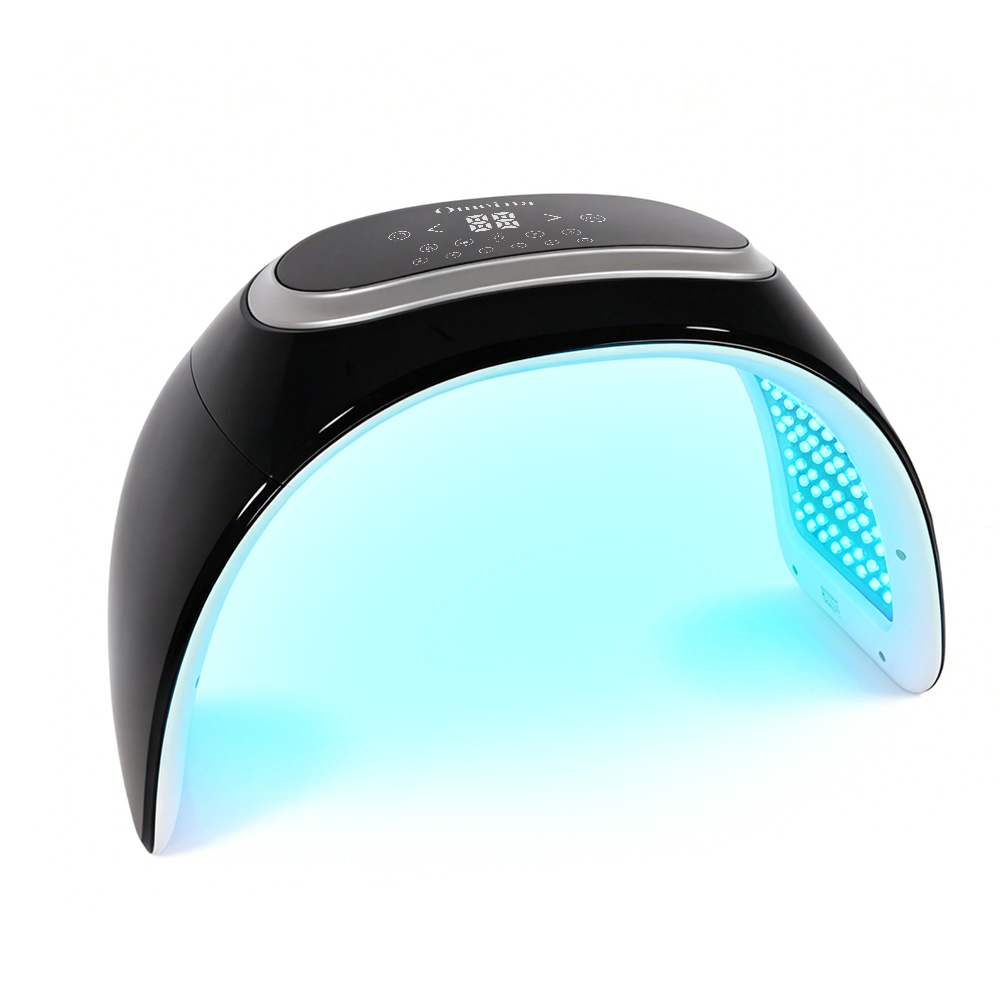
Sometimes the difference between a good treatment system and a great one isn't a headline feature. It's the way a bearing is damped, or how a thermal sensor is tucked into a joint where no one will ever see it. Engineers who obsess over these details know that a beam aimed at a moving target lives and dies by fractions of a millimeter. A slightly oversized counterweight might add cost and weight, but it also quiets the micro-oscillations that would otherwise blur the beam's center over a long session. A particular alloy might be chosen not for its strength, but for how predictably it expands when the gantry warms up after the first three patients.
Then there are the choices around feedback loops. Placing a temperature probe in an easy-to-reach spot is simple; embedding it near a critical pivot point is harder, but it feeds the control system data that actually matters. Some teams accept a tiny delay in signal smoothing because rejecting that delay would make the correction loop twitchy. What looks like a software tweak on a spec sheet is often a hard-won compromise between responsiveness and stability. It shows up later as a treatment plan that doesn't drift between morning and afternoon appointments.
Calibration rituals reveal the same mentality. A nightly beam steering routine might account for the building's own vibration profile, not just the machine's internal alignment. A gear ratio may be selected to trade speed for finer angular resolution, making the difference between routinely hitting a 2 mm margin and needing a 5 mm one. None of these choices win awards or get mentioned in sales training. They simply accumulate into a system that holds its precision long after the demo is over, giving clinicians the confidence to treat smaller volumes with less collateral dose.
Reading Past the Data Sheets for Real-World Device Performance
Lab benchmarks rarely reflect the moment you unplug a phone after an overnight charge and step outside. Thermal throttling, fluctuating network signals, and a battery already a few months old can peel away a double-digit percentage of the performance shown on paper. The spec sheet stays silent about the stutter when switching between a video call and a map while walking in direct sunlight.
Real-world responsiveness depends on how the software stack and firmware handle resource contention. Two devices with identical chipsets can feel entirely different once carrier preloads, background sync, and adaptive brightness kick in. A phone that posts impressive sustained-graphics scores might still drop frames during a 20-minute navigation session simply because memory bandwidth gets squeezed by live widgets and camera buffering.
Watching a device over weeks reveals more than any controlled benchmark. Heat buildup after prolonged camera use, GPS drift in narrow streets, and battery endurance under mixed loads all tell a story the data sheets cannot. Pay attention to those small degradations—a laggy keyboard after a security patch, slower charging on a warm afternoon—because they map more closely to how you will actually live with the hardware.
When Customization Requests Reveal a Manufacturer's Limits
Customization often seems like a straightforward promise—tell us what you need, and we'll build it. But the moment a client asks for something that sits just outside the usual specs, the cracks in a manufacturer's actual capability start to show. A simple change in material tolerance, a non-standard connector layout, or a firmware tweak that sounds minor on a call can quickly expose whether the production line is genuinely flexible or just optimized for a narrow set of configurations. What gets revealed isn't just a technical gap; it's the boundary between what a factory has done before and what it can truly learn to do without grinding to a halt.
The friction usually appears in the details that don't make it into the glossy brochure. For instance, a buyer might request a slightly different threading on a metal housing—small enough that it shouldn't matter. But if the manufacturer relies on off-the-shelf tooling and a fixed supplier network, that one change ripples backward into procurement, quality checks, and assembly jigs. Suddenly the promised six-week lead time stretches, or the quote jumps because the factory has to source a new die from a third party. That's when the limit shows up: not as a refusal, but as a series of quiet compromises on cost, timeline, or even durability that the client never explicitly approved.
Watching how a manufacturer handles an unusual request tells you more than any audit. Do they push back with questions that show deep understanding of the trade-offs, or do they simply say "yes" and hope for the best? A capable partner will map out the ripple effects—whether it's retooling a fixture, rewriting a test protocol, or renegotiating a raw material grade—and present a clear picture of what's actually involved. A limited one will either overpromise and later deliver something that barely works, or hide behind a wall of minimum order quantities and engineering fees. In the end, the customization request isn't just a feature negotiation; it's an unintentional stress test of the manufacturer's real engineering depth and willingness to own the consequences.
The Support Ecosystem Behind Every Reliable Therapy Device
A therapy device rarely works in isolation. Behind every unit that delivers consistent, safe treatment is a network of engineers, clinical specialists, and logistics teams who rarely appear in the product brochure. They monitor firmware updates, answer late-night service calls, and make sure replacement parts arrive before a clinic even notices a drop in performance. This invisible layer is what separates a gadget from a dependable medical tool.
Consider the routine maintenance cycle. A respiratory therapy machine, for instance, depends on calibrated sensors that drift over time. Without a proactive support team flagging calibration windows and shipping loaner units, a hospital could face unexpected downtime. The ecosystem also includes training: clinicians need to understand new software features without wading through dense manuals, so support staff create short video walkthroughs and live troubleshooting sessions.
Regulatory compliance adds another dimension. Every firmware patch, every material change must be documented and validated. A reliable therapy device therefore needs a support infrastructure that tracks these changes across hundreds of deployed units, ensuring that a fix in one clinic doesn't create a new risk in another. That coordination, often unnoticed, is what keeps therapy devices trustworthy over years of daily use.
Uncovering the Production Practices That Impact Long-Term Consistency
Long-term consistency rarely hinges on a single dramatic decision. More often it erodes through a series of small, seemingly harmless shortcuts: a mixing time shortened by thirty seconds to speed up a shift, a temperature probe left uncalibrated because the last batch looked fine, or a visual inspection substituting for a documented measurement. Each deviation seems trivial on its own, yet together they create drift that only becomes obvious weeks later when customer complaints or scrap rates climb.
Raw material variation is another quiet saboteur. Even when suppliers ship material that meets the same specification on paper, subtle shifts in moisture content, particle size, or trace chemistry can alter how the material flows, cures, or bonds downstream. Without routine sampling and comparison against a stable reference lot, these incoming changes remain invisible until they have already reshaped the final product. The most robust operations treat incoming inspection not as a gatekeeping chore but as an early warning system tied directly to process adjustments.
Equipment wear follows a similar pattern. A dull cutting edge, a slightly clogged nozzle, or a sensor whose baseline has shifted may not produce an immediate defect, but it shrinks the window of acceptable operation. Operators compensate by pushing settings toward the edge of the original specification, and over time the process runs on tolerance rather than intent. Preventive maintenance and scheduled recalibration restore that window before it closes, making repeatability a matter of design rather than luck.
FAQ
Look for in-house optical design and thermal management capabilities. A real manufacturer can discuss peak wavelength tolerance, irradiance uniformity across the treatment area, and how they handle LED binning. If they can't walk you through their PCB layout or explain how they control junction temperature, they're probably outsourcing the core work.
More than most buyers think. A 10nm drift can shift a device from therapeutic to cosmetic. Ask for spectral test reports from an integrating sphere, not just a datasheet. The best partners will share batch-level measurements showing actual peak wavelength and FWHM rather than a single marketing number.
Heat is a design flaw, not a feature. Excess surface temperature usually means poor thermal management, which shortens LED lifespan and shifts wavelength over time. Solid manufacturers use active cooling, aluminum substrates, and current regulation to keep junction temperatures low. If a sample gets uncomfortably warm during normal use, walk away.
Request their incoming LED binning process, in-circuit testing, and aging procedures. Ask how many hours they burn in finished units before shipment and what failure rate they consider acceptable. A partner who hesitates to share these details or only talks about ISO certificates without showing data is giving you marketing, not manufacturing insight.
Give them a hard constraint—like a specific irradiance at 6 inches with a tight housing size—and see how they respond. Strong partners will discuss optics, driver efficiency, and thermal simulations. Weak ones will offer to change the LED count and hope for the best. The ability to explain trade-offs is the real test.
Binning groups LEDs by actual wavelength and flux output. Without strict binning, two units from the same batch can look identical but deliver different clinical results. Ask if they buy pre-binned LEDs or sort in-house, and what tolerance they guarantee. Consistency across production units is what protects your brand and your customers' outcomes.
It should be non-negotiable. Before sharing specs, ask for mutual NDAs and check whether they've ever been involved in copying a client's design. Also clarify who owns the mold, PCB files, and firmware. The best manufacturers will proactively define ownership and won't pressure you to use shared tooling with competitors.
Conclusion
Choosing a manufacturing partner for LED light therapy devices goes far beyond comparing lumen output or wavelength claims. A true specialist reveals itself in the unglamorous details: how they manage thermal drift across a treatment session, whether their optics maintain uniform irradiance at the edges of the panel, and how they handle component sourcing when a supplier changes a diode bin. General assemblers often copy a spec sheet, but they lack the iterative engineering history that prevents subtle inconsistencies—like hot spots that cause uneven dosing or driver noise that shortens LED lifespan. When you ask for a customized pulse sequence or a specific housing material, the depth of their response quickly exposes whether they understand photobiology or just assemble parts.
Look beyond marketing data sheets and ask for third-party test reports that show real-world performance over months, not minutes. A reliable manufacturer will have a support ecosystem that includes firmware update paths, spare part forecasting, and clear failure analysis when a device returns from the field. Production practices matter just as much: traceable soldering, batch testing for wavelength tolerance, and humidity-controlled storage all contribute to unit-to-unit consistency. The best partners treat your device as a medical or therapeutic instrument, not a commodity, and their willingness to explain their engineering trade-offs—rather than hide behind glossy brochures—is the clearest signal you have found the right fit.
Contact Us
Contact Person: Tina Liu
Email: [email protected]
Tel/WhatsApp: 8618681405932
Website: https://www.omeinabeauty.com/