Leading Swing Goggle Valve Manufacturer for Industrial Flow Control Solutions
2026-07-10
In industrial flow control, the swing goggle valve is a workhorse—but its performance hinges on the manufacturer behind it. THT has quietly set the benchmark, blending precision engineering with rugged reliability for the toughest jobs. If you think all goggle valves are alike, think again. Here’s what makes THT the name engineers trust when failure isn’t an option.
Precision-Engineered Swing Goggle Valves for Demanding Industries
In environments where safety and reliability can't be compromised, our swing goggle valves are built with a level of precision that translates directly to longer service life and reduced maintenance. Every component, from the dual-plate design to the seating surfaces, is machined to exacting tolerances. This ensures a tight, bubble-tight seal even under fluctuating pressures and temperatures, making them a trusted choice across chemical processing, power generation, and offshore applications.
What truly sets these valves apart is their adaptability to real-world operational demands. The goggle plate swings smoothly between open and closed positions, providing clear visual confirmation of flow status—a simple yet critical feature during inspections or emergency shutoffs. Materials are carefully selected to resist corrosion, erosion, and galling, so you don't have to worry about premature wear in aggressive media. From high-purity gases to abrasive slurries, the valve performs consistently without seizing or leaking.
Installation and field servicing are straightforward, which means less downtime when it matters most. We've designed the valve body with integrally cast lugs and a compact footprint to fit into tight piping layouts without sacrificing strength. Whether you're dealing with extreme thermal cycling or high vibration, the rugged construction handles it. It's the kind of workhorse that engineers specify when failure isn't an option—and it delivers day after day with minimal fuss.
Custom Flow Control Solutions Tailored to Your System
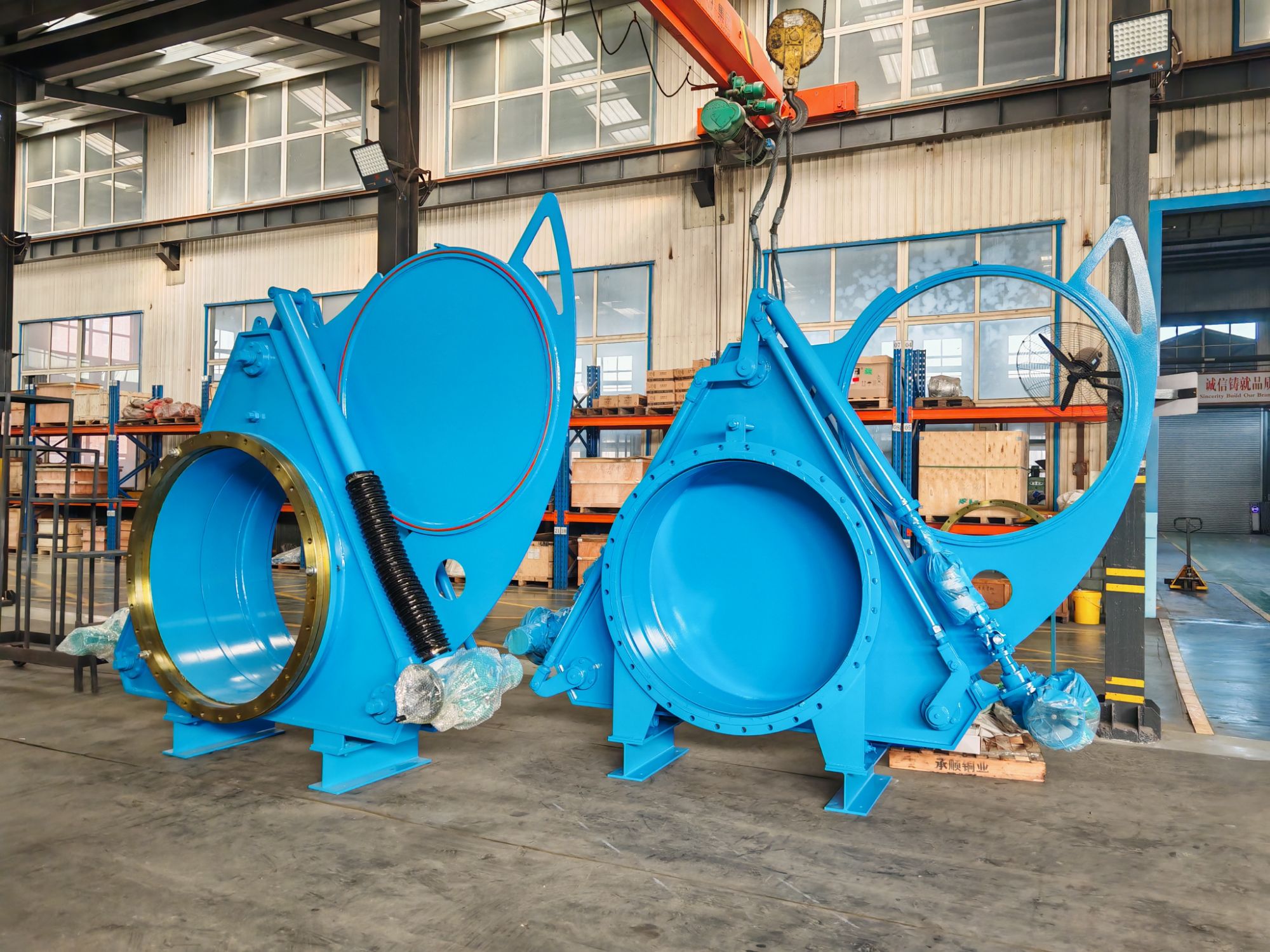
Every fluid system has its own personality—pressure spikes, temperature swings, flow irregularities. Our approach starts by mapping these unique behaviors, not forcing assumptions from a catalog. We spend time understanding your operation's rhythm, then design flow control mechanisms that mesh with it naturally, ensuring smooth, uninterrupted throughput without over-engineering.
Instead of generic valve sets or one-size-fits-all controllers, we craft solutions around your piping geometry, media characteristics, and process constraints. This means you get components that integrate seamlessly, reduce maintenance touchpoints, and adapt on the fly when conditions shift. The result is a system that feels like it was built from the ground up for your workflow, because it practically was.
From rapid prototyping to field commissioning, our team works alongside yours to tune every response curve and feedback loop. The payoff shows up in quieter operations, fewer alarms, and longer intervals between service calls. No two deliveries are identical, because no two systems should be.
Behind the Scenes: How Our Manufacturing Process Ensures Durability
Every unit starts its journey in our precision-driven facility, where raw materials are rigorously tested before they even touch the production line. We don't just trust a supplier's spec sheet – we push components through thermal cycling, stress loading, and corrosion trials that far exceed real-world demands. This upfront scrutiny means only the most resilient inputs make the cut, eliminating weak points before they have a chance to compromise your product's lifespan.
On the floor, our assembly protocols blend automated accuracy with human expertise at critical checkpoints. Laser-guided alignment systems ensure micron-level consistency, while seasoned technicians inspect key interfaces for subtle gaps or uneven wear patterns that machines might overlook. It's a deliberate fusion that catches deviations early, because true durability isn't just about tough materials – it's about flawless integration where each part supports the next without strain.
Beyond the build, we accelerate time in our endurance chambers. Products face rapid temperature swings, humidity saturation, and continuous operation cycles that simulate years of use in a matter of weeks. If a design survives this gauntlet without drift or degradation, it earns approval. This philosophy of over-testing embeds longevity into the final product, so when it reaches your hands, it's already weathered the equivalent of a harsh lifetime.
Real-World Applications: From Chemical Plants to Water Treatment
In a modern chlor-alkali plant, brine electrolysis doesn’t just split salt into chlorine and caustic soda—it anchors a supply chain for PVC, solvents, and water disinfection chemicals. The cell rooms run on precise voltage control; membranes that once fouled within weeks now last years thanks to brine purification tweaks. Engineers learned that coating anodes with ruthenium-iridium oxides cut power consumption by 15%, a hard-won gain that pays for itself within a quarter. Down the line, the same chlorine cylinders that ship out to polymer plants also end up at municipal drinking water stations, where automatic dosing systems inject just enough to knock out pathogens without forming excess trihalomethanes.
Water treatment has quietly borrowed the mass-transfer tricks of chemical engineering. Aeration basins in wastewater plants use fine-bubble diffusers modeled on spargers from fermentation reactors—oxygen transfer efficiency jumped from 10% to over 30% once they matched pore size to dirty-water surface tension. Meanwhile, reverse osmosis desalination keeps chasing the dream of perfect brine management. At a plant in Ashkelon, staged pressure exchangers recover energy from the reject stream, cutting kWh per cubic meter to a third of what thermal processes need. The real headache isn’t the salt; it’s the silica scaling that blinds membranes, so operators pulse low-frequency ultrasound into the feed to keep crystals from nucleating on the polyamide surface.
Why Maintenance Teams Trust Our Valve Design
Valve maintenance often gets pushed down the list until something goes wrong. We’ve seen how unpredictable downtime eats into budgets and morale, so our design starts with the people who have to wrench on these things at 2 a.m. The seats and seals come out without fighting seized bolts, and the non-rising stem means you don’t need extra headroom or a full crew just to inspect the internals. That kind of thoughtfulness keeps teams from dreading the next PM cycle.
It also helps that parts are intentionally common across sizes — fewer shelf spares to manage, fewer mix-ups. When a tech can grab the same packing set for a 2-inch or 6-inch body and be done in half the time, trust builds naturally. Over time, we’ve learned that reliability isn’t just about the valve never leaking; it’s about making the human side of upkeep feel almost effortless.
Expanding Operational Efficiency with Smart Valve Integration
Modern industrial environments thrive on precision and adaptability. By weaving smart valve technologies into existing frameworks, facilities uncover new layers of control that were previously out of reach. These intelligent components do more than open and close—they continuously monitor flow, pressure, and temperature, feeding real-time data back to central systems. This constant stream of information empowers operators to make informed adjustments instantly, trimming the fat from energy consumption and reducing wear on critical infrastructure. The result is a leaner operation where every movement serves a purpose, and downtime becomes a rarity rather than a recurring headache.
One of the subtler advantages of intelligent valve integration is the way it reshapes maintenance strategies. Instead of rigid, calendar-based checkups that often service perfectly healthy equipment, plants can pivot to a predictive model. Embedded diagnostics flag anomalies the moment they arise, from microscopic leaks to erratic actuation patterns. Maintenance crews then intervene exactly when needed—no sooner, no later—which slashes both labor costs and unnecessary part replacements. Over time, this approach extends the lifespan of valves and connected assets, turning a reactive scramble into a calm, calculated rhythm of upkeep.
Beyond the immediate gains in monitoring and maintenance, smart valve systems open the door to autonomous orchestration. With advanced algorithms parsing data behind the scenes, entire process loops can self-adjust in response to shifting demands or external conditions. A cooling circuit might throttle back during mild weather without anyone touching a dial, or a batch reactor could fine-tune ingredient flows to hit quality targets with minimal waste. This level of automated finesse not only streamlines day-to-day production but also frees skilled personnel to focus on innovation rather than firefighting, embedding efficiency deeply into the plant’s DNA.
FAQ
They specialize in swing goggle valves designed for precise flow control in demanding industrial environments.
Its pivoting disc mechanism allows for faster shut-off and a more secure seal, minimizing leakage even under high-pressure conditions.
Typical applications include oil and gas, chemical processing, water treatment, and power generation, where reliable flow isolation is critical.
Options range from cast iron and carbon steel to stainless steel and special alloys, with coatings for enhanced corrosion resistance.
Yes, the manufacturer offers tailored designs, including varying pressure ratings, end connections, and actuation methods to match unique operational needs.
Thanks to a robust, self-lubricating design, routine inspections are straightforward, and the seat can often be replaced without removing the valve from the line.
Each valve undergoes rigorous testing, including hydrostatic and pneumatic checks, and is built to comply with international standards like API and ANSI.
They provide comprehensive after-sales assistance, from on-site troubleshooting to operator training and spare parts supply.
Conclusion
Industrial flow control often hinges on the reliability of a single component: the swing goggle valve. When media is abrasive, hot, or chemically aggressive, standard valves quickly degrade, leading to leaks and costly shutdowns. This reality has driven decades of focused engineering to produce valves that not only last but also integrate smoothly into complex piping systems. Rather than offering a one-size-fits-all product, the approach starts with a detailed assessment of the application—flow rate, pressure class, media compatibility, and installation constraints—then moves to custom material selection and precision machining. Each valve is built to handle specific challenges, whether it's frequent cycling in a chemical plant or long-term exposure to chlorinated water in treatment facilities. The goal isn't just to sell a valve but to deliver a flow control solution that maintains performance over the entire service life.
The manufacturing process itself reflects this commitment, with in-house casting, machining, and assembly subject to strict quality checks that exceed industry standards. Maintenance engineers appreciate design touches that aren't always visible in spec sheets: reversible seats that double service life, simplified disassembly for in-line servicing, and robust stem packing that stays sealed after thousands of cycles. These features emerged from direct collaboration with field teams who deal with valve failures daily. Recently, the integration of smart position sensors and wireless monitors has brought a new level of operational awareness, allowing plants to detect anomalies early and plan maintenance during scheduled outages. From caustic soda lines to cooling water networks, users report not just fewer repairs but also tangible energy savings from tighter shutoff and optimized flow control. That blend of practical robustness and modern adaptability defines what makes these valves stand out in crowded industrial markets.
Contact Us
Contact Person: Su Zhang
Email: [email protected]
Tel/WhatsApp: +86-25219206
Website: https://www.tht-valve.com/