

Leading Cold Storage Panel Production Line Supplier Delivers High-Efficiency Manufacturing Solutions
2026-08-01
In an industry where precision and speed determine the shelf life of perishables, the quest for truly efficient cold storage panel production often leads to the same few names. But one supplier is quietly reshaping expectations—YI ZHOU TECHNOLOGY has honed a manufacturing system that doesn't just promise high output; it delivers cold room panels that fit together with a level of accuracy that can actually lower energy costs over time. Behind this shift is a production line engineered to cut waste at every stage, leaving competitors wondering what they've been missing. What follows reveals how this approach might change the way your next facility takes shape.
Redefining Speed and Precision in Cold Storage Panel Production
Cold storage panel production has long faced a trade-off between speed and precision—faster lines often compromised panel flatness or insulation bonding, while meticulous quality checks slowed output. Our approach disrupts this pattern by embedding adaptive robotics and real-time laser measurement directly into the forming and foaming stages. Panels are now cut and profiled with sub-millimeter accuracy at speeds that would have warped older machinery, eliminating post-production corrections and material waste.
The heart of this shift lies in synchronized multi-axis motion control and predictive temperature management during the polyurethane injection phase. Instead of relying on operator intuition, the system continuously adjusts foam density and curing time based on ambient conditions and metal skin thickness. The result is a fully cured, dimensionally stable panel emerging from the press in under four minutes—ready for immediate stacking or edge detailing without the usual cooling period. This tight integration slashes cycle times while keeping the insulation core consistently void-free and the faces flat within 0.3 mm per meter.
Beyond standalone machine upgrades, the real leap comes from treating the entire line as a closed feedback loop. Sensors from decoiling to packaging stream data into a central optimization model, allowing the line to self-adjust for coil springback, roll wear, or chemical viscosity shifts without human intervention. What used to require a shift change to recalibrate now happens in microseconds, keeping throughput steady at over 15 panels per hour for even the thickest composite builds. This redefinition isn’t just about doing things faster or more accurately—it’s about making high-performance cold storage panels accessible at a production cadence that matches the growing demands of the cold chain industry.
Seamless Integration: From Raw Material to Finished Panels
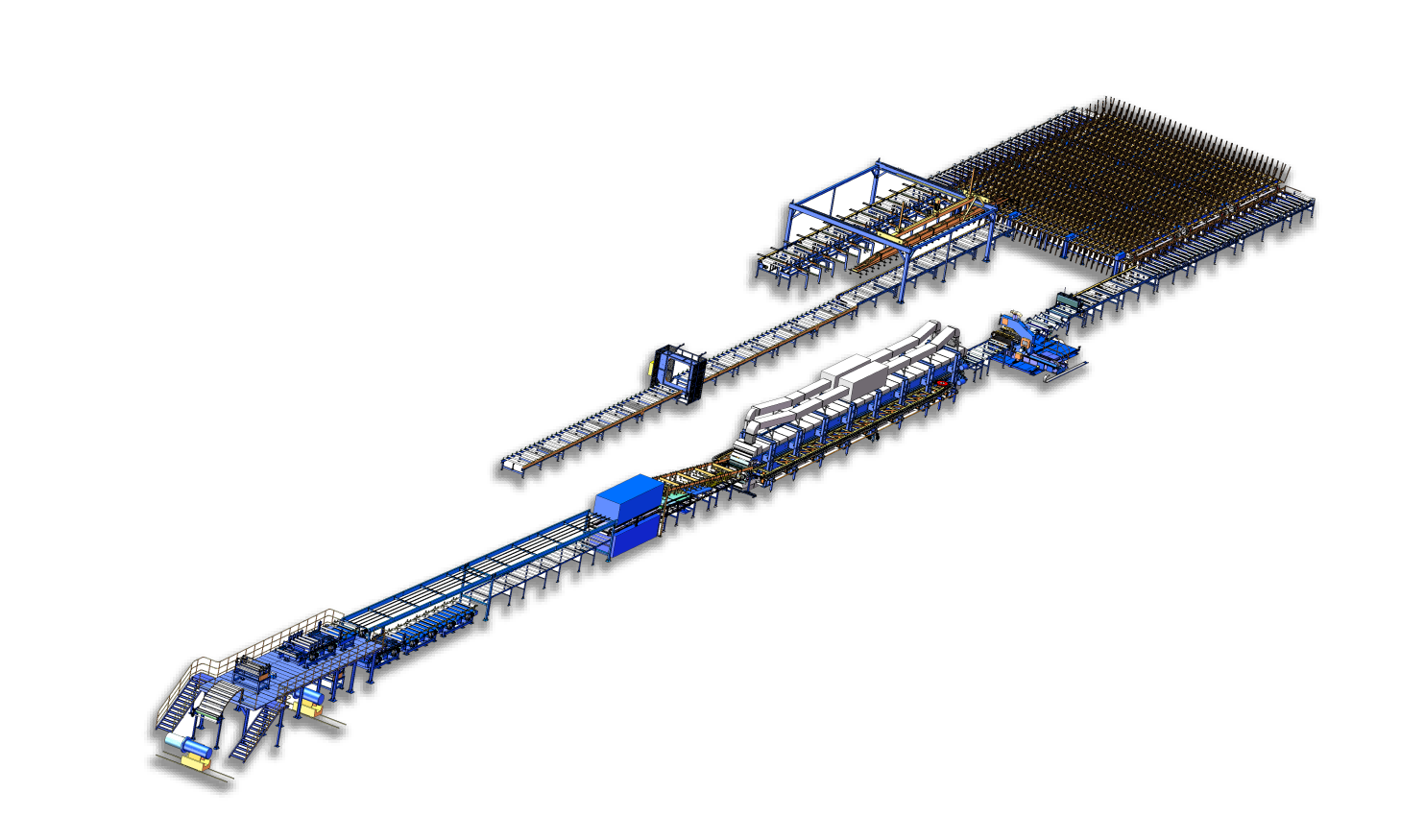
The entire process moves as a single, unbroken chain from raw input to final output. Sheets of metal or composite begin their transformation without pause—cleaned, coated, cured, and cut to precise dimensions under one roof. There’s no shuffling between separate facilities or waiting for off-site steps to finish; the line itself enforces a rhythm that keeps material flowing and quality consistent from start to finish.
This tight linkage means the characteristics of incoming stock are accounted for in real time. If coating thickness drifts or a substrate varies, downstream stations adjust immediately rather than letting flaws accumulate. By the time the panels are stacked and ready for shipment, they’ve been checked against original specs at every stage, making rework rare and lead times predictable. It’s less a chain of steps and more a continuous refinement, where each meter of material gains value without interruption.
Integration also cuts out the small damages that creep in when pieces are handled repeatedly. Because the panel is never set aside between stages, there’s far less risk of scratches, dents, or misalignment. Operators oversee a smooth transition from raw stock to finished product, with monitoring systems flagging any deviation before it becomes a defect. The result is a package that arrives on site exactly as intended—no surprises, no patches, just a panel that performs as designed.
Smart Solutions That Slash Operational Costs
Operational costs can quietly drain resources, but the right approach turns them into a manageable line item. By rethinking everyday workflows, businesses uncover hidden inefficiencies that, once addressed, free up both time and money. Simple adjustments—like automating repetitive tasks or consolidating vendor contracts—often yield quick wins without disrupting core operations. It's not about cutting corners; it's about designing systems that run leaner while maintaining quality, so teams can focus on growth rather than firefighting.
Technology plays a quiet yet powerful role in driving down expenses. Cloud-based tools, for instance, eliminate the need for costly on-site hardware and the maintenance that comes with it. Meanwhile, data analytics reveal patterns that human oversight might miss—think inventory levels that adjust in real time or energy usage that dips during off-peak hours. These aren't futuristic concepts; they're practical, accessible upgrades that pay for themselves often within months, delivering steady savings without constant hand-holding.
The real secret lies in making cost reduction a continuous habit rather than a one-time project. Encouraging teams to flag inefficiencies cultivates a culture where every dollar is spent with intention. Small shifts, such as switching to digital documentation or adopting flexible work models, chip away at overheads in ways that compound over time. The result isn't just a leaner budget—it's an organization that adapts faster, wastes less, and stays resilient without sacrificing what makes it competitive.
Engineered Durability for the Most Demanding Cold Chain Needs
In the unforgiving world of cold chain logistics, durability isn't just a feature—it's a survival mechanism. Every component is built to withstand extreme temperature swings, punishing vibration, and the relentless passage of time. From reinforced panel joints that resist thermal flexing to heavy-duty door seals that maintain integrity after thousands of cycles, this isn't equipment that simply meets standards; it exceeds the unspoken demands of real-world operations where failure isn't an option.
The toughness extends beyond the obvious. Cold chain containers and trailers are subjected to hidden stresses: corrosive road salts, constant humidity fluctuations, and the abrasive wear of frequent washdowns. That's why materials are selected not just for insulation performance, but for their innate resistance to degradation. Stainless steel interiors shrug off chemical cleaners; industrial-grade floor coatings resist impact from pallet jacks and forklifts day after day. Every hinge, latch, and gasket is engineered to operate smoothly at -30°C without seizing, because in this business, a jammed door can mean a spoiled shipment and a ruined reputation.
True durability is also about predictability. Rather than waiting for components to fail, the design incorporates intelligent wear indicators and modular parts that allow for rapid field replacement. This proactive approach to longevity means fleets spend less time in repair bays and more time where they belong: on the road, maintaining the cold chain with unwavering reliability. It's not just built to last; it's built to keep performing without surprise, mile after frozen mile.
End-to-End Support: From Design to Installation
Bringing a vision to life takes more than just a great idea—it requires a partner who can navigate the entire journey with you. From the earliest sketches to the final bolt being tightened, our team provides genuine, hands-on support that adapts to your project’s unique rhythm. We don’t just hand off designs and hope for the best; we’re in the trenches with you, ensuring every detail transitions seamlessly from concept to reality.
What sets this approach apart is the continuity of care. You won’t find yourself explaining your goals to a new face at each phase. Instead, the same dedicated specialists who helped refine your design are the ones troubleshooting on site during installation. This means no lost nuances, no misinterpreted specs—just a cohesive thread of expertise running from the drawing board to the final walkthrough.
And when unexpected challenges arise, as they often do, you’re backed by a team that can pivot without missing a beat. Whether it’s a last-minute material adjustment or an onsite constraint that demands creative problem-solving, our end-to-end model means there’s no gap between design intent and practical execution. The result is a process that feels less like a series of handoffs and more like a single, fluid conversation—with your vision at the center.
The Future of Cold Storage: Flexibility Meets Energy Efficiency
Cold storage facilities are shedding their reputation as rigid, energy-hungry beasts. The next generation is built around adaptability, with modular designs that let operators scale capacity up or down without breaking the bank. Think movable partition walls, adjustable temperature zones, and plug-and-play racking systems—all engineered so a single warehouse can juggle everything from frozen seafood at -25°C to fresh produce at +4°C, sometimes on the same day. This flexibility isn’t just a nice-to-have; it’s a direct response to volatile supply chains that now demand lightning-fast turnover and multi-client consolidation.
At the same time, energy efficiency is being baked into every layer. High-speed doors with intelligent gaskets slice air exchange, while AI-driven control systems learn traffic patterns to pre-cool staging areas minutes before inbound loads arrive. Refrigerant choices are moving toward ultra-low GWP alternatives like ammonia-CO2 cascade systems, and solar arrays are becoming as common as dock seals. The real magic happens when flexibility and efficiency merge: a dynamic system that shuts down entire racking aisles when empty, reroutes airflow only to occupied zones, and uses phase-change materials to coast through peak electricity pricing. It’s a quiet revolution that cuts operational costs by up to 40% while matching the erratic rhythm of modern logistics.
FAQ
We integrate precision cutting, automated material feed, and real-time monitoring that minimize scrap and ensure every panel meets strict tolerance levels. This combination keeps quality high and waste remarkably low.
Absolutely. Our lines are designed for quick changeovers. The tooling and process parameters can be adjusted in under an hour, so you can respond to market demands without costly downtime.
We use proprietary motion control algorithms and sensor networks that synchronize every stage—from lamination to curing. The result is a seamless production flow with fewer bottlenecks and consistent output rates that exceed industry averages.
Yes. We offer modular designs that can fit into standard factory layouts. Our engineers work closely with your team to plan a phased integration that keeps your current operations running during the upgrade.
Our lines feature heat recovery systems, variable-speed drives, and optimized heating zones. These elements cut energy consumption by up to 30% compared to conventional setups, lowering your operational costs significantly.
We deliver a comprehensive program: on-site training during installation, remote support for troubleshooting, and access to an online knowledge base with video tutorials. Your crew will be fully equipped to handle daily operations and basic maintenance.
Definitely. The equipment is adjustable for thicknesses from 50mm to 250mm and lengths up to 12 meters. Enter your specifications into the control panel, and the line automatically calibrates—no manual tweaking required.
Typical lead time is 10 to 14 weeks from order confirmation to shipment, with installation and commissioning taking an additional 3–4 weeks. We also offer expedited options for urgent projects without compromising build quality.
Conclusion
At the forefront of industrial innovation, this leading supplier completely transforms how cold storage panels are manufactured by merging blistering speed with micron-level precision. Production lines are no longer simple assembly setups—they are integrated ecosystems where raw material enters one end and fully finished, insulated panels emerge from the other without manual bottlenecks. The entire process, from decoiling and profiling to foaming and automated stacking, is orchestrated by a centralized control system that monitors every parameter in real time. By eliminating disjointed stages, manufacturers can achieve continuous output rates that were once deemed impossible, while maintaining panel consistency batch after batch. This seamless integration not only shortens lead times but also ensures that every panel meets the strict flatness and thickness tolerances required for cold chain logistics.
Beyond bare output, the emphasis on intelligent engineering slashes operational costs in ways that traditional lines overlook. Smart energy management systems reclaim heat from the foaming process, cutting overall power consumption by a noticeable margin. Predictive maintenance algorithms analyze vibration and temperature data from critical components, flagging potential failures days before they occur, which drastically reduces unplanned downtime. The modular design of the line also allows facilities to scale production up or down with minimal retooling, giving businesses the flexibility to respond to volatile market demands without sacrificing efficiency. Durability is equally embedded in every panel—using advanced polyurethane formulations and precision lamination techniques, the resulting panels resist thermal bridging and structural fatigue even in extreme sub-zero environments. Backed by comprehensive support from initial layout planning to on-site installation and beyond, this supplier positions its partners to lead a future where cold storage is both highly adaptable and remarkably energy-efficient.
Contact Us
Contact Person: Sophia Jiang
Email: [email protected]
Tel/WhatsApp: +86 17367381818
Website: https://yzwelding.com/