

Insulated Clean Panel Production Line Factory for Superior Panel Quality and Efficiency
2026-08-15
In the competitive world of panel manufacturing, achieving both superior quality and high efficiency often feels like chasing two rabbits at once. Yet, some production facilities have cracked the code—and one name stands out: YI ZHOU TECHNOLOGY. This insulated clean panel production line factory has redefined what it means to deliver flawless panels without sacrificing speed. But what exactly sets their line apart? From precision welding to streamlined workflows, the answer lies in a blend of engineering ingenuity and relentless focus on detail. In this post, we’ll take you inside the process, revealing how YI ZHOU TECHNOLOGY turns raw materials into clean panels that meet the strictest industry standards—and why their approach is turning heads across the market.
How Precision Foam Injection Shapes Panel Insulation Consistency
Getting the foam to behave the same way in every cavity isn't about luck—it's about controlling the moment it enters the panel. Precision injection systems regulate both the shot volume and the mixing pressure, so each pocket receives an identical dose before the foam begins to rise. This tight control eliminates the thin edges and hollow cores that plagued older, hand-poured methods. The result is a panel where the insulating layer hugs every contour without voids, making thermal performance predictable from the first unit to the ten-thousandth.
What often gets overlooked is how injection speed influences cell structure. Push the foam too fast, and it shears against the panel skins, breaking the delicate bubbles before they set. Too slow, and the material starts curing in the nozzle, creating uneven density lines. Precision equipment finds that middle ground, maintaining a steady flow that lets the foam expand uniformly. This consistency shows up in the final product as a smooth, fine-celled core that resists heat transfer evenly across the entire panel face.
The real pay-off comes when panels are installed side by side. Because each one carries the same density profile and edge fill, there are no weak spots where heat sneaks through at the joints. Builders no longer need to overcompensate with extra layers or worry about one batch outperforming another. Precision foam injection turns insulation from a variable into a given, letting the panel's rated R-value actually match what you get in the field.
The Lamination Step That Keeps Panel Layers Bonded Under Stress
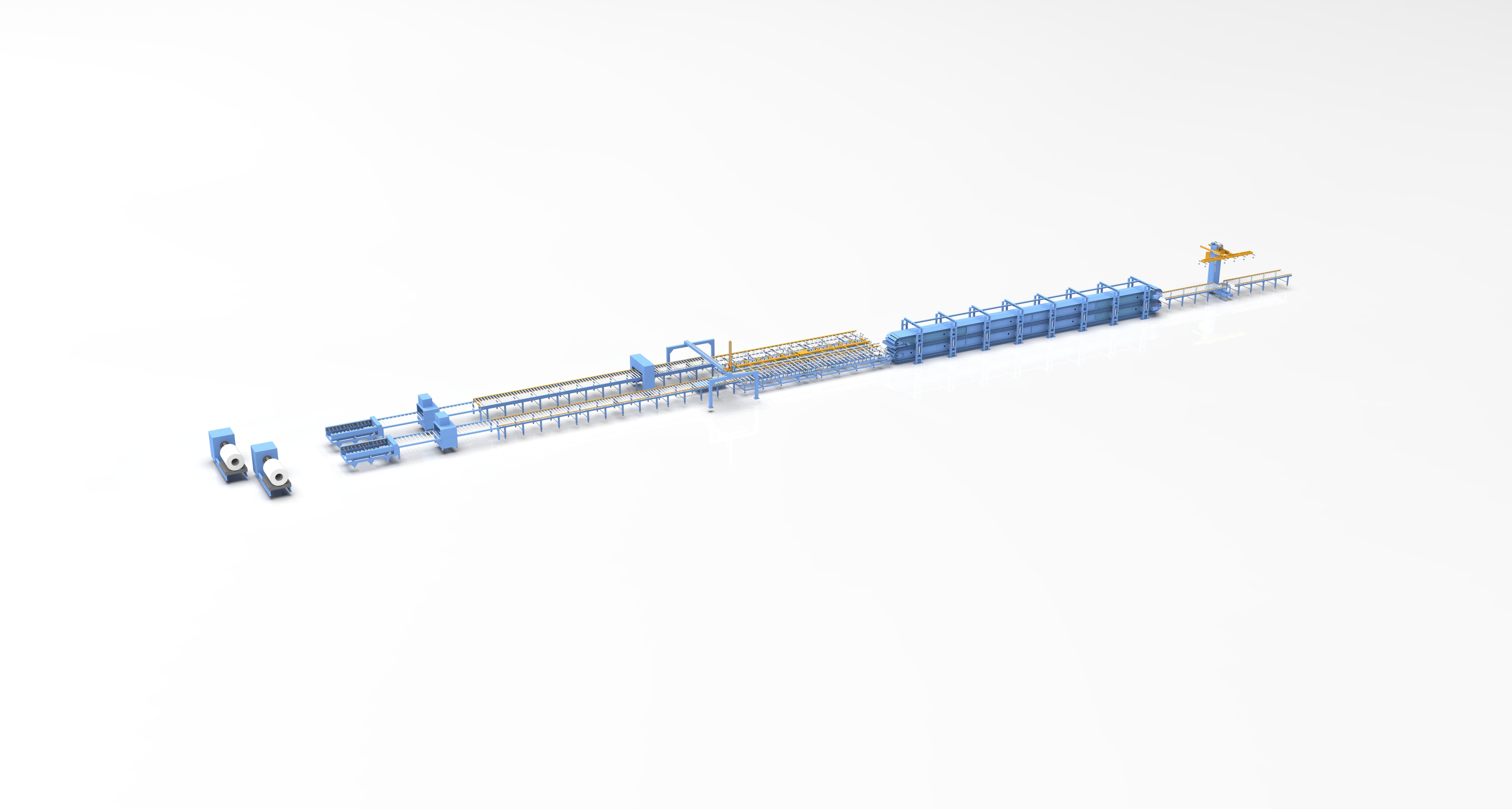
Pressure and heat are only part of the story when it comes to bonding panel layers. The real work happens in the lamination step where adhesive systems are brought to a precise cure window. If the resin moves too early or too late, internal stress gets trapped between layers, and that is exactly where delamination starts.
A well-controlled lamination cycle balances dwell time, temperature ramp, and roller pressure so the adhesive can wet out the substrate without starving the bond line. This is not about squeezing harder; it is about giving the layers enough time to knit into a single unit before the resin sets.
When panels are later subjected to thermal swings, vibration, or flexural loads, the bond created in this step becomes the difference between a panel that holds together and one that splits along invisible weak planes. Small adjustments to the lamination profile—often overlooked—have an outsized effect on long-term durability.
Edge Sealing and Trimming Without Slowing the Main Line
Keeping a production line moving at full speed while applying edge sealing and trimming often feels like a tug-of-war between quality and throughput. The trick lies in treating these finishing steps not as separate stations, but as integrated movements that ride alongside the main conveyor. By using synchronized rotary trimmers and precision sealant applicators that operate within the same cycle time as the core process, you avoid the stop-and-start rhythm that drains efficiency. This means the edge work happens in the shadow of the primary operation, never demanding its own pause.
The real challenge is thermal management and material handling. A sealing head that lingers too long can warp thin substrates or leave uneven beads, while a rushed trim can tear or delaminate edges. The solution is to pair adaptive pressure control with short, high-precision passes—often achieved through servo-driven rollers that adjust in real time based on material feedback. Trimming is handled by a flying shear or rotary knife that matches line speed exactly, cutting on the fly rather than after a dead stop. This keeps the stream continuous and the edge quality consistent, even when panel sizes or board thicknesses shift.
What often gets overlooked is the choreography of waste removal. Offcuts and squeeze-out must be evacuated without interfering with the primary product path. A vacuum-assisted scrap diverter placed immediately after the trim point can redirect debris beneath the line, while a compressed air curtain prevents sealant mist from settling on downstream sensors. When these auxiliary flows are designed to be invisible to the operator, the main line never senses the extra activity. The result is a line that runs at rated speed, produces sealed and trimmed edges ready for the next step, and leaves no trace of the once-slow finishing bottleneck.
Inline Thermal Scans That Verify Every Panel's R-Value
During production, each insulated panel passes under an array of thermal imaging sensors mounted directly on the line. The system measures surface temperature differentials while a calibrated heat source excites one side. Software converts those readings into a real-time R-value estimate, flagging any unit that drifts outside the specified tolerance before it reaches the stacking station.
Unlike batch testing, where a single sample represents thousands of panels, this approach catches core voids, foam density shifts, and delamination as they happen. Operators see a live heat map with pass/fail boundaries, so a cold streak from a clogged mix head or a missed shot is corrected immediately rather than discovered after installation.
The result is a closed-loop quality record: every serialized panel carries its measured thermal resistance, not just a nominal spec. Builders can pull up the scan data for a specific panel, which simplifies warranty claims and gives code officials hard evidence of performance without destructive testing.
Changeover Flexibility for Custom Panel Sizes in Under an Hour
Switching the line to a different panel width or length used to mean losing half a shift. The new setup replaces fixed rails and shims with servo-driven backstops and quick-release side guides. Operators key in the target dimensions at the operator panel, and the stops move to position while the clamping presets adjust themselves.
Most size changes now happen in forty minutes or less because the tooling cassettes slide out on rollers and lock back with two handles instead of bolts. Pneumatic clamps release the forming dies, and a stored program recalls the exact pressure and stroke for each panel recipe. Even uncommon custom sizes can be run without making new spacers.
That flexibility matters when short-run orders arrive back-to-back. The crew can set up for a 900-millimeter panel, finish the batch, and switch to a 1,240-millimeter job before the next break. Downtime drops, but more important, custom sizes no longer have to wait for a long changeover window.
Defect Detection Gates That Stop Flawed Panels Before Stacking
Panel defects that slip through into the stacking stage create compounding problems: misaligned layers, trapped debris, and structural weak points that only surface after lamination. A well-placed detection gate intercepts these flaws while the panel is still isolated, before it becomes one unit among dozens pressed together. The gate evaluates surface irregularities, edge geometry, and internal voids using a mix of laser profiling and ultrasonic pulse-echo. Panels that fail the threshold are routed to a reject buffer, never reaching the stacker.
The timing of the gate matters more than its sensitivity. If the inspection occurs too early, thermal expansion from the previous process can mask real warpage. Too late, and the stacker has already indexed the panel into position. In practice, the gate sits after cooling and before the alignment pins engage. This placement catches residual bow, corner lift, and thickness variation that would otherwise propagate through the entire stack. Operators can adjust pass/fail limits per product family without stopping the line.
Beyond catching obvious cracks, the gate acts as a process feedback loop. A sudden uptick in edge chipping often traces back to dull trim blades or a misaligned conveyor. By monitoring rejection patterns shift-by-shift, maintenance teams can intervene before a bad batch fills a pallet. The result is not just fewer stacked rejects but a quieter line where stacker jams and rework stations stay idle for longer stretches.
FAQ
We offer rock wool, polyurethane, and EPS cores with densities tailored to thermal or acoustic requirements. Thickness ranges from 50 mm to 200 mm, and we can pair them with galvanized steel, stainless steel, or aluminum skins.
The continuous lamination and multi-roller calibration hold thickness within ±0.5 mm. Automatic stacking and a 24-hour curing buffer help panels stay flat even after cutting.
Standard panels move at up to 12 meters per minute. For a typical 20,000-square-meter order, we usually finish production within 15 working days after deposit and arrange shipment right after final inspection.
Yes. Rock wool core panels can achieve A2 fire rating, and we provide third-party test reports along with CE and ISO 9001 documentation when required.
Absolutely. We can adjust length, width, core density, edge shape (tongue-and-groove, rabbet, or flat), and surface coating. Our team also supports CAD drawings for doors, windows, and utility cutouts.
We run peel strength, compressive resistance, and air leakage tests on random samples from each batch. Surface scratches, edge damage, and thickness deviation are also checked on a light table before packing.
They're widely used in pharmaceutical cleanrooms, food processing plants, electronics assembly, and hospital operating theaters. The insulation and air-tight joints help maintain strict temperature and hygiene control.
You get installation drawings, on-site guidance via video call, spare edge trims, and a 12-month warranty covering delamination and surface defects under normal operating conditions.
Conclusion
The production line starts with a foam injection system tuned to deliver even density across every square inch, which prevents weak thermal spots from appearing later. Operators can fine-tune the foam blend and injection rate for different panel thicknesses, so the core density stays uniform from panel to panel instead of varying batch by batch. Right after injection, the lamination stage applies controlled pressure and heat, locking the metal skins and insulating core into a bond that holds up under repeated stress, not just initial handling. Edge sealing and trimming happen in the same pass without forcing the main conveyor to pause, keeping throughput steady while giving each panel clean, durable edges that resist moisture and air leakage.
As panels move toward the end of the line, inline thermal scanners check each panel's R-value in real time, flagging any unit that falls outside the expected insulation range before it reaches the stack. The system logs each scan automatically, so quality records are ready without manual data entry. The factory also handles custom sizes quickly: operators can switch panel dimensions in under an hour, so short runs don't turn into downtime. A final defect detection gate catches delamination, dents, or seal gaps automatically and removes flawed panels from the flow. The result is a production environment where consistency, speed, and quality control are built into the line itself rather than added as afterthoughts.
Contact Us
Contact Person: Sophia Jiang
Email: [email protected]
Tel/WhatsApp: +86 17367381818
Website: https://yzwelding.com/