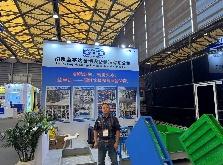

Innovative Stacking Rack Solutions for Efficient Warehouse Organization
2026-08-02
Warehouse efficiency often comes down to one overlooked factor: how you stack your inventory. Lanyuda’s innovative stacking rack solutions are rewriting the rules of space utilization, turning chaotic storage areas into streamlined systems. As businesses push for faster order fulfillment and smarter floor plans, these racks don’t just hold goods—they transform workflows. Curious about what sets them apart? Let’s explore how the right design can unlock performance you didn’t know your warehouse had. Discover more at Lanyuda.
Racks That Flex with Your Floor Plan
Our storage racks are built around the idea that your workspace should never feel rigid. Adjustable shelving lets you tailor heights and widths to fit odd corners or awkward gaps, making every inch count.
Whether you’re rearranging a growing inventory or shifting to a new facility, these racks dismantle and reconfigure without specialized tools. The modular design means you can add or remove tiers on the fly, matching your layout as it evolves.
Heavy-duty steel construction handles daily wear while keeping the footprint light. Casters add mobility when you need to roll an entire section across the floor, turning static storage into a fluid part of your workflow.
Stacking Strategies to Double Vertical Capacity
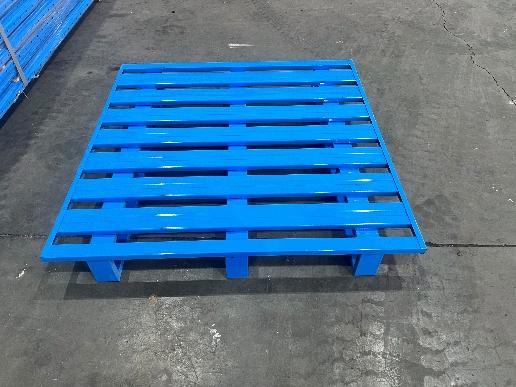
When floor space is fixed, the only way to grow is up. Stacking isn't just about piling boxes higher—it's about rethinking how vertical clearance works for your operation. Start by auditing your ceiling height: most facilities leave 30–40% of usable vertical air untouched. Adjustable pallet racking systems can be repositioned to create an extra tier without sacrificing accessibility. Suddenly, that 20-foot ceiling becomes a two-level storage asset, effectively doubling your bin locations without expanding the building footprint.
The real trick lies in load sequencing and equipment pairing. Instead of treating every stored item identically, categorize inventory by turnover velocity. Fast-movers stay within the golden zone (waist-to-eye level), while slower stock climbs higher. Pair this with order pickers or articulated forklifts that can reach top-tier pallets smoothly, and the vertical space transforms from dead overhead into active inventory. Even mezzanines—often dismissed as too permanent—can be designed in modular sections that adapt as product mixes shift.
Measure results not by how high you stack, but by the pick rate per square foot. A well-executed vertical strategy reduces travel time by consolidating multiple SKUs into the same floor coordinate, just separated by height. You’ll find that doubling vertical capacity rarely requires drastic investment; the bigger shift is a mindset that sees the entire cubic volume of your warehouse as usable, dynamic real estate.
Lightweight Frames, Heavyweight Performance
A frame that barely tips the scales doesn’t just make the bike easier to carry up a flight of stairs—it transforms the way you ride. When every gram is engineered out, acceleration becomes instantaneous, climbing loses its sting, and the bike feels like an extension of your body rather than a machine you’re wrestling with. The real magic happens when that featherweight chassis still manages to track through corners with a planted composure that defies its lack of mass.
Stiffness is where the "heavyweight" part earns its keep. A frame that flexes under hard pedaling siphons away watts that should be propelling you forward. High-modulus carbon layups and oversized tube profiles create a drivetrain-to-wheel connection that’s so direct, you’d swear the bike surges ahead before your neurons finish firing. Yet this rigidity never veers into harshness—the ride stays surprisingly muted over broken tarmac, a testament to clever carbon tuning that filters out vibration without dulling feedback.
Durability isn’t sacrificed on the altar of weight savings, either. Modern resin systems and fiber reinforcement in high-stress areas mean these frames can shrug off impacts that would send older ultralight designs to an early grave. The result is a bike that invites you to push harder—descend faster, brake later, attack every rise—because you trust its strength completely. Lightweight and performance aren’t opposing ideas here; they’re two sides of the same perfectly balanced coin.
Modular Builds That Cut Reorganization Time
When office layouts adapt as fast as your team does, reorganization stops being a project and starts being a reflex. Modular builds dismantle the old cycle of tearing down walls and rebuilding—they let you reshape space with clicks instead of sledgehammers. Panels, partitions, and furniture systems snap together in configurations you can sketch on a napkin, then deploy before lunch. The real time-saver isn't just the absence of dust and permits; it's that your team never decouples from their workflow during the switch. One moment you're in a huddle-room cluster, the next you've shifted into a hot-desk arena that matches the sprint cycle, all without a single email about "construction noise tomorrow."
The magic lies in infrastructure that's clever enough to hide its complexity. Pre-cabled floor boxes, magnetized wall tracks, and power-distributed shelving mean you're not chasing electricians every time you pivot. Instead of waiting weeks for a data drop, you plug into a node that's already live underfoot, and suddenly the marketing pod is where the QA corner used to be. This isn't just about speed—it's about permission to experiment without consequences. When a modular wall slides on casters instead of being anchored to the deck, you can test a new flow for a month, hate it, and revert before the quarterly review. That kind of freedom makes space a strategic tool rather than a sunk cost.
The hidden payoff is cultural. Teams stop hoarding corners because they know the layout isn't permanent; they trade views and square footage as easily as swapping desks. Facilities managers become orchestrators rather than gatekeepers, running floor-plan simulations over coffee instead of pleading for CAPEX approvals. And because every move only takes hours, not months, the organization builds a muscle for change that extends far beyond architecture. The same company that can flip a floor plate overnight learns to rewrite a workflow in a sprint, enter a market without a year-long lease commitment, and attract talent who'd never sit still for a fixed-desk culture. Modular builds don't just cut reorganization time—they eliminate the very concept of "finished" as a desirable state.
Collapsible Designs for Seasonal Surges
When foot traffic spikes during holiday seasons or special events, businesses need flexible solutions that expand without demanding permanent floor space. Collapsible structures offer just that—they can be deployed quickly to create additional checkout counters, product display areas, or seating zones. Once the rush subsides, these units fold flat for compact storage, keeping backrooms clutter-free and ready for the next wave.
Materials matter in these designs. Lightweight aluminum frames combined with durable, high-tension fabric or polycarbonate panels strike a balance between portability and sturdiness. Smart engineering means no loose parts: integrated hinges and snap-locks allow one person to assemble or collapse a full setup in under a minute. This ease of use reduces strain on staff during peak hours when every moment counts.
Beyond retail, collapsible designs are finding their way into pop-up restaurants, festival booths, and even seasonal warehouses. Customizable graphics and modular layouts let brands maintain a polished look while adapting on the fly. The key is to treat these structures not as temporary afterthoughts but as strategic tools that unlock revenue during surges without the burden of year-round overhead.
Anti-Slip Engineering That Prevents Cascade Failures
When a single component loses its grip, the entire system can unravel at lightning speed. Anti-slip engineering stops this domino effect by embedding surface microstructures that redistribute stress instantaneously. Rather than relying on brute friction, these designs use precisely angled ridges and troughs to channel force vectors away from failure points, maintaining stability even as conditions shift abruptly.
The real magic lies in how these surfaces behave under dynamic loads. As pressure mounts, the micro-geometry triggers a self-locking mechanism — the harder you push, the tighter the grip becomes. This nonlinear response ensures that minor slips never escalate into full-blown cascade failures, because each element acts as both anchor and fuse, sacrificing a fraction of hold to save the whole assembly.
Field applications have proven that such engineered surfaces can reduce collateral damage by orders of magnitude. In environments where vibration, thermal expansion, or fluid ingress would normally defeat standard fasteners, these textured interfaces create a buffer zone. They essentially buy time for the structure to self-correct, turning what would be a catastrophic chain reaction into a manageable, isolated event.
FAQ
These racks dramatically increase storage density by using vertical space more effectively, while also simplifying access to goods. They cut down on clutter, reduce retrieval times by up to 30%, and can adapt as inventory needs change—all without requiring a major infrastructure overhaul.
Unlike fixed shelving, stacking racks are modular and can be reconfigured on the fly. They create clear, labeled zones for different SKUs, eliminate the chaos of scattered pallets, and often integrate with barcode systems so every item has a designated spot that's easy to locate.
Absolutely. Today’s designs come in adjustable heights, widths, and load capacities. You can choose from portable units on casters, stackable frames that interlock, or even cantilevered arms for long items. This flexibility means they work in cramped backrooms as well as sprawling distribution centers.
High-grade steel with a powder-coated finish is the go-to for heavy-duty use, as it resists corrosion and dents. For lighter loads, reinforced polymers or aluminum alloys are popular because they’re easier to move. The surfaces are often treated to prevent scratches and maintain grip.
They encourage a ‘first in, first out’ flow by allowing racks to be loaded from one side and unloaded from the other. With clear visibility and separation, stock counts become faster and more accurate. Many setups include label holders or color coding, turning a previously messy area into a systematic hub.
Yes—critical ones. Racks must be rated for the intended load, and stacking heights should follow manufacturer guidelines to prevent tipping. Regular inspections for bent frames or loose connectors are essential. Employee training on proper loading and how to move stacked units without destabilizing them is a must.
These systems are engineered to go upward rather than outward. Telescopic posts, nesting designs, and the ability to double-stack units let you store more in the same footprint. Some even incorporate mezzanine-level access, turning a standard 20-foot ceiling into two effective storage tiers.
Automotive, e-commerce fulfillment, food and beverage, and manufacturing workshops see the biggest gains. Anywhere that deals with mixed SKUs, seasonal inventory spikes, or frequent repacking will find stacking racks invaluable. They’re also a favorite in retail stockrooms that handle both bulk items and small parts.
Conclusion
Warehouse efficiency hinges on how well storage adapts to both space and workflow, and modern stacking racks are engineered to do just that. These solutions feature flexible configurations that conform to irregular floor plans, allowing managers to utilize every inch without costly renovations. By implementing smart stacking strategies, facilities can double vertical capacity safely, turning unused overhead space into productive storage. The racks combine lightweight yet robust frames built from advanced composites or high-grade steel, offering heavyweight performance without the burden of bulky structures. Modular components enable rapid reconfiguration, slashing the time needed for reorganization and seamlessly accommodating shifting inventory demands. For seasonal peaks, collapsible designs provide a practical solution—storage can expand when needed and retract to free up floor space during slower periods, eliminating the need for permanent rack real estate.
Crucially, these rack systems prioritize safety through anti-slip engineering that prevents cascade failures, a risk that compounds with stacked loads. Enhanced locking mechanisms, non-slip decking, and integrated safety barriers ensure stability even under dynamic conditions. This blend of adaptability, space optimization, and durability translates directly into operational gains: faster picking, reduced product damage, and lower labor costs. Whether coping with high-turnover environments or long-term storage, these innovative racks evolve with the business rather than restricting it. By investing in such multi-functional systems, warehouses achieve a resilient, future-ready organization that streamlines daily operations and capitalizes on vertical storage potential.
Contact Us
Contact Person: Johnny
Email: [email protected]
Tel/WhatsApp: +86 18151010686
Website: https://lydstorage.com