

Inconel Alloys Factories: Exploring Modern Manufacturing Techniques for High-Performance Materials
2026-03-24
In the world of high-performance materials, Inconel alloys stand out for their exceptional strength, corrosion resistance, and ability to withstand extreme environments. But what goes into producing these advanced materials? This blog delves into the cutting-edge manufacturing techniques that power modern Inconel alloys factories, revealing how innovation is driving efficiency and precision in this critical industry. As a leader in materials science, Jiangsu Baowu New Materials leverages state-of-the-art processes to shape the future of these alloys, pushing boundaries in aerospace, energy, and beyond. Join us as we explore the fascinating world where science meets industry, and discover the secrets behind crafting materials that redefine performance limits. Whether you're an engineer, a researcher, or simply curious about the backbone of modern technology, this journey into manufacturing excellence promises valuable insights that will spark your interest and deepen your understanding of this vital field.
Innovative Production Methods in Inconel Alloy Fabrication
In the realm of advanced material engineering, the fabrication of Inconel alloys—renowned for their exceptional heat and corrosion resistance—has undergone a remarkable transformation. While traditional methods like casting and forging laid the foundation, recent innovations are pushing the envelope in precision and efficiency. For instance, additive manufacturing, specifically powder bed fusion, has emerged as a game-changer. This technique builds parts layer by layer from metal powders, such as Inconel 718 or 625, enabling the creation of intricate geometries that defy conventional machining. This not only reduces material waste but also allows for lightweight, optimized designs critical in aerospace and energy sectors, where every gram counts.
Another cutting-edge approach gaining traction is directed energy deposition (DED), another form of 3D printing. Unlike powder bed methods, DED uses a focused energy source, like a laser or electron beam, to melt feedstock material—often in wire or powder form—as it's deposited onto a substrate. In Inconel alloy fabrication, this technology excels in repairing high-value components, such as turbine blades, or adding features to existing parts without compromising the alloy's inherent properties. What sets DED apart is its ability to handle large-scale builds and multi-material compositions, offering flexibility that traditional welding or casting can't match.
Beyond additive techniques, advanced thermomechanical processing is revolutionizing the microstructure control of Inconel alloys. Methods like hot isostatic pressing (HIP) combine high pressure and temperature to eliminate internal defects, enhancing the material's fatigue life and strength. Coupled with computer simulations and machine learning, manufacturers can now predict and fine-tune alloy behavior during fabrication. This data-driven approach ensures consistent quality, reduces trial-and-error costs, and tailors alloys for specific applications, from deep-sea drilling to nuclear reactors, marking a shift toward smarter, more sustainable production.
Advanced Heat Treatment for Enhanced Material Properties
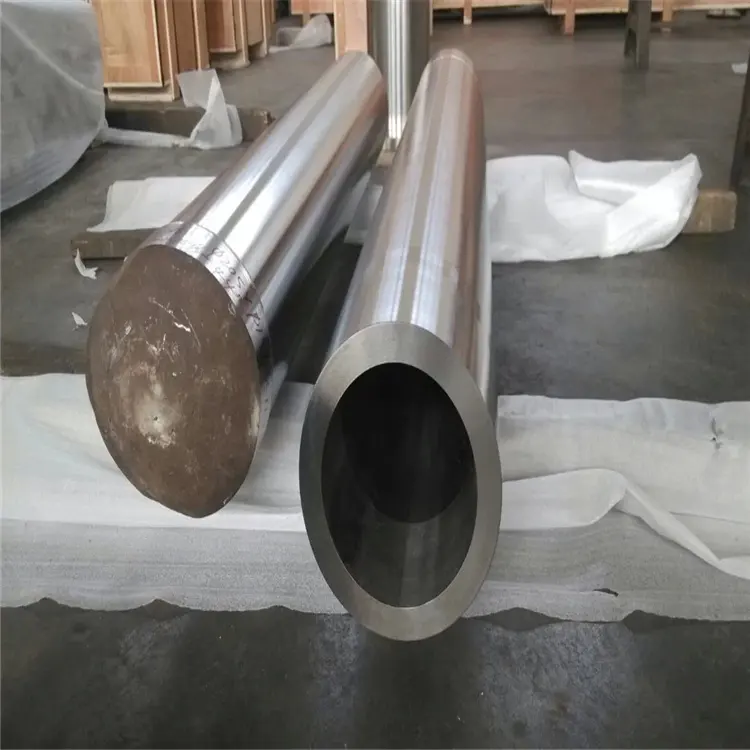
Advanced heat treatment processes go beyond basic heating and cooling cycles to precisely manipulate a material's microstructure, unlocking properties tailored for specific applications. By controlling variables like temperature ramps, soaking times, and cooling rates with high precision, these techniques enable engineers to optimize characteristics such as hardness, toughness, and corrosion resistance in metals and alloys.
Innovations in this field often involve non-conventional methods, such as cryogenic treatments or laser-assisted heating, which can refine grain structures and reduce residual stresses more effectively than traditional approaches. This leads to components that not only perform better under stress but also exhibit longer service lives in demanding environments like aerospace or automotive industries.
The synergy between computational modeling and experimental validation has further propelled advancements, allowing for custom heat treatment protocols that minimize energy consumption while maximizing material performance. As industries seek lighter, stronger, and more durable materials, these sophisticated processes play a crucial role in pushing the boundaries of what materials can achieve.
Cutting-Edge Machining Techniques in Modern Factories
Modern factories are revolutionizing production with advanced machining techniques that enhance precision and efficiency. Technologies like 5-axis CNC milling allow for complex geometries to be crafted from a single setup, reducing manual intervention and errors. This not only speeds up manufacturing cycles but also enables the creation of intricate components for industries such as aerospace and medical devices, where tight tolerances are critical.
Another game-changer is additive manufacturing, commonly known as 3D printing, which builds parts layer by layer from digital models. This technique reduces waste by using only the necessary material and supports rapid prototyping, allowing designers to iterate quickly without expensive tooling. In factories, it's being integrated for small-batch production and custom parts, offering flexibility that traditional methods can't match.
Additionally, smart factories leverage IoT sensors and real-time data analytics to optimize machining processes. By monitoring equipment performance and predicting maintenance needs, these systems minimize downtime and ensure consistent quality. This integration of digital and physical systems is setting new standards in manufacturing, driving innovation across the globe.
Quality Control Systems for High-Performance Inconel Alloys
Developing robust quality control systems for high-performance Inconel alloys involves integrating advanced non-destructive testing (NDT) techniques, such as ultrasonic and radiographic inspections, tailored specifically to detect microstructural anomalies and stress corrosion cracking tendencies inherent in these nickel-chromium-based superalloys. By implementing real-time monitoring during critical manufacturing phases like hot working and heat treatment, manufacturers can swiftly identify deviations in alloy composition or grain structure, ensuring each component meets rigorous standards for applications in aerospace, chemical processing, and power generation, where failure tolerance is near zero. This proactive approach not only enhances material integrity but also reduces costly rework by catching defects early, leveraging data analytics to predict performance under extreme thermal and mechanical conditions, thus optimizing the alloy's life cycle in demanding environments.
A standout feature of modern quality control for Inconel alloys is the adoption of machine learning algorithms that analyze historical production data and environmental variables to fine-tune inspection parameters, moving beyond traditional static checks. For example, by correlating ultrasonic wave patterns with fatigue life predictions, these systems can adaptively adjust scanning frequencies based on alloy batches from different suppliers or varying operational temperatures, offering a dynamic, customizable framework that distinguishes itself from generic metal quality protocols. This innovation enables manufacturers to achieve tighter tolerances on mechanical properties like tensile strength and creep resistance, aligning with bespoke specifications for projects in marine engineering or oil extraction, where custom alloy grades require precise validation to withstand prolonged exposure to corrosive agents and high pressures.
To further differentiate quality control in the competitive landscape, leading-edge practices incorporate blockchain technology for traceability, creating immutable logs of every quality check from raw material sourcing to final certification, which enhances transparency and builds trust among stakeholders. Coupled with real-time feedback loops between production lines and R&D teams, this holistic system facilitates continuous improvement in alloy formulations, addressing unique challenges like hot corrosion resistance in turbine blades or weldability in thick sections. By embedding these cutting-edge elements, companies not only ensure compliance with international standards like AMS and ASTM but also pioneer innovations that push the boundaries of Inconel performance, setting new benchmarks for reliability in industries that depend on unwavering material excellence.
Environmental Sustainability in Manufacturing Processes
When you think about modern manufacturing, it’s not just assembly lines and mass production—it's also about how we can make things without harming the planet. More companies are now weaving environmental sustainability into their core processes, moving beyond compliance to genuine stewardship. This shift involves rethinking everything from raw material sourcing to energy use, aiming to cut waste and emissions while still delivering high-quality products.
Innovations like closed-loop systems and lean manufacturing principles are leading the charge, turning byproducts into resources and slashing unnecessary energy consumption. It’s a practical approach that not only benefits the Earth but often boosts efficiency and reduces costs in the long run, proving that green practices can be a win-win for business and the environment.
Ultimately, embracing sustainability in manufacturing isn’t just a trend; it’s becoming essential for staying competitive and responsible. By integrating eco-friendly strategies, industries are building resilience and earning trust, showing that forward-thinking production can pave the way for a healthier planet.
Customization and Application-Specific Alloy Development
In today's competitive industrial landscape, customization in alloy development has shifted from a niche practice to a core strategy for meeting precise application requirements. Instead of relying on one-size-fits-all materials, engineers now collaborate closely with metallurgists to design alloys with tailored properties, such as enhanced corrosion resistance for marine environments or specific thermal conductivity for electronics. This approach not only improves performance but also reduces waste by eliminating the need for over-engineering, making processes more efficient and cost-effective.
Application-specific alloy development goes beyond mere tweaks to existing formulas; it involves deep analysis of operational conditions to create solutions that address unique challenges. For instance, in the aerospace sector, alloys are developed to withstand extreme temperatures and stress while maintaining lightweight characteristics, directly impacting fuel efficiency and safety. By integrating advanced simulation tools and real-world testing, manufacturers can predict how these custom alloys will behave under actual use, ensuring reliability from the start and preventing costly failures down the line.
What sets this practice apart is its dynamic adaptability to emerging technologies and industries. Whether for renewable energy systems requiring durable, weather-resistant components or medical implants that demand biocompatible and strong materials, custom alloys are crafted to evolve with changing needs. This forward-thinking mindset not only fosters innovation but also builds stronger partnerships between suppliers and clients, as each project becomes a collaborative journey to solve specific problems, ultimately driving progress across various fields with tailored, high-performance materials.
FAQ
Inconel alloys stand out due to their exceptional resistance to extreme temperatures, corrosion, and oxidation, making them ideal for demanding applications like aerospace engines and chemical processing plants. Their unique nickel-chromium composition ensures durability under stress.
Advances include precision casting, additive manufacturing (like 3D printing), and improved forging methods, allowing complex geometries and reduced waste. These innovations enhance performance while cutting production time and costs.
Factories often struggle with high material costs, difficulty in machining due to hardness, and the need for specialized equipment. Ensuring consistent quality and managing supply chains for raw materials also pose significant hurdles.
Industries such as aerospace, energy (e.g., nuclear and oil & gas), and automotive gain significantly. They rely on Inconel's ability to withstand harsh environments, improving safety and longevity of components like turbine blades and exhaust systems.
Factories now focus on recycling scrap materials, reducing emissions through efficient processes, and developing eco-friendly alternatives. Sustainability efforts aim to balance high performance with lower environmental impact.
Rigorous testing, including non-destructive methods like ultrasonic inspection and chemical analysis, ensures alloys meet strict standards. This minimizes defects and ensures reliability in critical applications, fostering trust in the final products.
Conclusion
Inconel alloy factories are revolutionizing the production of these high-performance materials through a blend of innovative manufacturing techniques. Modern fabrication methods, such as additive manufacturing (e.g., 3D printing) and precision casting, allow for complex geometries and reduced material waste, enhancing efficiency and customization. Advanced heat treatment processes, including solution annealing and aging, are crucial for optimizing properties like corrosion resistance and high-temperature strength. Meanwhile, cutting-edge machining techniques, such as laser cutting and CNC milling, ensure precise shaping, even for Inconel's challenging hardness. These approaches are often integrated with robust quality control systems, utilizing non-destructive testing and real-time monitoring to maintain consistent performance standards across aerospace, energy, and chemical applications.
Beyond technical prowess, Inconel manufacturing increasingly emphasizes environmental sustainability by adopting energy-efficient processes, recycling scrap materials, and reducing emissions. Factories are also moving towards application-specific alloy development, tailoring compositions to meet unique industrial demands, from oil rigs to jet engines. This holistic focus on innovation, quality, and customization not only boosts material reliability but also positions Inconel as a versatile solution for extreme environments. By seamlessly blending advanced production, rigorous testing, and eco-friendly practices, these facilities drive progress in high-performance materials while addressing modern challenges like cost-effectiveness and resource conservation.
Contact Us
Contact Person: Zoe Liang
Email: [email protected]
Tel/WhatsApp: 86 189 2128 6299
Website: https://www.baowuchina.com