

High Speed Paper Bag Machine Manufacturer Guide for Efficient Production
2026-11-21
Most guides on high-speed paper bag machines still read like equipment manuals: long on specs, short on practical insight. This one takes a different route. Whether you are replacing outdated lines or planning a high-volume expansion, output speed alone will not save you if material waste, changeover time, and service support are working against you. In the sections ahead, we break down what efficient production actually requires on the shop floor and why manufacturers like ROKIN are becoming a serious reference point for converters who need more than just a fast machine.
The Overlooked Link Between Speed and Waste on a Paper Bag Line
Most line managers treat speed as a pure output lever, but on a paper bag converting line it quietly reshapes the waste profile in ways that don't show up on a shift summary. At higher running speeds, small registration drift becomes a full-width mis-cut before the sensor can react, and the bottom fold picks up a slight skew that turns into rejected stacks minutes later. The scrap bin near the delivery end tells the real story: a few extra bags per minute at the front often means a much larger climb in rejected units at the back.
The connection isn't simply "faster means more waste." Some lines have a narrow speed band where glue application, paper tension, and perforation timing stay in step, and pushing just beyond it produces defects that operators spend the rest of the shift chasing. One common pattern is that waste spikes not at top speed, but during acceleration and deceleration around reel changes or jam clearances. Tracking waste per order while overlaying line speed charts usually reveals the true cost of those extra few bags per minute.
A practical fix is to stop setting speed targets in isolation. Instead, the target should be the fastest speed at which the line holds its defect rate flat for a full hour. That number is often lower than the machine's rated maximum, and it shifts with paper grade, humidity, and the age of the forming plates. When operators are given that kind of target, waste drops without anyone touching a single setting on the glue station.
Why Motor Power Alone Does Not Predict Real Output
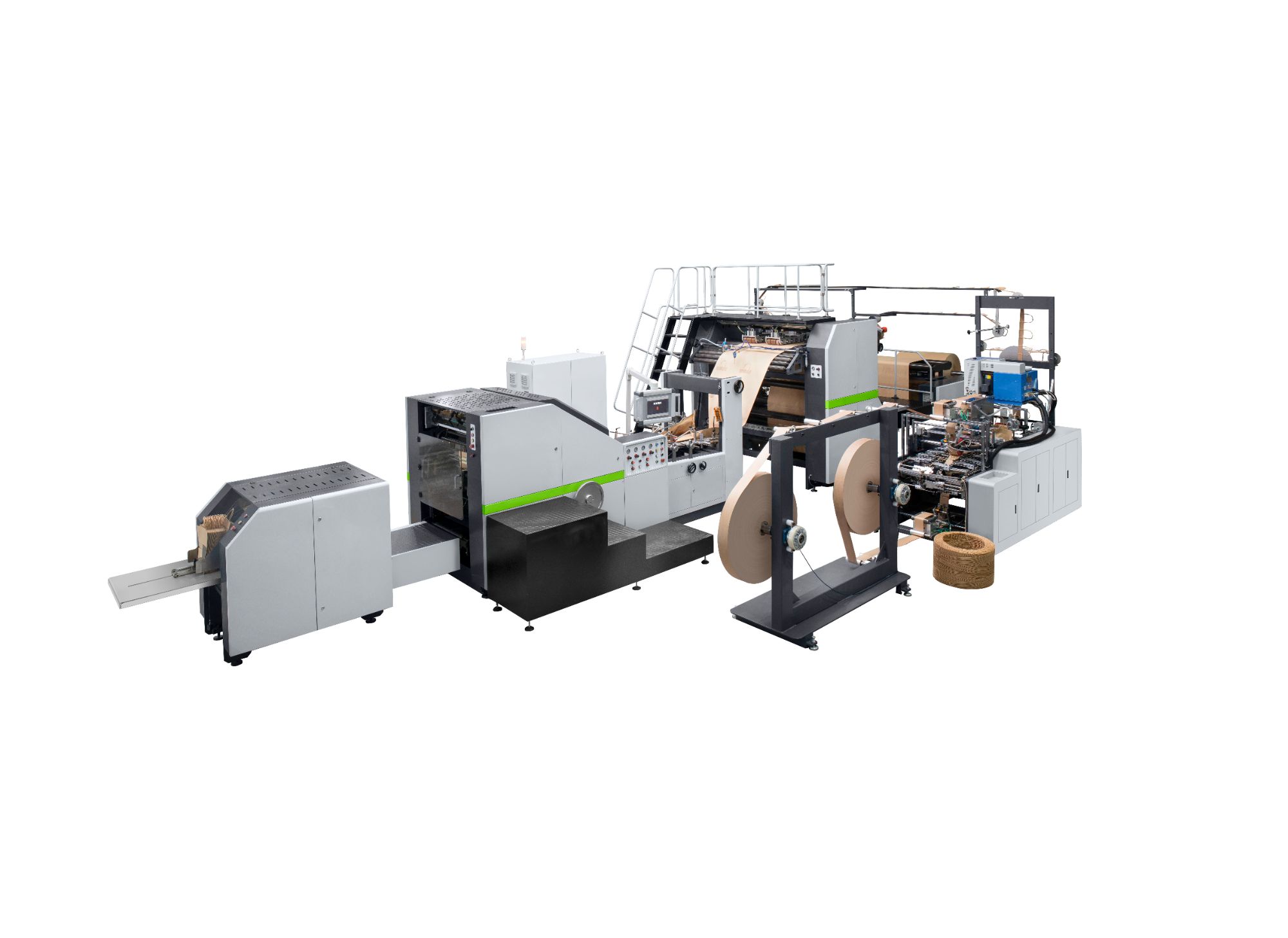
A motor's rated wattage is usually measured under a narrow set of conditions: a steady load, a specific voltage, and an ideal operating temperature. The moment that motor is asked to start a heavy drum, climb a long grade, or run against a fluctuating current, the number on the label loses meaning. Real output depends on where the motor sits in its torque curve and how much of that electrical input actually becomes usable mechanical work.
Heat is another factor that quietly erodes the gap between nameplate power and what a machine can actually deliver. Under continuous use, windings warm up, resistance shifts, and efficiency drops. Two motors with the same printed wattage can behave very differently once one of them is mounted in a tight housing with poor airflow or paired with a gearbox that introduces its own losses.
The load itself changes the equation as well. Some applications need brief bursts of high torque, while others demand sustained speed under variable resistance. A motor that performs well on a bench test may struggle when it has to overcome startup inertia or maintain force through a long duty cycle. Without looking at the full power curve, the controller settings, and the mechanical path to the output shaft, a single wattage figure leaves out most of the story.
Paper Stretch, Moisture, and the Limits of a Fast Line
In a moving web, stretch is rarely uniform. As tension rises, the sheet elongates slightly, but moisture gradients across the width and along the machine direction turn that elongation into a moving target. A zone that is wetter gives more readily, while a drier edge holds its shape longer. This mismatch feeds directly into registration drift and baggy edges, which become harder to correct as line speed climbs.
Moisture also changes the fiber network itself. Water acts as a plasticizer, loosening hydrogen bonds between fibers so the sheet can extend further before breaking. That sounds forgiving, but it also means the paper's elastic recovery is less predictable. If the sheet enters a dryer section with uneven moisture, the subsequent shrinkage locks in curl and cockle, and the fast line simply carries those defects downstream faster instead of giving operators time to react.
The practical limit is therefore not just about tensile strength. It sits where tension, moisture variation, and the short dwell time of a high-speed process intersect. Beyond that point, the control window narrows: a small spike in humidity or a slight shift in pulp refining can push the web past its stable stretch range, producing wrinkles, web breaks, or misregister that no downstream correction can fully hide.
Changeover Time Eats High-Speed Gains Faster Than You Think
The appeal of a faster line usually starts with the cycle time printed on the spec sheet. What that number hides is the dead space between runs. A machine that trims three tenths of a second per part looks impressive until a twelve-minute job change erases the gain from nearly three thousand cycles. High speed simply makes every wasted minute more expensive, because the machine could have been producing far more pieces while it sat idle.
Changeover losses are not always obvious on daily reports. They get buried in downtime codes or averaged across a shift, so the true cost stays hidden. Yet a press or filler that runs 25 percent faster also loses 25 percent more potential output during the same wait. If a team only measures parts per minute while running, it misses the larger story: the clock keeps ticking during setups, and those minutes multiply quickly. Speed without quick changeover is just faster waiting.
Maintenance Triggers That Keep a Fast Machine Running Clean
A fast machine doesn't stay clean by accident—it gets that way because someone paid attention before the mess had a chance to settle in. The first trigger is simple: after any run that leaves visible residue, whether it's dust from a dry cut or a thin film from a humid day, the surfaces get wiped down before shutdown. Not a deep scrub, just a quick pass with a microfiber and a dry spot-check around seals and vents. That small habit stops buildup from hardening into something that needs solvent later.
The second trigger is tied to sound and feel. When a bearing starts to hum slightly differently, or a guide feels just a bit stickier than it did yesterday, that's the cue to stop and look. It's not about waiting for a scheduled maintenance day—it's about treating those early hints as part of the machine's language. A drop of oil on a dry slide now means you won't be fighting the same slide next week. Over time this turns maintenance from a chore into a rhythm.
The third trigger lives in the logbook, but not as a rigid checklist. Instead of writing “cleaned” every Friday, you note what actually came off the machine. If one week the log says “wipe down only,” and three weeks later it says “scraped old grease from under the carriage,” that's a signal. The interval between deeper cleans shortens or lengthens based on those notes. The goal isn't perfect records—it's keeping the machine running so smoothly that a dirty week stands out immediately.
Field-Testing Manufacturer Speed Claims Before You Commit
A speed rating on a cut sheet only tells you what the machine did on one afternoon, under conditions the manufacturer controlled. If the number matters to your throughput, ask to run the test yourself. Bring a batch of your actual stock or product, use your own operator if possible, and time the full sequence from load to unload. Peak cycle speed often hides slow ramping, pauses for tool changes, or feed adjustments that show up only when real work is in the machine.
Push beyond a ten-minute demo. Let the equipment run for several hours and note whether the pace holds as components warm up, belts settle, or cutting edges begin to wear. Ask for the raw cycle log rather than a summary. A vendor who quietly deletes alarm stops or manual overrides from the record is giving you a laboratory number, not a production one.
Have a second operator repeat the same process without vendor coaching. Manufacturer claims often assume a highly practiced hand setting every parameter, but your shop will likely see more variation. Compare the observed cycle times against the quoted figure, and leave a realistic cushion for shift changes, material inconsistencies, and maintenance. If the equipment only hits its claimed speed under perfect conditions, treat that gap as part of the purchase cost.
FAQ
Ask for a timed run on the exact bag size, paper weight, and handle style you plan to run. A machine rated at 500 bags per minute may drop well below that once a square bottom or twisted handle station is engaged, so request footage or an on-site trial with your own material.
Lighter recycled stock is less stable under acceleration and more sensitive to moisture changes. Without closed-loop web tension and segmented draw rollers, the paper drifts, wrinkles, or tears at the cutoff, so the frame and tension zones need to be tuned for a narrower operating window.
It depends on paper dust, run speed, and shift length, but creasing plates, perforating blades, and glue applicator tips usually need attention before they look worn. Many plants track cycles per shift and replace those parts on a schedule tied to bag count instead of waiting for rejects to appear.
Look for servo-adjusted formers, cartridge-style glue heads, and stored recipes that recall settings for each SKU. When everything moves by hand, a size change can eat an entire shift; with repeatable motorized stops, two operators can often complete the switch in under twenty minutes.
Hot melt systems tend to be easier to keep consistent than cold glue when the line runs nonstop, but they require strict temperature control and clean nozzles. The real advantage comes from a closed applicator that re-melts evenly and does not leave stringing across the bottom patch.
It is worth it if you frequently switch branded runs or want to eliminate a separate printing step. The trade-off is that washup, plate changes, and registration checks now happen on the bag line itself, so the crew needs to recognize when to slow the machine slightly rather than chase defects at full speed.
Stable humidity, clean power, and enough space for paper roll staging make a bigger difference than most people expect. Paper that absorbs moisture between storage and the unwind will change its stiffness, and cramped roll loading often causes edge damage that leads to jams later.
If your order profile mixes short custom runs with high-volume stock bags, two narrower lines may outperform one wide line. A single wide machine is efficient when it runs long jobs, but frequent width changes and washups can eat the output advantage quickly.
Conclusion
Many converters assume that pushing a paper bag line to its maximum advertised speed will automatically lower unit costs, but the connection between velocity and scrap is often ignored. A machine running beyond its practical sweet spot can generate misaligned seams, torn patches, and wrinkled gussets that quietly erase the savings from faster cycling. Equally misleading is the habit of comparing motor power ratings across suppliers. A high-kilowatt drive says little about how well the unwind, forming, and delivery sections stay synchronized under acceleration; real output depends on how the line handles tension spikes and stops without crumpling the web. Paper itself also sets hard boundaries. Lightweight or recycled grades respond differently to moisture and ambient humidity, and high-speed drawing can cause stretch or curl that makes clean bag geometry harder to hold.
Changeovers are another place where nominal speed loses meaning. A machine that runs fast but takes thirty minutes to switch bag width or handle style will fall behind a slower line with quick tool-free adjustments. Ongoing upkeep matters just as much: dull perforation blades, worn rubber rollers, and drifting seal temperatures may not stop a line, but they create intermittent rejects that force operators to slow down or rework. Before committing to a supplier, buyers should run their own trials on the actual paper grades and bag sizes they intend to produce, measuring sustained output over a full shift rather than a short demo. Counting good, saleable bags per hour, including startup waste and changeover downtime, gives a far more realistic picture than any brochure figure.
Contact Us
Contact Person: CARA
Email: [email protected]
Tel/WhatsApp: +8619519778302
Website: https://www.rokinmachinery.com