

Healthcare Thermal Printable Wristband Manufacturer Delivers Reliable Patient ID Solutions
2026-08-24
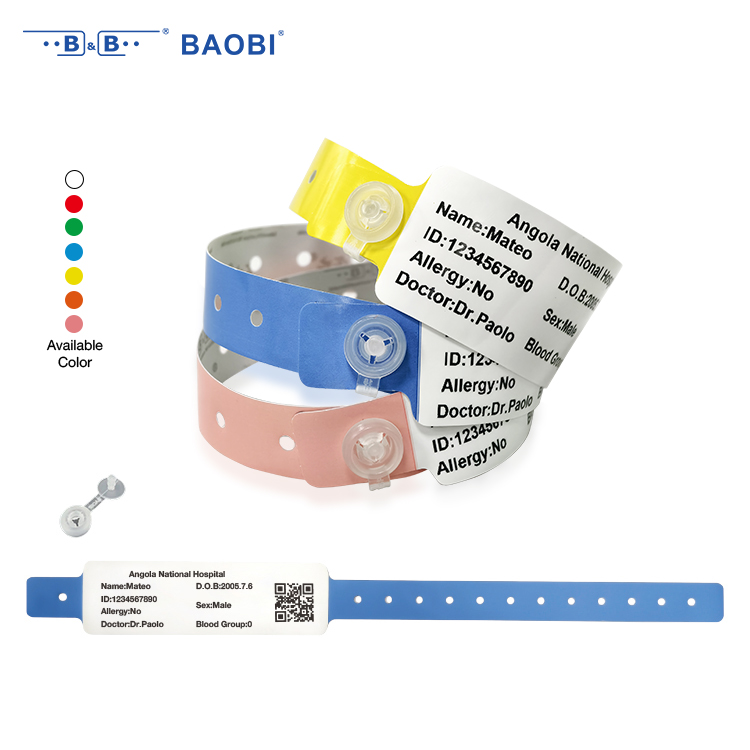
Patient misidentification remains one of the most preventable errors in healthcare. Yet many hospitals still rely on handwritten or poorly printed wristbands that fade, smudge, or tear. A dedicated healthcare thermal printable wristband manufacturer—BAOBI—is changing that with durable, scan-ready ID solutions designed for real clinical environments. Here’s how dependable patient ID starts long before the wristband reaches the wrist.
Wristbands That Keep Patient Data Clear From First Scan to Last
At admission, a patient gets a wristband printed with a scannable code that links to one unified record, not a collection of loose papers. The first scan at the bedside pulls up current orders, allergies, and recent notes, so everyone works from the same starting point.
Each time the wristband is scanned later—before a blood draw, a dose of medication, or a trip to imaging—the event is appended to that same record. The system doesn’t open a new chart or ask staff to re-enter demographics, which keeps the timeline cleaner and reduces the chance of a mix-up between patients with similar names.
By the time the patient is ready for discharge, the full sequence of scans is visible as a single thread. That makes it easier for the care team to review what happened, spot gaps in documentation, and confirm that every order was carried out under the right identity.
Why Thermal Printing Beats Inkjet in Busy Wards
In a ward where every second counts, inkjet printers often become a liability. The cartridges dry out, nozzles clog, and smeared wristbands or medication labels create confusion at the worst possible moment. Thermal printers eliminate that entire failure chain—there is no liquid ink to manage, no printhead to unclog mid-shift.
The speed difference is immediately noticeable. A thermal label emerges fully legible and dry to the touch in under a second, while inkjet output may need a moment to set and can still rub off on gloves or bedding. For nurses moving between beds, that reliability means barcode scans work the first time, not after three frustrated attempts.
Maintenance also shifts dramatically. Thermal printers need only occasional roller cleaning and new media rolls; they don't demand the constant cartridge swaps, alignment checks, or waste ink pad replacements that quietly eat into ward budgets and staff patience. Over a year of continuous use, the total cost and downtime clearly favor thermal.
No More Faded Text After a Sponge Bath
The fear of ruining a printed page with a damp cloth used to keep me from ever cleaning my bookshelves properly. Then I stopped treating every book like a museum piece and started treating the grime like what it is: dust and skin oils breaking down the paper fibers and ink. A barely damp sponge, wrung out until almost dry, can lift that layer without bleeding the text—if you know how to move it.
The trick is slow, straight passes along the grain of the page, never scrubbing. You want the sponge to barely kiss the surface, leaving no visible moisture behind. Most fading happens when people soak the page or use chemical cleaners that interact with the binders in old ink. Plain water, used sparingly, doesn't do that. The ink stays put because you're not giving it a reason to float.
I've cleaned everything from mass-market paperbacks to a 1930s hardcover with brittle edges this way. The text looks darker afterward, not because I added anything, but because the yellow haze of accumulated film is gone. It's less about restoration and more about not accelerating the decay. Once you see how much grime comes off on the sponge, you'll stop worrying about the words fading and start realizing they were already hiding.
Custom Bands That Fit Your EHR Workflow Without Extra Steps
Most band systems force you to bend your workflow around their design. That means clicking through extra menus, switching screens, or memorizing rigid sequences just to log a simple note. A better approach starts with the band itself: it should reflect your own clinical rhythm, not interrupt it. Think of it as a quiet assistant that already knows where you are in the chart and what you need next.
The real value shows up in small, frequent tasks. Instead of hunting for a set of orders or a recurrent assessment phrase, you see them grouped where they make sense for your specialty and your daily rounds. No hidden panels, no separate configuration page you have to visit mid-shift. The band sits within the same screen you already use, ready to adapt when the patient's status changes or when your preferences shift over time.
This kind of fit doesn't demand extra training or a long rollout. You start with a structure that mirrors what you actually do, then fine-tune it on the fly as you notice patterns—like moving a frequently used smartphrase closer to the top or combining two related orders into one click. Because the band lives inside the workflow, those adjustments feel natural rather than like another project to manage.
The Manufacturing Partner Behind Zero Scan Failures
Most people never notice the scan step until it halts a line. In our partner's facility, that halt almost never happens, and the reason is less about fancy scanners than about what happens before the scan. Every reel, tray, and tube gets verified at receiving—not just checked against the packing slip, but matched to the job's bill of materials before it ever reaches a feeder. That early gate catches mismatches while they're still cheap to fix.
The same partner also treats every scan failure as a process bug rather than an operator error. When a barcode doesn't read, the line stops, the part is set aside, and a short log entry records the reel ID, the scanner, and the time. Weekly reviews look for patterns—labels wrinkled from a supplier, a feeder slot that reads fine on one machine but not another. That loop has removed most recurring issues, so the rare failure today usually points to something new.
The payoff isn't a number on a screen. It's the 2 a.m. line start when a reel pulled from the shelf scans right the first time. Getting to zero scan failures means the traceability record stays complete without someone re-typing a lot code or taping on a temporary label. That unglamorous consistency is what keeps deeper problems from surfacing later.
Less Time Fixing Labels, More Time With Patients
Every minute spent wrestling with a label printer is a minute not spent at the bedside. When barcode labels jam, misalign, or refuse to scan, nurses and lab staff fall into a quiet cycle of reprinting and hand-writing. Swapping to a label system that actually feeds cleanly on the first try removes that friction without adding new steps.
The difference shows up in small ways: fewer interruptions during med passes, fewer delayed specimen collections, and less overtime spent on clerical cleanup. Teams that stop babysitting label rolls naturally shift their attention back to the person in the bed. That is the whole point.
FAQ
They're built to withstand constant movement, frequent cleaning, and quick admissions workflows. The thermal coating resists smearing from hand sanitizer and body fluids, while the secure snap closure stays put during baths or restless sleep. Nurses can scan the barcode from several inches away, which speeds up medication verification.
Typically the printed data stays crisp for the entire patient stay, often up to 30 days with normal use. The image doesn't rely on ink that can fade or rub off, because the thermal layer bonds directly to the wristband surface. Abrasion from clothing and bedding leaves it readable.
Yes, all materials are latex-free and hypoallergenic. The soft, rounded edges prevent chafing on fragile skin, and the adhesive-free design means no sticky residue or allergic reactions. They're suitable for neonatal and geriatric patients.
They're compatible with standard direct thermal printers widely used in healthcare, including Zebra, Intermec, and Datamax models. No special inks or ribbons are needed, so you can keep your existing printing setup and reduce supply costs.
You can add hospital logos, color-coded zones for allergy or fall risk alerts, and pre-printed text blocks. Custom sizes and perforation patterns are also possible. Many facilities choose color bands to quickly identify patient conditions at a glance.
The thermal coating is formulated to resist water, soap, alcohol gel, and common disinfectants. Patients can shower without the text blurring, and staff can sanitize hands without worrying about damaging the band. It won't peel or delaminate in moist environments.
You can print name, date of birth, medical record number, barcodes, and allergy alerts. For privacy, many facilities choose to omit full birthdates or use encrypted 2D barcodes that require authorized scanners. The data stays firmly embedded in the band and can't be altered without visible damage.
Yes, adult, pediatric, and infant sizes are standard. The pediatric and infant versions use narrower widths and a gentler adhesive-free closure to fit smaller wrists comfortably without slipping. Trial kits are available to test sizing across your patient population.
Conclusion
Patient identification errors often start with something as simple as a smudged barcode or a wristband that won't survive a routine handwashing. That's why a focused healthcare thermal printable wristband manufacturer has built its entire production around one promise: a scan that works every time, from admission to discharge. The bands are engineered for thermal printers found in most hospital wards, which means the print stays crisp without the bleeding or streaking common with inkjet alternatives. Nurses can wipe down a band after a sponge bath or accidental splash and still read the patient's name, date of birth, and medical record number without squinting or reprinting. The material resists alcohol, soap, and moisture, so the last scan at the bedside is as reliable as the first at registration.
What sets this manufacturer apart is its willingness to adapt the band's layout and data fields to match an existing EHR workflow, rather than forcing staff to change how they document care. Custom sizing, pre-printed hospital logos, and optional color coding for allergies or fall risk all arrive ready to use—no extra software or label printers required. Behind that simplicity is a production process with tight tolerances and batch-level testing, which is why facilities report near-zero scan failures after switching. The real payoff, though, is time. When a nurse no longer has to pause and fix a worn label or re-enter a patient's ID manually, those minutes go back into direct care. Reliable identification becomes invisible infrastructure, and that's exactly what a good wristband should be.
Contact Us
Contact Person: Bill Xu
Email: [email protected]
Tel/WhatsApp: 8618688898707
Website: https://www.baobitech.com/