

Exporting Aromatic Carbonyl Intermediates: A Comprehensive Industry Guide
2026-07-20
The global market for aromatic carbonyl intermediates is evolving rapidly, driven by surging demand in pharmaceuticals, agrochemicals, and advanced materials. Yet navigating the export landscape requires more than just product quality—it demands deep insight into regulatory frameworks, supply chain dynamics, and partner reliability. In this guide, we pull back the curtain on what it truly takes to succeed, drawing on the expertise of industry specialists like DSL Chemicals, whose tailored solutions and global reach have set a benchmark for excellence. Whether you’re scaling up or entering new territories, this is your blueprint for confident, compliant, and competitive exporting.
Understanding the Global Market for Aromatic Carbonyl Compounds
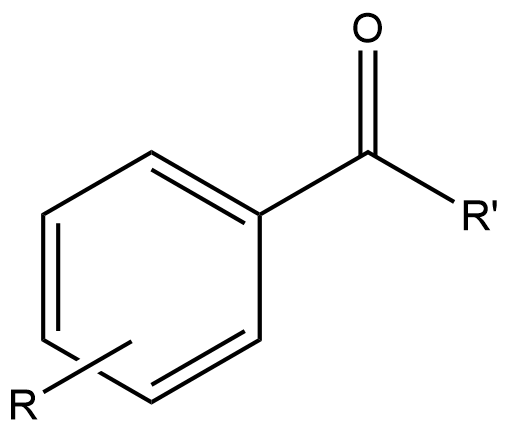
Aromatic carbonyl compounds, characterized by a carbonyl group attached to an aromatic ring, form a diverse and commercially vital class of organic chemicals. Their unique reactivity and structural versatility underpin applications spanning high-value fragrances, pharmaceutical intermediates, and advanced agrochemicals. The market for these compounds is closely tied to innovation in end-use sectors, where demand for specialized molecules like benzaldehyde derivatives or vanillin alternatives continues to reshape global supply chains.
Regionally, Asia-Pacific dominates production and consumption, driven by robust manufacturing bases in China and India and expanding middle-class demand for personal care and processed foods. Meanwhile, Europe and North America maintain strong positions in high-purity, custom-synthesized variants, leveraging technological expertise and stringent quality standards. Regulatory shifts toward bio-based feedstocks and greener synthesis routes are also beginning to redirect investment flows, with several producers exploring fermentation-derived vanillin as a drop-in replacement.
Persistent challenges include feedstock price volatility—particularly for petrochemical-derived benzene and toluene—and tightening environmental regulations on solvent-intensive processes. Nevertheless, ongoing research into catalytic upgrading of lignin and other renewable aromatics points to a future where the market decouples from crude oil dependency. Companies that can pair cost-competitive production with transparent sustainability credentials are likely to capture disproportionate value as downstream brands face increasing consumer pressure to verify ingredient provenance.
Regulatory Frameworks and Compliance in International Trade
Navigating international trade means constantly adapting to a shifting mosaic of rules. Every country layers its own import controls, export restrictions, and safety standards onto global agreements, creating a compliance puzzle that demands more than just checking boxes. Companies that treat this maze as a living system rather than a static checklist are better positioned to spot regulatory shifts early and adjust supply chains without disruption.
The real challenge lies in the gaps between overlapping jurisdictions. A product compliant under one trade bloc might still face hurdles elsewhere due to subtle differences in labeling laws or certification requirements. Successful firms often embed compliance thinking directly into product design and partner vetting, so that meeting disparate regulations becomes a byproduct of how they do business rather than a last-minute scramble.
Beyond written rules, enforcement trends and informal expectations shape the landscape just as much. Customs authorities increasingly use data analytics to flag inconsistencies, while trade disputes can suddenly rewrite tariff classifications overnight. Staying ahead means cultivating local expertise at key ports and investing in relationships that provide early warnings—turning regulatory complexity from a barrier into a strategic advantage.
Streamlining Logistics and Supply Chain for Chemical Exports
Navigating the complexities of global chemical shipping demands more than just transportation—it requires a tightly integrated approach that harmonizes procurement, documentation, and last-mile delivery. By consolidating freight management under a single framework, exporters can reduce delays caused by fragmented communication and inconsistent compliance checks. This shift from reactive troubleshooting to proactive orchestration keeps shipments moving, even when regulatory landscapes shift unexpectedly.
The backbone of an efficient chemical supply chain lies in visibility and adaptability. Real-time tracking of cargo conditions—temperature, pressure, and container integrity—combined with predictive analytics, allows logistics teams to anticipate bottlenecks before they escalate into costly standstills. Flexible routing strategies and pre-qualified alternative ports further ensure that hazardous and non-hazardous materials alike are not held hostage by regional disruptions, from port strikes to severe weather.
Beyond technology, fostering long-term partnerships with specialized carriers and in-country distributors transforms transactional relationships into strategic alliances. These partners bring nuanced knowledge of local handling protocols and customs nuances, which generic logistics providers often overlook. When chemical exporters invest in shared training programs and joint contingency planning, the entire supply chain evolves from a series of handoffs into a cohesive, resilient network capable of absorbing shocks and delivering reliably to every corner of the globe.
Quality Assurance and Specification Standards for Intermediates
Every intermediate batch undergoes rigorous testing against predefined specification limits. These parameters cover purity, moisture content, residual solvents, heavy metals, and particle size distribution, all verified through validated analytical methods. A certificate of analysis accompanies each shipment, detailing actual results alongside acceptance criteria, ensuring full traceability from raw material receipt to final dispatch.
Our quality management system integrates statistical process control to monitor trends and prevent variances before they occur. Stability studies under accelerated and long-term conditions support assigned retest dates, while forced degradation experiments identify potential impurities. Any deviation triggers a structured investigation, with corrective actions documented and reviewed.
Customer-specific requirements are addressed through tailored specification agreements. Whether a tighter impurity threshold or a customized particle morphology is needed, our technical team collaborates closely to define and validate achievable standards. This partnership approach ensures the intermediate not only meets general compendial standards but also aligns precisely with the intended downstream application.
Identifying Key Buyers and Distribution Channels Worldwide
Pinpointing the right buyers on a global scale starts with a deep dive into market research, but it’s the nuanced understanding of local preferences and business customs that truly sets successful efforts apart. Beyond generic databases, cultivating relationships through industry events, regional trade associations, and even social listening on platforms popular in target countries can reveal buyers who are actively seeking solutions. It’s not just about who’s buying now, but who influences purchasing decisions—often overlooked stakeholders like local consultants or regulatory bodies can shape demand in ways that a surface-level scan might miss.
Distribution channels demand equal creativity. While direct sales via a dedicated regional team or e-commerce platform offers control, partnering with local distributors or agents often provides instant credibility and access to established networks. The trick is matching the channel to the product’s complexity and the market’s maturity; for instance, high-touch technical products might thrive with specialized value-added resellers, while consumer goods could gain momentum through collaborative pop-up retail or partnerships with complementary brands. Testing multiple channels in a limited region before a full rollout frequently uncovers unexpected friction points or hidden efficiencies.
Ultimately, blending quantitative data—like market size and trade flow analysis—with qualitative insights from on-the-ground conversations helps paint a full picture. Revisiting channel performance regularly is crucial, as shifts in consumer behavior or regulatory landscapes can suddenly open or close entire routes to market. A flexible, relationship-forward approach often proves more resilient than rigid master plans, especially in regions where business hinges on trust built over time.
Pricing Strategies and Contract Negotiation for Bulk Chemicals
In bulk chemicals, pricing rarely follows a fixed list; instead, it often hinges on feedstock costs, supply-demand dynamics, and regional market indices. Sellers frequently adjust contract prices based on quarterly or monthly settlements of key raw materials like ethylene, propylene, or benzene. This pass-through mechanism protects both parties from extreme volatility, but it also demands transparent cost benchmarks—buyers should verify the index references and ensure they truly reflect market conditions to avoid inflated base costs.
Effective negotiation therefore centers on the formula itself: how much margin is added to the feedstock component, what floor and ceiling prices apply, and whether rebates or volume discounts are on the table. Long-term agreements often include take-or-pay clauses that obligate minimum offtake volumes, but buyers can push for flexibility with swing production clauses or off-spec adjustment options that reduce financial exposure during plant turnarounds or demand slumps. Payment terms likewise become a bargaining lever—shifting from prepayment to open account can lower working capital pressure without altering headline price.
Beyond price, logistics and incoterms frequently separate good deals from great ones. A competitive FOB offer might look attractive until barge scheduling delays or demurrage fees eat into margins. Seasoned procurement teams therefore negotiate dedicated storage at the supplier’s terminal, fleet capacity guarantees, or penalty clauses for late deliveries. Building in performance metrics and regular operational reviews during the contract drafting stage turns a static agreement into a living partnership, where both sides work to optimize total landed cost over time rather than just the invoice price.
FAQ
Aromatic carbonyl intermediates are organic compounds that feature a carbonyl group (C=O) attached directly to an aromatic ring, or within a structure that includes an aromatic system. Think benzaldehyde, acetophenone, or more complex molecules like anthraquinone derivatives. Their importance stems from their role as building blocks in synthesizing pharmaceuticals, agrochemicals, dyes, flavors, and specialty polymers. The aromatic ring provides stability and unique electronic properties, while the carbonyl group is a versatile reactive center, enabling countless transformations. Without them, many modern medicines and high-performance materials simply wouldn't exist.
The category spans a wide range, but a few key families stand out. Aromatic aldehydes like vanillin and cinnamaldehyde are widely used in flavors and fragrances. Aromatic ketones, such as benzophenone, serve as photoinitiators in coatings and UV-curable systems. Then you have aromatic acids and their derivatives—think salicylic acid for aspirin production. Quinones like benzoquinone and anthraquinone are essential in dyes and as redox agents. Even more specialized are heteroaromatic carbonyls, where the aromatic ring contains nitrogen or sulfur, often found in active pharmaceutical ingredients. Each subcategory has its own supply chain quirks.
First, you need to nail down the regulatory landscape—and it's often a patchwork. Start with a full classification: get the correct Harmonized System (HS) code, because that dictates tariffs and clearance. Then, check if your product is subject to international chemical control treaties like the Chemical Weapons Convention or Rotterdam Convention. Simultaneously, you must understand the importing country's chemical registration requirements, like REACH in the EU or TSCA in the US. Next, focus on logistics: many aromatic carbonyls are sensitive to heat, light, or moisture, so validated packaging and cold chain management might be non-negotiable. Finally, secure proper documentation—Safety Data Sheets (SDS), Certificates of Analysis (CoA), and sometimes a Certificate of Origin. A single mistake in paperwork can hold a container at port for weeks.
Unlike bulk solvents or polymers, these intermediates often fall into the 'fine chemicals' category, which means lower volumes but much higher value. Supply chains tend to be more fragmented and less transparent. Production is often concentrated in specific regions—China and India dominate many low- to medium-complexity products, while high-purity, cGMP-grade materials might only come from a handful of European or Japanese manufacturers. Lead times can be long because many are made to order, not stocked. Quality consistency is another headache: minor impurities, like trace metal residues, can ruin a downstream pharmaceutical synthesis, so lot-to-lot reproducibility requires rigorous supplier auditing. Shipping can be trickier too; some compounds are classified as dangerous goods (e.g., flammable solids or toxic substances) and face stricter transportation rules.
The biggest trend is the shift toward green chemistry and circular economy principles, which is changing what buyers demand. In Europe, the European Green Deal and the Chemicals Strategy for Sustainability are putting scrutiny on hazardous substances, meaning exporters must provide detailed lifecycle data and explore safer alternatives. Carbon footprint is becoming a differentiator—transportation emissions, solvent recovery, and energy-intensive syntheses are all under the microscope. Also, extended producer responsibility concepts are emerging, where exporters might need to plan for take-back or recycling schemes. On the regulatory front, countries are aligning with the Globally Harmonized System (GHS) for classification and labeling, but implementation varies. A practical tip: proactively document your process mass intensity and have a cradle-to-gate life cycle assessment ready, because sophisticated buyers now ask for it.
One pitfall is assuming the supplied product meets specs based on a generic certificate. You need to pre-qualify the analytical methods: is the purity measured by HPLC or GC? What's the detection limit for key impurities? Another issue is stability during transit. A product that passes QA at the factory might degrade in a hot shipping container, especially if it's light-sensitive or hygroscopic. So accelerated stability studies mimicking transport conditions are essential. Cross-border documentation errors are rampant—an SDS not compliant with the destination country’s GHS revision, or a missing CAS number on the commercial invoice. Finally, sampling at the receiving end must be statistically sound; I've seen entire batches rejected because the buyer’s retest used a non-representative sample, leading to wrongful disputes.
Pricing is tied to multiple factors: upstream raw material costs (often petrochemical or natural extract-based), energy prices for synthesis, and spot availability of key intermediates. Currency fluctuations add another layer for exporters. Smart buyers and sellers use a mix of strategies. Long-term contracts with price adjustment formulas—linked to indices like ICIS or Platts—can provide stability. Diversifying feedstock sources, where possible, reduces exposure to a single raw material spike. Building buffer inventory during low-price cycles helps, but that ties up capital and risks degradation. Transparency in communication with partners is invaluable; sharing forecast and capacity information often leads to mutually beneficial arrangements during crises, rather than adversarial negotiation.
Absolutely. One growing area is the demand for bio-based aromatic carbonyls—vanillin from lignin, for example, or microbial fermentation-derived benzaldehyde—driven by the natural and clean-label trends in food and cosmetics. Another opportunity is in the electronics sector: high-purity aromatic carbonyls are used as monomers for specialty polymers in flexible displays and advanced photoresists. The pharmaceutical outsourcing boom in Southeast Asia and Latin America is creating new demand for locally available intermediates, bypassing traditional hubs. Also, as mRNA and oligonucleotide therapies advance, there's a need for ultra-high-purity protecting group reagents, many of which are aromatic carbonyl derivatives. The key is to couple technical R&D with market intelligence and tailor your product purity and packaging to these niche requirements.
Conclusion
Navigating the global trade of aromatic carbonyl intermediates demands a deep grasp of shifting market dynamics and a proactive approach to regulatory compliance. The landscape is shaped by evolving demand patterns across pharmaceuticals, agrochemicals, and specialty materials, with regional hubs like Asia-Pacific and Europe driving both production and consumption. Success hinges on more than just chemical expertise; it requires a nuanced understanding of cross-border regulations such as REACH, TSCA, and emerging green chemistry mandates that can abruptly disrupt established supply chains. Companies that treat compliance not as a hurdle but as a strategic advantage—by embedding sustainability and transparency into their processes—often find doors opening in highly regulated markets. Furthermore, mapping key buyers and distribution channels is not a one-time exercise but a continuous effort to align with shifting industry clusters and preferred supplier networks.
On the operational side, flawless logistics and rigorous quality assurance form the bedrock of long-term partnerships. Temperature-sensitive intermediates demand meticulous cold chain management, while documentation accuracy prevents costly border delays. Aligning specifications with internationally recognized standards, such as those from the European Pharmacopoeia or ACS, builds trust with technical buyers who prioritize consistency over price. When negotiating contracts, a blend of cost competitiveness and value-added services—like tailored packaging or just-in-time delivery—can differentiate an offering in a crowded field. Smart pricing strategies incorporate raw material volatility and currency risks, often through indexed formulas or staggered agreements, safeguarding margins while offering transparency. Ultimately, thriving in this sector means weaving together regulatory savvy, supply chain resilience, quality commitment, and commercial agility into a cohesive export strategy that withstands global uncertainties and fosters enduring client relationships.
Contact Us
Contact Person: Wei Zhang
Email: [email protected]
Tel/WhatsApp: 862163529955
Website: https://www.dslchem.com