

Customized Spiral Freezer Manufacturer Delivers Tailored Freezing Solutions
2026-05-08
In the competitive realm of food processing, one-size-fits-all freezing equipment often falls short. That’s where a customized spiral freezer manufacturer steps in, offering tailored freezing solutions that align precisely with your operational needs. Worldbase excels in crafting these bespoke systems, ensuring optimal throughput, energy efficiency, and product quality. Read on to discover how personalized design can elevate your freezing process.
Why Customization Matters in Spiral Freezing Systems
Off-the-shelf freezing equipment often forces food processors to adapt their production lines to the machine, rather than the other way around. Batch sizes, floor layouts, and product characteristics vary dramatically between facilities, and a one-size-fits-all spiral freezer can create bottlenecks, compromise product quality, or waste valuable factory floor space. Customization shifts this dynamic, allowing the freezing system to be designed around your specific operational realities. When a spiral freezer is tailored to your throughput targets, belt width, tier spacing, and airflow patterns can be optimized to handle your exact product dimensions and production volume, eliminating unnecessary compromises from day one.
The real impact of customization becomes clear when you consider how different products behave during freezing. Delicate items like individually quick-frozen (IQF) berries require gentle handling and precise airflow to prevent clumping or damage, while dense products like meat patties need higher heat extraction rates to achieve core temperature targets efficiently. A custom-engineered system can integrate specialized belt materials, adjustable dwell times, and zone-specific temperature controls that match these thermal and mechanical demands. This level of fit not only preserves product integrity—maintaining texture, moisture, and appearance—but also reduces energy consumption by avoiding over-engineered cooling that a generic system might apply. The result is a freezing process that feels almost invisible, consistently turning out a product that looks and tastes as intended, batch after batch.
Beyond immediate performance, customization plays a critical role in future-proofing your investment. As product lines evolve or seasonal demands shift, a well-designed spiral system can incorporate modular features—like variable-speed drives, interchangeable belt configurations, or expandable tower sections—that allow capacity or functionality adjustments without a complete overhaul. This forward-looking approach sidesteps the hidden costs of rigid machinery that quickly becomes a constraint. Facilities that opt for tailored solutions often find they can respond to market changes faster, trial new products with less risk, and maintain a competitive edge simply because their equipment was built to flex with them. In the end, customization isn’t a luxury; it’s a practical strategy for staying agile and efficient in a market that never stands still.
How Tailored Designs Improve Production Efficiency
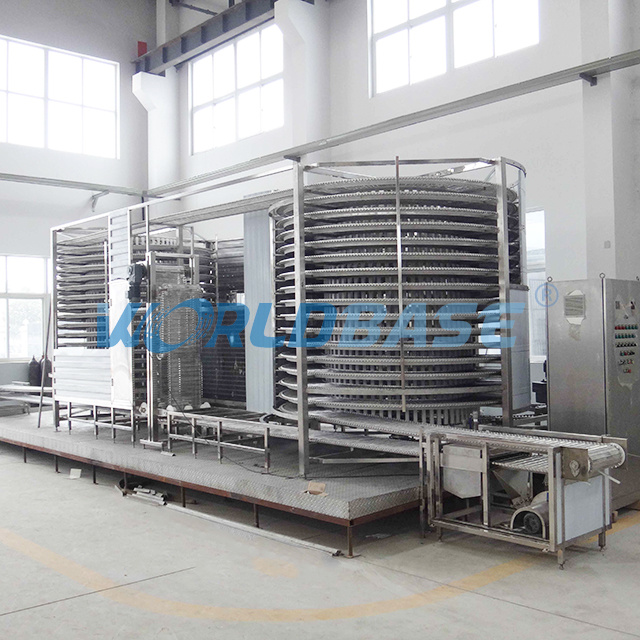
Tailored designs cut out the clutter, leaving only what directly serves the manufacturing process. This sharp focus eliminates redundant steps and makes each movement on the floor count, turning complex assemblies into intuitive sequences that workers can execute faster and with fewer errors.
When parts and tools are shaped to the exact demands of a production line, they slot into automated systems without friction, reducing the need for adjustments and halts. The result is a steady rhythm where machines and people work in sync, pushing output up while keeping strain on equipment low.
Customization also means material use gets smarter. Designs that match technique avoid overbuilding, so less gets trimmed and discarded. That lean approach not only speeds up throughput but also keeps costs grounded, all while holding quality steady.
Key Industries Benefiting from Bespoke Freezing Solutions
Food processors and cold storage operators have long relied on standard blast freezers, but bespoke solutions now let them fine-tune cycles to preserve texture and flavor in everything from delicate berries to artisan breads. Instead of a one-size-fits-all approach, these tailored systems adjust airflow and temperature ramping, locking in freshness without the ice crystal damage that ruins quality.
Pharmaceutical and biotech labs benefit equally, where precise freezing keeps vaccines, cell therapies, and reagents stable. Off-the-shelf units often struggle with the narrow temperature windows these materials demand; custom-engineered freezers maintain uniformity even under frequent door openings, safeguarding years of research and stringent regulatory compliance.
Specialty manufacturing sectors—think aerospace composites and high-end electronics—also turn to bespoke freezing for stress relief and component testing. By programming exact cooling profiles, engineers can simulate extreme environments or stabilize alloys without introducing micro-fractures, proving that tailored chilling is as much about industrial precision as it is about preservation.
The Engineering Behind Custom Spiral Freezers
Every custom spiral freezer starts with a careful analysis of the product's thermal properties and the desired throughput. The belt path, drum diameter, and tier spacing are not one-size-fits-all; they evolve from the need to balance footprint constraints with the required dwell time. Advanced computational fluid dynamics models are then used to map the airflow, ensuring that cold air is directed precisely across the product zone without excessive turbulence or wasteful bypass. This targeted circulation, often achieved through purpose-built finned coil arrays and radial fan placements, minimizes dehydration and ice crystal formation while maintaining a uniform temperature envelope, even in freezers operating at cryogenic ranges.
The structural framework demands equal attention. Repeated thermal contraction and expansion cycles can fatigue a poorly designed frame, so engineers select alloys and stainless steel grades that remain tough at subzero temperatures. Belt materials are chosen for their performance under constant tension and cold, with some designs incorporating self-stacking belts that eliminate the need for separate support rails, simplifying sanitation. Insulated panels are engineered with high-density polyurethane cores and tongue-and-groove joints to curb thermal bridging, while the drive system—often a friction-driven drum—uses torque-limiting couplings to prevent jamming. On the controls side, a blend of variable-speed drives and strategically placed thermocouples gives operators the ability to fine-tune airflow and belt speed without stopping production, a critical edge when processing heat-sensitive or irregularly shaped items.
Ensuring Food Safety with Precise Temperature Control
Getting temperature control wrong isn't just a minor slip—it can turn a kitchen into a hazard zone. Bacteria thrive between 40°F and 140°F, doubling in as little as 20 minutes. A fridge set above 40°F or a slow cooker that barely simmers creates a perfect storm for pathogens like Salmonella. Precise control means using calibrated thermometers, not guesswork, to keep cold foods cold and hot foods hot. That digital probe you use isn't just a gadget; it's the frontline defense between a safe meal and a recall-level disaster.
Think about the complexity of a supply chain: from farm to fork, every handoff risks breaking the cold chain. Trucks with miscalibrated reefers or warehouse coolers that fluctuate even a few degrees can warm perishables into the danger zone. Modern monitoring systems that log minute-by-minute temperatures aren't overkill—they're essential. They turn passive storage into active guardianship, flagging shifts before they turn into outbreaks. It's not about flashy tech for its own sake; it's about building a net so tight that a single slip gets caught long before a plate reaches the table.
In the kitchen, the battle continues. A steak that looks beautifully seared might still hide a cool center, sheltering E. coli. Relying on touch or color is playing roulette with your guests' health. Instead, instant-read thermometers ensure ground beef hits 160°F and poultry reaches 165°F—no excuses. It's the difference between confidence and caution. Even in holding stations, precise heat maintenance keeps buffet trays safe without turning them into dried-out messes. Food safety isn't a signoff; it's a rhythm of constant, exact adjustments that separates a professional operation from a gamble.
Partnering with a Manufacturer for Long-Term Success
Building a solid partnership requires moving past transactional thinking. Lasting manufacturing collaborations are rooted in mutual trust, clear communication, and a shared direction. When both parties see the relationship as a strategic alliance rather than a simple buyer-supplier arrangement, they unlock lasting value.
Effective cooperation means committing to continuous improvement and flexibility. Regularly reviewing processes, exchanging honest feedback, and jointly solving problems keep both sides ahead in quality, efficiency, and innovation. A good manufacturer brings practical industry insights that help you navigate shifting markets.
Ultimately, success comes from nurturing a deep connection. Investing in the relationship—through joint planning, knowledge exchange, and mutual support—builds resilience. It helps both partners stay stable during challenges and seize opportunities together.
FAQ
They design and build spiral freezers that precisely match your production capacity, product type, and facility layout—no one-size-fits-all approaches here.
By optimizing belt width, tier spacing, and airflow patterns for your specific product, these machines reduce freezing time and energy use while maximizing throughput.
Absolutely. Their engineering team works with your floor plan to configure the freezer's footprint, height, and entry/exit points so it integrates seamlessly.
Bakeries, meat processing, seafood, ready meals, and ice cream producers all gain from spiral freezers built for their distinct product characteristics and hygiene requirements.
They incorporate easy-clean features like sloped floors, accessible CIP systems, and durable materials chosen for your sanitation protocols, which simplifies upkeep.
Timelines vary by complexity, but they prioritize efficient project management and often deliver within a competitive window, keeping your expansion plans on track.
Beyond commissioning, they offer training, remote monitoring, and responsive service visits to ensure your freezer runs optimally for years.
Conclusion
Spiral freezers have become indispensable in food processing, yet off-the-shelf systems often fall short when production lines demand unique spatial constraints, product characteristics, or throughput targets. A manufacturer dedicated to customization steps in at this critical juncture, engineering freezing solutions that align precisely with a facility’s workflow and product range. By adjusting belt width, tier spacing, and airflow patterns, tailored designs can dramatically improve freezing uniformity and overall efficiency, reducing energy consumption while maximizing output. Bakeries, seafood processors, and prepared meal manufacturers are among the sectors reaping the most benefits, as bespoke configurations accommodate delicate items, high moisture content, or rapid freezing requirements that generic equipment simply cannot handle.
Behind these tailored systems lies rigorous engineering that integrates advanced refrigeration cycles, variable-speed drives, and precise instrumentation. Such attention to detail ensures unwavering temperature control, which is critical for food safety and compliance with stringent standards. Moreover, a collaborative partnership with the manufacturer from initial design through installation and after-sales support yields long-term operational resilience. This approach not only future-proofs the investment but also enables continuous fine-tuning as production needs evolve, creating a foundation for sustained product quality and business growth without the compromises inherent in standardized machinery.
Contact Us
Contact Person: Mr Yang
Email: [email protected]
Tel/WhatsApp: +8613809083091
Website: https://en.worldbase.cn