

China Storage Tank: Innovations Shaping the Future of Industrial Containment
2026-05-22
Industrial storage solutions are evolving faster than ever, and China's tank innovations are rewriting the rules of containment. From smart monitoring systems to corrosion-resistant materials, these advancements aren't just incremental—they're transformative. At the forefront of this shift is a new wave of engineering that prioritizes safety, efficiency, and sustainability. With experts like DYE driving the conversation, the future of storage technology looks more robust and intelligent than we ever imagined. Here's what's changing—and why it matters.
Beyond Steel: New Materials Redefining Storage Tank Durability
For decades, steel has been the go-to material for storage tanks, prized for its strength and relative affordability. Yet, its limitations are becoming increasingly apparent as industries demand longer lifespans and resistance to harsh chemicals, extreme temperatures, and constant corrosion. The age of steel dominance is fading, making way for a new class of materials that promise to revolutionize how we store everything from water to volatile industrial liquids.
Advanced composites, such as fiberglass-reinforced polymer (FRP), are leading this shift. Unlike steel, FRP tanks resist rust and corrosion without requiring protective coatings that can fail over time. Their lightweight nature simplifies installation and reduces transportation costs, while their design flexibility allows for seamless, joint-free constructions that minimize leak risks. Additionally, innovations like polyethylene alloys and hybrid materials are challenging traditional assumptions, offering enhanced chemical compatibility and impact resistance that steel simply cannot match.
The move toward these novel materials isn't just about durability—it's a strategic choice for businesses focused on long-term operational efficiency. With reduced maintenance needs, lower lifecycle costs, and the ability to handle more aggressive substances, these modern tanks are setting new industry standards. As engineering horizons expand, the question is no longer whether steel can keep up, but how quickly these new solutions will become the default for critical storage applications worldwide.
Smart Tanks, Smarter Operations: Embedding IoT and Real‑Time Monitoring
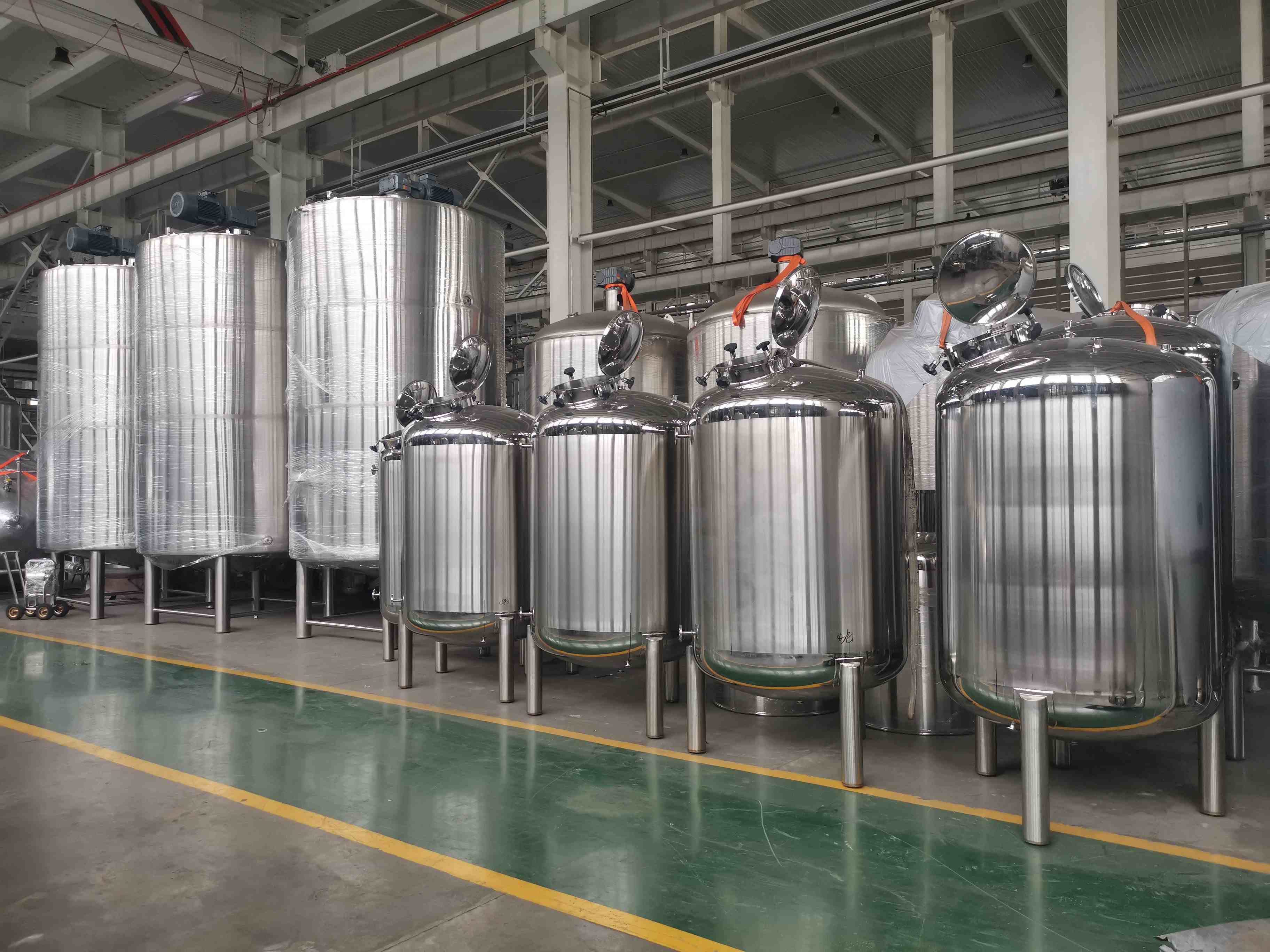
Modern industrial storage has moved far beyond giant metal containers quietly holding liquids. With IoT sensors woven into every level of a tank farm, operations teams now see a living, breathing snapshot of their inventory—temperature spikes, minute pressure changes, sudden draws, or slow leaks are flagged in real time. It’s like giving each tank a voice that never stops reporting.
This constant stream of data feeds into dashboards and alerts, letting operators catch anomalies before they become incidents. Instead of periodic manual checks, remote monitoring keeps a vigilant eye 24/7, whether the tank sits in a remote well pad or a bustling refinery. The result is fewer environmental surprises, lower maintenance costs, and a clear chain of custody for compliance reporting.
Embedding these technologies doesn’t just prevent problems—it reshapes how organizations plan. Historical patterns guide predictive refills, route shipments dynamically, and even fine-tune blends. It turns a simple storage asset into a strategic node, where every piece of data shapes smarter, leaner operations.
Modular Builds and Rapid Deployment: Shelving Traditional Construction
Gone are the days when a building project meant months of on-site chaos, weather delays, and a parade of subcontractors. Modular construction flips the script by shifting the bulk of the work indoors, where walls, floors, and even entire rooms come together under controlled factory conditions. This isn't about temporary trailers or cookie-cutter boxes; today's modular units can be crafted with the same materials and architectural flair as any high-end site-built structure, only faster and with fewer surprises.
Speed is the headline act here, but it's not just about rushing. While the foundation is being poured on-site, modules are already taking shape off-site, slashing project timelines by up to half. The real magic happens during installation, when cranes lift these pre-finished pieces into place like giant building blocks, often in a matter of days. This parallel workflow doesn't just beat the clock—it drastically cuts down on neighborhood disruption, material theft, and the kind of budget overruns that plague traditional builds.
Skeptics might wonder if “fast” means “flimsy,” but modular buildings face the same building codes and often exceed structural standards because each module must endure the rigors of transport. From sleek urban homes to expansive school campuses, the method is proving that leaving behind old-school construction habits doesn't mean leaving behind quality. It's a quiet revolution, one where the loudest noise isn't a hammer, but the click of perfectly aligned components coming together.
Greener Containment: How Eco‑Design Is Cutting Leakage and Waste
Containment systems have long been the silent workhorses of industry, yet their environmental footprint often goes unnoticed. Traditional designs, plagued by material fatigue and poor seals, inevitably leak—spilling everything from chemicals to microplastics into surrounding ecosystems. Eco‑design flips this narrative by treating containment not as a static shell, but as a dynamic system where every joint, coating, and material choice is optimized for longevity and zero emissions. The result is a quiet revolution: fewer replacements, less waste sent to landfill, and a dramatic drop in fugitive leaks.
At the heart of this shift lies a blend of biomimicry and material science. Engineers are now drawing inspiration from natural barriers—like the self‑healing skin of a cactus or the interlocking scales of fish—to create seals that adapt to pressure changes and repair minor damage autonomously. Pair this with biopolymers that degrade harmlessly if ever released, and you have containment that mimics nature’s circular logic. In the field, these designs are proving their worth: a recent retrofit of chemical storage tanks cut leakage rates by over 70% within the first year, simply by replacing rigid gaskets with flexible, plant‑based alternatives that swell when wet to shut down leak paths.
The knock‑on effects go beyond the obvious. When containment is designed to be disassembled, components can be reused or recycled rather than shredded and incinerated. Modular systems mean you replace a single faulty panel, not an entire liner, slashing material consumption. Even better, real‑time sensors embedded in eco‑containment structures now feed data back to operators, flagging micro‑leaks before they become catastrophic failures. It’s a case where smarter design doesn’t just curb industrial waste—it rewires our relationship with the materials we rely on, turning containment from a disposable shield into a regenerative asset.
Safety in the Unseen: Anti‑Seismic and Fireproof Innovations Worth Noticing
When a building sways during an earthquake, its true character reveals itself in the details most people never see. Engineers have moved beyond brute‑force solutions, weaving flexibility into the skeleton of structures through base isolators that let the ground move independently of the building above. It’s a bit like giving a skyscraper roller skates—the tremor slides beneath it while the tower barely flinches. These hidden layers of dampers and shock‑absorbing joints are often tucked between floors or inside walls, quietly doing their job until the earth reminds us why they matter.
Fire safety follows a similar principle: the most effective shields are the ones you never notice. Intumescent coatings, for instance, look like ordinary paint until heat triggers them to swell into a thick, insulating char that buys precious minutes for evacuation. Meanwhile, some modern concrete mixes contain polypropylene fibers that melt under extreme heat, creating tiny channels for steam to escape and preventing explosive spalling. These are not flashy gadgets; they’re quiet promises built into the materials themselves, waiting for the worst-case scenario.
The real art lies in how these systems coexist without compromise—seismic gaps that also block fire spread, structural connections that remain stable in a blaze yet ductile in a quake. It’s a balancing act that often goes unnoticed because, when it works perfectly, nothing happens. A building simply stands firm, holding its ground against fire and tectonic fury, while its occupants remain unaware of the layered defiance beneath the surface.
From Automation to 3D Printing: What’s Actually Heading to a Tank Farm Near You
Walk through a modern tank farm today and you'll notice something different—machines doing the heavy lifting. Automated guided vehicles creep between storage spheres, while drones buzz overhead inspecting welds and scanning for gas leaks. It’s a quiet shift, but a profound one: tedious manual checks are fading, replaced by sensor arrays that feed real-time data straight to a tablet in the control room. Even valve operations, once a strictly hands-on affair, are increasingly handled remotely, letting operators adjust flow rates without ever suiting up. This isn’t about replacing people; it’s about giving them a sixth sense for what’s happening inside the pipes, so they can catch anomalies before they become incidents.
Then there’s the quiet rumble of 3D printers, tucked into maintenance shops onsite. Need a replacement impeller for a pump at 2 a.m.? Instead of waiting weeks for a part to ship, crews can print one in high-grade polymer or metal composite right there, often in a single night shift. It’s not just about speed—though that’s a game changer during turnarounds—it’s about weaving a new kind of resilience into operations. When a custom flange or a corroded valve body can be recreated from a digital file, the whole supply chain shrinks to the size of a shipping container. Engineers are even experimenting with printing complex filter elements that outperform traditional designs, shedding weight while increasing surface area.
What ties these threads together isn’t some futuristic lab experiment; it’s the practical, unglamorous reality of keeping product flowing safely and profitably. Automation isn’t arriving in a dramatic wave—it’s appearing piecemeal, in sensors that predict pump failures two weeks out, in robotic crawlers that map corrosion inside tanks without draining them. And additive manufacturing isn’t about printing entire vessels; it’s about making maintenance smarter and more local. The real story is these technologies learning to coexist, bridging the gap between the rigidity of a fixed pipeline and the flexibility of on-demand production. For the tank farms that embrace it, the payoff isn’t just efficiency—it’s the ability to adapt when the unexpected hits, without grinding to a halt.
FAQ
Advanced welding automation and high-strength composite materials are now being integrated, allowing for tanks that withstand extreme pressures and corrosive substances with significantly longer service lives.
New double-walled configurations with real-time leak detection sensors and vapor recovery systems are becoming standard, drastically reducing the risk of soil and groundwater contamination.
IoT-enabled tanks now offer remote monitoring of temperature, pressure, and fill levels, with predictive maintenance algorithms that alert operators before failures occur.
From cryogenic storage for LNG to heated tanks for viscous chemicals, modular designs and tailored material selections allow rapid adaptation to specific industry needs without sacrificing safety.
Engineers are adopting base isolation techniques and flexible joint systems, informed by decades of seismic data, to ensure tanks remain intact even during major earthquakes.
Vacuum-insulated panels and advanced reflective coatings are increasingly used to minimize heat transfer, cutting energy costs in temperature-sensitive applications like food-grade and pharmaceutical storage.
Graphene-enhanced linings and cathodic protection systems are fighting corrosion at the molecular level, effectively doubling the operational lifespan in harsh chemical environments.
Joint research between universities, state-owned enterprises, and private tech firms is driving breakthroughs, ensuring that next-generation tanks meet both domestic demands and international standards.
Conclusion
China's storage tank industry is undergoing a radical transformation, driven by breakthroughs in materials and intelligent systems. The shift away from conventional steel toward advanced composites and high-performance polymers is redefining durability, offering exceptional corrosion resistance and extended service life even in harsh chemical environments. Simultaneously, the integration of IoT sensors and real-time monitoring platforms has turned passive containers into active, data-generating assets, enabling predictive maintenance and minimizing downtime. These smart tanks can self-diagnose potential failures, automatically adjust to changing conditions, and feed operational insights directly to centralized control centers, drastically reducing manual inspection needs and human error.
Beyond materials and connectivity, the sector is embracing modular construction techniques that slash installation times and allow for rapid scaling at remote sites. This approach, combined with a growing emphasis on eco-design, is cutting leakage risks and waste through double-wall structures, advanced sealants, and built-in leak detection. Safety innovations now tackle seismic and fire threats with base isolation systems, fire-resistant coatings, and passive cooling designs that perform reliably without external power. Looking ahead, automation and 3D printing are moving from pilot projects to commercial reality—robotic welding, drone inspections, and on-site additive manufacturing of tank components are poised to reshape tank farms, making them safer, leaner, and strikingly more sustainable than their predecessors.
Contact Us
Contact Person: Ada Xu
Email: [email protected]
Tel/WhatsApp: 0577-86806088
Website: https://www.dayuwz.com/