

China Soil Stabilizer Techniques Transforming Modern Infrastructure Projects
2026-07-02
Across China’s sprawling construction sites, a quiet revolution is reshaping the ground beneath our feet. Advanced soil stabilization methods are turning unstable soils into durable foundations—accelerating timelines, cutting costs, and boosting sustainability. At the heart of this shift is MST, a pioneer whose techniques are setting new benchmarks in modern infrastructure. How are these innovations transforming highways, railways, and megaprojects? The answer lies in a blend of cutting-edge binders, smart compaction, and a deep understanding of local geology—ushering in a new era where the very earth becomes a reliable building block.
Reinventing Ground Engineering with Advanced Chinese Soil Stabilizers
The conventional approach to ground improvement has long relied on cement and lime, which, despite their widespread use, come with notable drawbacks—high carbon emissions, slow curing, and limited effectiveness in challenging soils. Advanced Chinese soil stabilizers are rewriting this narrative by introducing polymer-based and ionic formulations that alter the fundamental interaction between soil particles. Rather than simply binding them together, these agents trigger chemical reactions at the molecular level, creating a dense, water-resistant matrix that significantly boosts load-bearing capacity while slashing material consumption.
What sets these stabilizers apart is their adaptability across diverse soil types, from expansive clays to silty sands, often without the need for heavy machinery or prolonged curing times. Field applications in road bases, foundation subgrades, and embankments have recorded strength increases of up to threefold compared to traditional methods, alongside enhanced freeze-thaw and erosion resistance. Engineers are now able to reclaim marginal land that was previously deemed unsuitable, transforming it into viable construction ground with a far smaller environmental footprint.
The shift toward these innovative solutions reflects a broader engineering philosophy that prioritizes resource efficiency and lifecycle performance. By minimizing the quantity of imported aggregates and reducing cement usage by half or more, projects are not only cutting costs but also aligning with greener construction mandates. As global infrastructure demands escalate, the quiet adoption of Chinese stabilizers is proving that the future of ground engineering lies not in brute force, but in intelligent, chemically precise intervention.
How Innovative Binding Agents Are Redefining Road Construction in China
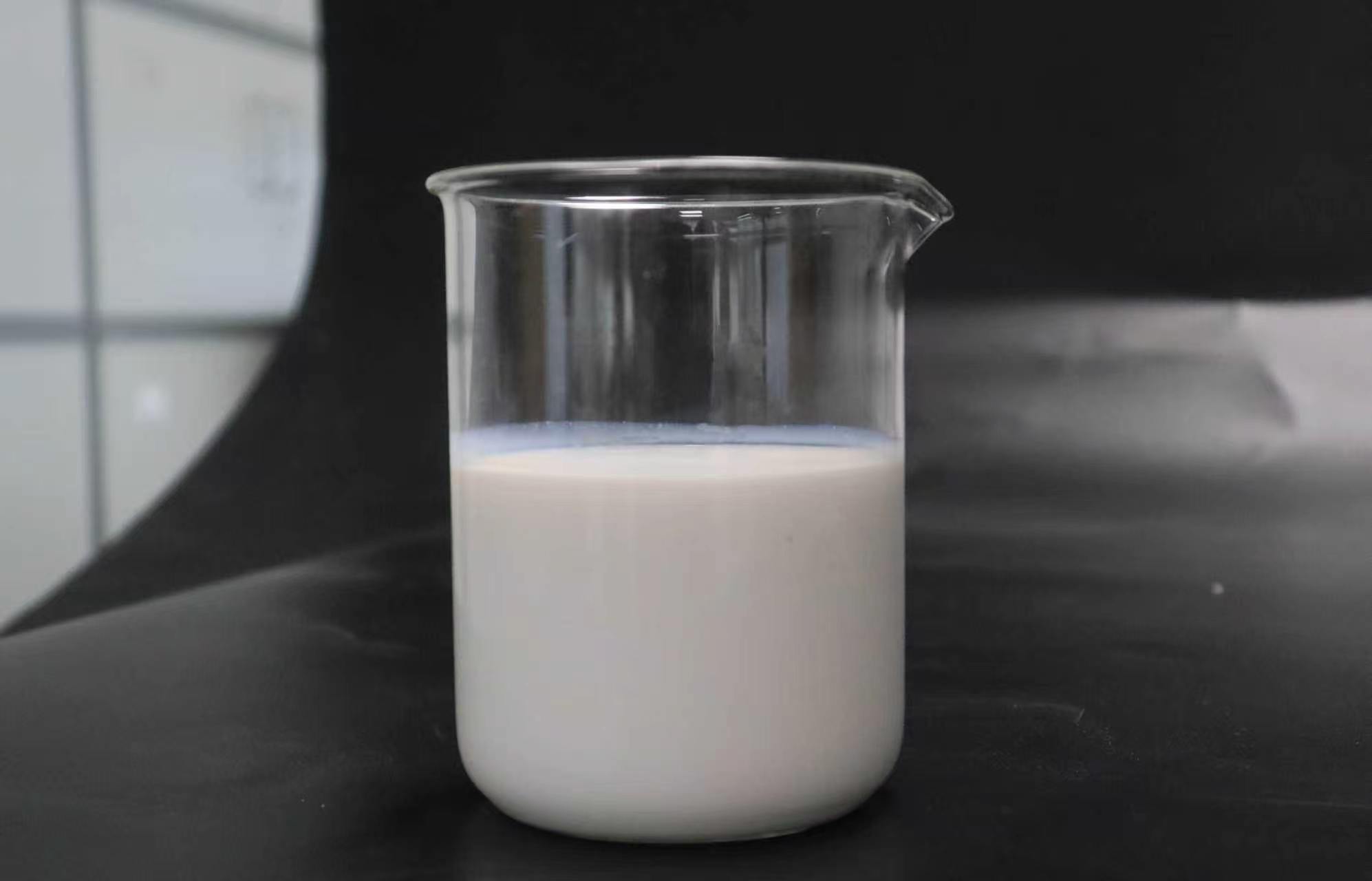
Across China, the rumble of heavy machinery is accompanied by a quiet revolution in materials science. Traditional asphalt binders, long dependent on petroleum-based bitumen, are being challenged by a new generation of innovative binding agents. These alternatives—ranging from bio-based resins derived from agricultural waste to synthetic polymers engineered for extreme climates—are reshaping how roads are built, maintained, and experienced. The shift is driven by more than just performance metrics; it reflects a deep-seated need to reduce carbon footprints, extend pavement life, and adapt to diverse geographical conditions that stretch from permafrost plateaus to subtropical deltas.
In practice, these novel binders are proving their mettle on some of the country's most demanding projects. Take the expressways threading through the Tibetan Plateau, where temperature swings of over 60°C can crack conventional asphalt within months. Here, polymer-modified binders and epoxy-based formulations are being used to create flexible, durable surfaces that withstand thermal stress without rutting. Meanwhile, in flood-prone southern provinces, lignin-infused binders—extracted from paper mill residues—provide enhanced moisture resistance, reducing pothole formation during monsoon seasons. The results are tangible: maintenance cycles are being stretched from years to decades, and the smoother rides are cutting fuel consumption for the millions of trucks that ply these routes daily.
Beyond performance, the environmental case is compelling. China's road network spans over 5 million kilometers, and its expansion has historically guzzled bitumen—a finite resource with a heavy refining toll. By harnessing binders from recycled plastics, cooking oil, or even algae, researchers are turning waste streams into valuable infrastructure assets. A recent pilot in Shandong province used a binder composed of 30% recycled polyethylene, diverting tons of plastic from landfills while delivering a road surface that outperformed conventional mixes in skid resistance. Such circular-economy approaches are not merely experiments; they are scaling rapidly under government-backed initiatives that link green materials to national infrastructure goals. As these binders evolve, they promise roads that are quieter, safer, and fundamentally more sustainable—a redefinition that is as much about ecological responsibility as it is about engineering breakthroughs.
From Deserts to Deltas: Adapting Soil Stabilization to China’s Diverse Terrains
China's terrain spans vast arid deserts, where shifting sands threaten infrastructure and agriculture, to fertile river deltas with soft, waterlogged soils prone to subsidence. In the Gobi and Taklamakan regions, wind erosion relentlessly scours away unprotected ground, demanding stabilization methods that can withstand extreme temperature swings and minimal moisture. Here, techniques like microbial-induced calcite precipitation are gaining traction, as they create natural cementation without the heavy water demands of traditional methods. Meanwhile, in the Yangtze and Pearl River deltas, the challenge is not dryness but saturation—silts and clays that become unstable under the weight of rapidly expanding urban centers. Soil mixing with lime or cement deepens the stable base, yet engineers now explore bamboo fiber reinforcement to reduce carbon footprint and improve ductility against seismic forces.
Moving inland, the loess plateaus of central China present a unique erosion puzzle. This silty soil, deposited by wind over millennia, stands vertically when dry but collapses instantly upon wetting, causing devastating landslides. Rather than relying solely on concrete retaining walls, restoration projects reintroduce deep-rooted grasses and shrubs, mimicking ancient practices that bound the earth for centuries. On the karst terrain of the south, stabilization merges with water management—sinkholes and underground drainage channels require grouting with polyurethane or modified clays to prevent sudden cavity collapse under roads and buildings. Each region’s geology dictates a tailored approach, blending modern materials science with local knowledge.
In the frigid high-altitude environments of the Tibetan Plateau, permafrost degradation due to climate warming undermines railways and highways. Thermosyphons and crushed rock layers help maintain frozen ground, but scientists are now testing biochar amendments to reduce thermal conductivity while improving soil structure. Across China, the diversity of terrains demands a flexible toolkit: from geotextiles that stabilize sandy slopes along the ancient Silk Road corridors to electro-osmosis techniques that rapidly dewater deltaic clays before construction. By adapting to local conditions, soil stabilization not only supports safe infrastructure but also helps restore degraded ecosystems, turning vulnerable landscapes into resilient foundations for the future.
The Economic Ripple Effects of Longer-Lasting Infrastructure Foundations
When infrastructure foundations are constructed to endure for decades longer than standard designs, the economic benefits extend far beyond the initial savings on replacement costs. Projects that once demanded frequent repairs or complete overhauls every 20 to 30 years begin to reshape municipal budgeting cycles, freeing up capital for other civic priorities. This shift reduces the fiscal strain on local governments and taxpayers, allowing funds to be redirected toward education, public safety, or green energy initiatives — investments that compound community-wide prosperity over time.
Businesses, too, feel the downstream effects. Reliable foundations mean fewer disruptions from road closures, utility outages, or bridge weight restrictions. Logistics companies can maintain tighter delivery schedules, retailers enjoy consistent foot traffic, and manufacturers avoid costly downtime caused by crumbling access routes. The predictability itself becomes an economic asset, encouraging companies to establish long-term operations in regions known for resilient infrastructure, which in turn strengthens local employment and property values.
Perhaps most compelling is the impact on insurance and financing. Structures built on proven, long-life foundations often qualify for lower insurance premiums and better lending terms due to reduced risk profiles. Developers can leverage these savings into more ambitious, mixed-use projects that might otherwise have been financially out of reach. Over a building’s lifetime, the cumulative effect of these micro-economic advantages can rival the initial construction budget, fundamentally altering how we measure the true cost — and value — of the built environment.
Blending Traditional Knowledge with Modern Chemistry for Superior Soil Strength
Ancient builders understood soil in ways that modern laboratories are only beginning to decode. For centuries, communities have stabilized earth with burnt lime, crushed termite mounds, or fermented plant juices, creating structures that still stand defiantly against time. These methods weren't born from chemical equations but from generations of trial and error, an intimate dance with local materials and seasonal rhythms. The secret often lay in triggering slow pozzolanic reactions or enzymatically altering clay platelet charges, principles that predate their formal scientific articulation by millennia.
Modern chemistry arrived with precise, engineered solutions: ionic stabilizers, synthetic polymers, and rapid-setting cements that promise predictable results in hours instead of months. Yet these off-the-shelf formulas frequently disrupt natural soil ecosystems, leaching compounds that can alter groundwater chemistry or kill vital microbial communities. The strength they deliver is sometimes brittle—metaphorically and literally—lacking the resilience that comes from a soil's innate biological architecture. Field engineers are increasingly noting that a purely synthetic approach ignores the self-healing, adaptive properties inherent in biologically active earth.
The most compelling breakthroughs now emerge at the intersection. Researchers are isolating the active molecules in traditional additives—like tannins from tree bark or casein from milk—and understanding how they cross-link with clay particles on a nanoscale. By combining these biopolymers with carefully dosed modern compounds, it's possible to amplify binding strength while preserving the soil's ability to breathe and regenerate. Field trials in rural India, using a blend of native gum extracts and minimal cement, have produced road bases that resist cracking far better than conventional treatments. This isn't about reverting to old ways or surrendering to technology; it's about letting ancestral wisdom guide the application of molecular science, creating soil structures that are not only stronger but also smarter—more attuned to their environment and their legacy.
Accelerating Project Timelines Through Rapid-Cure Stabilization Methods
Fast-track construction schedules often clash with the time needed for soil stabilization to reach design strength. Traditional cement or lime treatments can tie up a site for days, delaying subsequent trades and pushing out deadlines. Rapid-cure stabilization methods flip that script, using advanced polymer additives or accelerated cementitious blends that develop bearing capacity in hours rather than days, letting crews pave, backfill, or erect structures without the wait.
Beyond just speed, these methods reshape the risk profile of a project. By minimizing exposure to weather interruptions—a sudden downpour on uncured lime-treated subgrade can wash away progress—teams lock in gains early. The fast strength gain also reduces the need for costly rework from rutting or deformation under early construction traffic, keeping the critical path tight and budgets in check.
Field application is surprisingly straightforward: many rapid-cure systems integrate with standard spreader trucks or rotary mixers, requiring no exotic equipment. The key lies in precise dosage control and understanding the reaction window. When done right, a site can move from mixing to proof-rolling in a single shift, transforming a potential bottleneck into a streamlined step that sets the pace for everything that follows.
FAQ
China's soil stabilizer methods have transformed from simple lime and cement mixes to advanced polymer-based and bio-enzyme solutions, offering faster curing times and better load-bearing properties for high-speed rail and expressway foundations.
The Chinese approach focuses on integrating industrial by-products like fly ash and slag with synthetic additives, coupled with precision mixing equipment, yielding high-performance subgrades that significantly slow degradation in humid or seismic regions.
The Beijing–Shanghai high-speed railway and the Hong Kong–Zhuhai–Macau Bridge utilized proprietary stabilizer blends to reinforce soft marine clays and river silts, preventing settlement without massive soil replacement.
Green construction mandates push for low-carbon stabilizers; local researchers developed geopolymer-based agents that cut CO₂ emissions by over 30% while meeting durability standards, aligning with China's dual-carbon goals.
Exported Chinese stabilizers help accelerate overseas infrastructure in Southeast Asia and Africa by adapting to tropical lateritic soils and desert sands, offering cost-effective, locally sourced solutions instead of importing aggregates.
Formulas now include hydrophobic compounds and thermal resistance polymers, tested in the permafrost of the Qinghai–Tibet Highway and the flood-prone Yangtze Delta, maintaining structural integrity within a -40°C to 70°C range.
Smart stabilizers with self-healing microcapsules and nano-silica particles are in field trials, aiming to autonomously repair microfissures triggered by repeated heavy truck loads or freeze-thaw cycles.
Yes, case studies in Kenya's Mombasa–Nairobi railway show a 25% cost reduction over imported fill materials, as on-site soils are treated with Chinese additives, slashing logistics and expediting construction timelines.
Conclusion
China's relentless push to modernize its vast infrastructure network has birthed a quiet revolution in ground engineering, driven by advanced soil stabilizer techniques that are reshaping how projects are conceived and executed. Moving far beyond traditional compaction methods, engineers now deploy sophisticated binding agents—often blending industrial byproducts like fly ash with proprietary polymers—that chemically fuse loose particles into durable, load-bearing composites. This innovation is particularly striking when viewed across the country's extreme terrains: in the shifting sands of the Taklamakan Desert, stabilizers create crusts that halt erosion and support highway foundations, while in the waterlogged soils of the Yangtze Delta, rapid-cure formulas allow construction to proceed even during monsoon seasons. By dramatically reducing the need to excavate and replace weak soils, these techniques slash material costs and logistical headaches, effectively turning local earth into a high-performance construction material.
The economic implications ripple far beyond initial savings. Longer-lasting subgrades mean fewer repairs and traffic disruptions, extending pavement life by decades and unlocking long-term budget efficiencies for regional governments. Meanwhile, the accelerating pace of construction is equally transformative: rapid-cure stabilization can shrink project timelines by up to 40%, enabling new highways and railways to become operational much sooner—a critical boon for China's interconnected megaregions. Underpinning these breakthroughs is a uniquely Chinese synthesis of ancient wisdom and cutting-edge chemistry. Traditional lime-treatment methods, used for centuries in rammed-earth fortifications, now inform modern enzyme-based stabilizers that stimulate crystalline growth within soil matrices, achieving strengths approaching that of concrete. This fusion of heritage and innovation ensures that solutions are not only effective but also culturally attuned to local building practices, offering a replicable model for infrastructure development worldwide.
Contact Us
Contact Person: Helen
Email: [email protected]
Tel/WhatsApp: 86 18630661160
Website: https://www.roadmilestone.com/