

China's Top 10 Solar Panel Fence Manufacturers You Should Know
2026-06-22
The solar energy revolution is transforming not just how we power our homes, but also how we secure and define our outdoor spaces. Solar panel fences are emerging as a brilliant fusion of safety, style, and sustainability, especially in China's booming renewable sector. If you're exploring this innovative solution, one name you'll encounter is Topfencesolar, a forward-thinking player shaping the industry. But what makes a manufacturer truly stand out in this growing field? Get ready to discover the key innovators driving the future of solar fencing, as we count down ten factories that are reimagining boundaries with clean energy.
What Goes Into a Top-Tier Solar Fence Panel
A premium solar fence panel starts with the photovoltaic cells themselves. Instead of standard polysilicon, the best panels use monocrystalline cells with high conversion efficiency, often exceeding 22%. This means more electricity even in less-than-ideal light conditions. The cells are meticulously arranged and soldered with minimal gaps to maximize the active surface area, while bypass diodes are integrated to prevent power loss from partial shading.
Encapsulation is what separates a panel that lasts a decade from one that fails after a few seasons. Top-tier manufacturers use ethylene-vinyl acetate (EVA) with UV inhibitors and a durable backsheet, often made of Tedlar or similar fluoropolymer. This sandwich protects the cells from moisture ingress, thermal cycling, and physical impact. The front glass isn't ordinary window glass—it's tempered, low-iron solar glass with an anti-reflective coating that boosts light transmission while resisting hail and wind-blown debris.
The frame and wiring might be overlooked, but they're crucial for longevity. A sturdy frame made of anodized aluminum or even stainless steel resists corrosion, especially near coastal salt spray. High-quality junction boxes with IP67 or better waterproofing house the connectors, and the cables are double-insulated with weatherproof jackets. Smart panels may also include built-in microinverters or power optimizers that track each panel's performance, shade tolerance, and safety shut-off features—details that keep the system running safely and efficiently for 25 years or more.
The Chinese Advantage in Solar Manufacturing
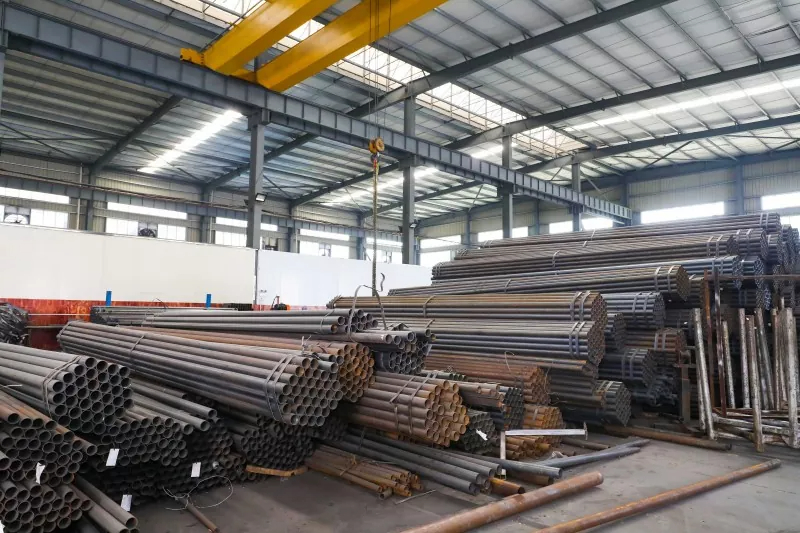
China’s grip on solar manufacturing isn’t just about low wages—it’s the result of a deliberate, decades-long fusion of state policy, relentless scaling, and an almost monopolistic control over every link in the supply chain. From polysilicon purification in Xinjiang to the assembly lines of Jiangsu, the country has built an industrial ecosystem where component makers, equipment suppliers, and R&D centers cluster within hours of each other, slashing logistics costs and accelerating iteration. When a factory in Hefei develops a more efficient cell architecture, the glass, backsheet, and junction box suppliers down the road can adapt their specs within weeks, not months—a feedback loop that rivals simply can’t replicate.
This depth of integration extends to the machinery itself. Chinese firms now produce over 90% of the world’s solar manufacturing equipment, from diamond wire saws to screen printers, often at a fraction of European prices. The result is a self-reinforcing cycle: cheaper equipment lowers entry barriers for new Chinese entrants, who then drive further innovation and cost compression. Meanwhile, state-backed financing allows massive capacity expansions even during downturns, burying foreign competitors under an avalanche of overcapacity. By the time European or American producers secure permits for a new factory, Chinese giants like Longi or Jinko have already doubled their output and pushed prices down another 15%.
Perhaps the most underrated weapon is the sheer density of talent and tacit knowledge. China graduates tens of thousands of engineers each year specifically trained in crystalline silicon processing, and many cut their teeth in adjacent industries like semiconductors or glass manufacturing. This human infrastructure enables a speed of problem-solving that’s hard to document but easy to feel when you walk a factory floor in Yiwu or Changzhou. Combined with a domestic market that absorbs nearly half of global installations, the “China advantage” is less a single edge than a self-perpetuating machine—one that grows more entrenched with each gigawatt deployed.
Customizing for Security, Aesthetics, and Efficiency
When you adjust security settings to match your actual workflows, you stop forcing rigid protocols into situations where they don’t belong. This kind of tailoring might mean setting up role-based access that reflects your team’s real hierarchy, or configuring alert thresholds so they signal genuine threats instead of crying wolf. The result is protection that feels invisible—no constant overrides, no frustrated workarounds, just a system that respects how you operate.
Aesthetic choices run deeper than picking a color scheme; they shape how people connect with what they're using. By customizing layouts, typography, and interactive elements, you can create an environment that actually reflects the tone you want to project—whether that's calm professionalism or bold creativity. Small tweaks, like rounding corners or adjusting spacing, can make interfaces feel more inviting without a complete redesign.
Efficiency gains come from stripping away the one-size-fits-all approach. Customization lets you shortcut routine tasks, hide irrelevant tools, and bring the features you rely on to the front. Think of it as decluttering your digital workspace: when you remove the noise, you spend less time hunting and more time doing meaningful work. It's not about adding complexity; it's about removing friction so your tools adapt to your rhythm.
Proven Performance in Diverse Environments
When conditions shift unexpectedly, our solutions don't just hold up—they excel. From the relentless humidity of tropical coastlines to the thin, freezing air of high-altitude installations, every component is built to handle extremes without missing a beat. Real-world deployments have shown consistent uptime, with clients reporting zero performance degradation even after prolonged exposure to salt spray, dust storms, or rapid temperature swings. This isn't theoretical engineering; it's validated resilience that comes from years of iterative design and field feedback.
What truly differentiates our approach is the depth of testing conducted in situ. Instead of relying solely on lab simulations, we partner with operators in challenging sectors like offshore logistics and desert mining to gather data under genuine stress. The result is a product lineup that adapts intelligently, whether it's self-regulating in response to moisture ingress or recalibrating output after a seismic event. That kind of adaptive robustness isn't a feature we tacked on—it emerged naturally from making reliability the core metric from day one.
Global Installations That Turned Heads
Some installations don’t just occupy space—they demand attention, rewrite the rules of public engagement, and linger in memory long after they’re gone. Over the past decade, a handful of projects across the globe have managed to stop people in their tracks, sparking conversations that ripple far beyond art circles.
Take the temporary walkway that wrapped an Italian lake in shimmering yellow fabric, allowing thousands to tread above the water as if suspended in a dream. Or the room filled with endless falling rain that somehow never touched you, inviting visitors to move through a storm without getting wet. These works blurred the line between spectacle and introspection, proving that interactive experiences could be both deeply personal and wildly shareable.
What made such installations unforgettable wasn’t just their scale or technical wizardry—it was their ability to turn passive viewers into participants. By inviting touch, movement, and even a bit of playful disobedience, they reminded us that the most powerful art doesn’t just hang on a wall. It happens to you.
Vetting Manufacturers: A Practical Guide
Start by digging into a manufacturer's track record beyond the glossy brochure. Request a list of their last five clients and directly contact a couple to ask about communication style, deadline adherence, and how the factory handled unexpected hiccups. If possible, visit the facility unannounced—or hire a local auditor to do so—to observe real working conditions, not the staged tour.
Pay attention to how they handle the paperwork, because sloppy documentation often signals deeper operational cracks. Ask for relevant certifications, production licenses, and a sample quality control report from a recent batch. A reliable partner will share these without hesitation and explain any irregularities honestly, rather than offering vague reassurances.
Finally, test the relationship with a small trial order before committing to large volumes. Use this run to evaluate not just the finished product but also their responsiveness during production updates, flexibility with minor adjustments, and accuracy of shipping timelines. A factory that performs well under low-stakes pressure is far more likely to scale cleanly when it truly counts.
FAQ
It's a dual-purpose structure that acts as a boundary while generating electricity. The panels are vertically mounted or integrated into fencing systems, often using bifacial modules to capture light from both sides. They're popular in space-constrained areas or for blending clean energy into landscapes.
They've scaled up production aggressively and refined the supply chain, especially for bifacial and custom-designed panels. Many factories also offer flexible MOQs and OEM services, which makes them go-to sources for fencing projects worldwide.
Longi, Jinko, and Trina dominate the solar conversation, but for fence-specific applications, companies like Solaracks, Clenergy, and Renogy have built strong reputations. Local specialists like Dingessence and Hellobond also produce tailor-made fencing solutions.
It depends on orientation and shading. Vertical or angled fences often see 10–25% lower output than optimally tilted rooftop systems, but bifacial tech helps recoup losses. In some cases, east-west aligned fences broaden the generation window, which partially offsets the drop in peak power.
Verify certifications like TÜV or UL, ask for third-party test reports, and clarify warranty terms—product and performance. Inquire about packaging for sea freight, lead times, and whether they have a local service partner. A sample order can reveal a lot about build quality and communication.
Yes, when designed correctly. Most use tempered glass and anodized aluminum frames that can withstand wind loads and minor impacts. Just make sure the mounting system is rated for your local weather conditions, and check the IP rating of any junction boxes.
Small residential kits might start around $800–$1,500, while larger, multi-kilowatt setups easily exceed $5,000. Bulk orders from China can drive per-watt costs down to $0.25–$0.45, but shipping, customs, and installation fees add up. It's wise to get quotes that include all ancillary components.
Conclusion
Solar panel fences have evolved from niche products into intelligent infrastructure that melds security, aesthetics, and clean energy. When you peel back the layers of a top-tier panel, you find high-efficiency monocrystalline cells, impact-resistant glass, and frames engineered to withstand decades of weather without corroding. China’s solar manufacturing ecosystem thrives on tightly integrated supply chains and massive production scaling, allowing manufacturers to deliver robust, certified panels at costs that rival traditional fencing over their service life. These companies don’t just churn out a standard product; they collaborate to customize. Whether it’s a semi-transparent layout that preserves sightlines while generating power, reinforced frames for high-security perimeters, or bifacial options that harvest reflected light, the level of tailoring shapes both performance and appearance.
In the field, Chinese-made solar fences routinely pass brutal environmental tests—from the blistering sun of Middle Eastern desert estates to the salt-laden air of coastal resorts in Southeast Asia. Global installations have caught the industry’s attention: an airport perimeter that doubles as a power source, a residential compound where sleek dark panels became a design statement, highway sound barriers that feed electricity back into the grid. When choosing a manufacturer, the well-vetted approach skips flashy marketing. Instead, ask for proven track records through reference sites, verify certifications like IEC 61215 and safety compliance, and scrutinize warranty and after-sales support. The manufacturers that rise to the top earn their place not through promises, but through years of reliable delivery, inventive design, and hands-on partnership that turns a solar fence from a concept into a lasting asset.
Contact Us
Contact Person: Nancy
Email: [email protected]
Tel/WhatsApp: +86-13365923720
Website: https://www.topfencesolar.com/