

China Food Label Manufacturer: Essential Guide to Quality and Compliance
2026-07-17
Navigating China’s food labeling landscape can be daunting, but getting it right is non‑negotiable for brand trust and legal compliance. From material choices to regulatory nuances, every detail matters. In this guide, we unpack what to look for in a reliable label manufacturer—and why industry leaders turn to Xinsen for solutions that never compromise on quality or precision.
Label Materials That Withstand the Supply Chain
Selecting label materials that can endure the rigors of the supply chain is critical for product integrity and brand reputation. From warehouse storage to final delivery, labels face exposure to moisture, temperature swings, abrasion, and rough handling. An overlooked material choice often leads to illegible barcodes, detached labels, or critical information loss—resulting in shipping delays and dissatisfied customers.
Traditional paper labels may seem cost-effective but frequently fail in cold chain logistics or humid environments. Instead, consider synthetic options like polypropylene and polyester, which offer superior durability against tears, chemicals, and UV light. For extreme conditions, specialty materials such as thermal transfer polyimide can withstand high heat and harsh solvents. Pairing the right adhesive is equally essential; permanent acrylic adhesives bond well to corrugated surfaces and low-energy plastics, while removable adhesives suit reusable containers.
Testing materials under simulated supply chain conditions is a step many businesses skip, yet it reveals vulnerabilities early. By mimicking the entire journey—vibration during transit, pressure from stacking, temperature cycling—you can validate performance before full-scale adoption. A thoughtful material strategy not only reduces returns and waste but also reinforces a seamless, professional experience for end users, strengthening trust in your logistics and product quality.
Understanding China’s Food Label Requirements
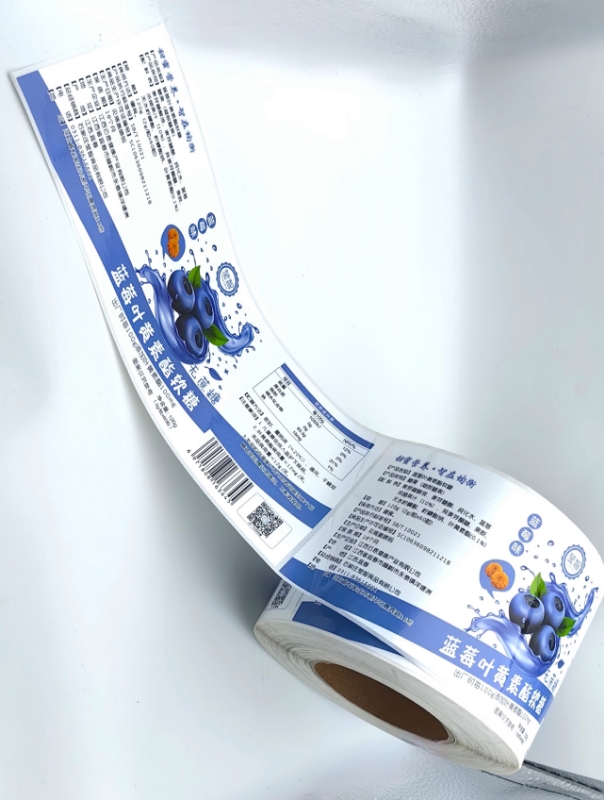
China’s food labeling system is built on a detailed regulatory framework, with GB 7718 and GB 28050 as the two core national standards. GB 7718 governs the general labeling of prepackaged foods, laying out mandatory information such as product name, ingredient list, net content, manufacturer details, date of manufacture, shelf life, and storage instructions. Meanwhile, GB 28050 sets the rules for nutrition labeling, requiring a standardized nutrition facts panel that includes energy, protein, fat, carbohydrate, and sodium levels. Any nutrient content or health claims must also comply with strict criteria defined in this standard.
Beyond the basics, Chinese food labels must appear in simplified Chinese, although foreign languages or minority scripts can be present alongside—provided they don’t exceed the size of the Chinese characters. Allergen labeling, while not mandatory, is increasingly expected; many domestic brands voluntarily declare common allergens like milk, eggs, and wheat. Imported foods must carry a supplementary Chinese label that matches the original, and it’s important to note that certain product categories—such as infant formula, health foods, and foods for special medical purposes—are subject to additional labeling requirements and pre-market approvals.
Decoding a food label in China often requires attention to details like the “production license number,” an SC (formerly QS) code that indicates the manufacturer’s permit, and the “standard code” referencing the applicable national, industry, or enterprise standard. Date formats can vary, but they typically follow the YYYY/MM/DD pattern. For shelf-stable items, check for any storage condition icons—these tell you whether the product needs refrigeration after opening. Understanding these elements helps consumers make informed choices and ensures compliance for businesses entering the market.
End-to-End Quality Assurance for Label Accuracy
Ensuring label accuracy isn't just a one-time check—it requires a process that spans the entire data pipeline. From initial data collection to final model deployment, every step introduces potential for mislabeling. This end-to-end approach means embedding quality checks at each stage: verifying raw data consistency, monitoring annotation guidelines, and cross-checking label assignments continuously. By catching inconsistencies early, teams can avoid costly downstream errors that often go unnoticed until it's too late.
A robust end-to-end system combines automated validation rules with human oversight. Automated scripts can flag patterns like label imbalance, outliers, or conflicting annotations, but they can't replace human judgment. Expert reviewers step in for ambiguous cases, using their domain knowledge to resolve edge scenarios. This partnership between algorithms and human intelligence creates a feedback loop where the system learns from corrections, gradually reducing the number of edge cases that slip through. Over time, this builds a more resilient labeling framework that adapts to evolving data sources and project requirements.
Perhaps the most undervalued aspect is documentation and versioning. Tracking changes to labeling guidelines, tools, and rationale provides a clear audit trail. When label discrepancies arise, teams can trace back through each decision point instead of guessing. This level of transparency not only speeds up troubleshooting but also ensures consistency across distributed teams and long-term projects. Ultimately, end-to-end quality assurance transforms labeling from a one-off task into a sustainable, scalable practice that underpins reliable model performance.
Custom Labels for Unique Brand Identities
Off-the-shelf solutions rarely capture the soul of a brand. Custom labels give you the freedom to fuse your visual DNA—colors, textures, typography—into a tangible asset that speaks before the product is even opened. Think embossed patterns that echo your logo’s geometry or edge painting that mirrors a signature accent hue. These are not mere stickers; they’re miniature embodiments of your brand’s worldview.
The real magic lies in material alchemy. A matte-coated wine label with a spot-gloss emblem, paired with a faintly textured background, can evoke old-world craftsmanship. For a tech-forward look, transparent films with metallic foil accents create a sense of depth and futurism. By layering unexpected substrates—like cotton rag, mushroom leather, or even stone paper—you rewrite the rules of first impressions, turning a simple peel-and-reveal moment into a tactile story.
Beyond aesthetics, custom labeling allows you to embed hidden details that reward loyal eyes. Micro-typography tucked into borders, security cuts that double as design flourishes, or color-shifting inks visible only under certain light—these nuances signal intentionality. They transform a functional item into a collector’s piece, something people may hesitate to discard because it feels distinctly yours.
Eco-Conscious Label Production Methods
Shifting toward eco-conscious label production begins with a critical look at material sourcing. Instead of defaulting to virgin plastics or solvent-heavy adhesives, forward-thinking brands are experimenting with substrates derived from post-consumer waste, agricultural byproducts like sugarcane fiber, or even stone-based paper that requires no trees and minimal water. These alternatives not only shrink the environmental footprint but also introduce a tactile difference that stands out on a crowded shelf. The conversation here isn’t just about swapping one resource for another—it’s about questioning why a label needs to be permanent, shiny, or waterproof in the first place, and then designing from that insight.
The actual printing process holds equal weight in redefining sustainability. Traditional inks often carry volatile organic compounds (VOCs) and heavy metals that linger far beyond a product’s lifecycle. By moving to water-based, algae-derived, or UV-curable inks cured with efficient LED lamps, manufacturers can drastically cut down on hazardous waste and energy use. Beyond ink, digital printing enables short runs with zero plate waste and precise color matching, which supports localized production and reduces overstock. It’s a pivot from mass-producing identical labels to manufacturing only what’s needed, when it’s needed—quietly dismantling the “more is cheaper” logic that has long haunted the industry.
Perhaps the most overlooked aspect is how the label interacts with the product’s end of life. A compostable label on a non-compostable package creates more problems than it solves. Real progress happens when the label and container are designed to be compatible in the same recycling or composting stream. That might mean using a wash-off adhesive that separates cleanly during the recycling process, or developing labels that break down safely in home compost without leaving microplastic residues. Some companies are even embedding seed paper into their tags, turning what would be waste into something that grows. These techniques reframe the label not as a disposable sticker, but as an intentional part of the product’s circular story.
Innovative Printing to Elevate Your Product
Every surface tells a story, but only when the printing technique matches the ambition behind your brand. We merge cutting-edge technology with artisanal precision to create textures, finishes, and effects that shift how people experience your product—from velvety soft-touch coatings that beg to be held, to metallic foils that catch the light and refuse to let go. It’s not just ink on a substrate; it’s a tactile conversation between your vision and the senses of your audience.
What sets truly elevated printing apart is the refusal to rely on off-the-shelf solutions. Instead of generic gloss, we explore gradient spot varnishes that guide the eye across a package like a curated journey. Instead of standard embossing, we sculpt micro-dimensional reliefs that turn a logo into a landmark. Every choice is deliberate: a matte background that amplifies a single glossy detail, or a translucent layer that reveals hidden depths only upon close inspection. These aren’t embellishments—they’re strategic tools for brand differentiation.
The real magic happens when printing becomes an intuitive part of the product experience. Imagine a label that feels like stone yet flexes with the container, or a hangtag embedded with wildflower seeds that can be planted. By treating the printed piece not as a container but as part of the product itself, we help you create moments of surprise and delight that turn customers into collectors. In a world of disposable packaging, intentional printing makes your product impossible to discard—both physically and emotionally.
FAQ
Focus on manufacturers with proven experience in food-grade materials, ISO 9001 certification, and familiarity with both domestic and international labeling regulations. Ask for samples, check their client list for recognizable brands, and ensure they can handle your specific substrate needs—whether it's peel-and-stick paper, synthetic films, or eco-friendly options.
China's GB 7718 standard sets strict rules for mandatory information like product name, ingredients, net weight, production date, and shelf life. Your manufacturer should help ensure label layouts comply with font size, language, and allergen declaration requirements, especially if you're importing goods. Non-compliance can lead to customs delays or fines.
Yes, many experienced manufacturers routinely produce labels in multiple languages, including English, French, or Arabic. To avoid errors, provide final translations and ensure they understand regional nuances like EU food additive codes or FDA Nutrition Facts format. A proofing stage with your overseas distributor is recommended before full production.
For cold environments, polyester (PET) or polypropylene (BOPP) films with freezer-grade adhesives are ideal. They resist moisture, condensation, and brittleness. Your manufacturer should test label adhesion at low temperatures and offer a discussion about conformability on frozen packaging, especially for irregular surfaces.
Request documentation on their incoming raw material testing, in-line inspection methods, and final random sampling procedures. Reputable factories will share reports on adhesion tests, color consistency measurements, and barcode readability checks. Consider a third-party audit or a video tour if an on-site visit isn't possible.
At minimum, look for ISO 9001 for quality management and ISO 22000 or FSSC 22000 if they supply direct food contact labels. Additional credentials like BRC Packaging certification or FSC chain-of-custody (for paper-based labels) are strong indicators of a commitment to safety and sustainability.
It can be, but minimum order quantities (MOQs) vary. Some manufacturers specialize in short runs using digital printing, which reduces plate fees. Be upfront about your volume, and ask if they can split batches for multiple SKUs. Factor in shipping costs and lead times—sea freight is cheaper for bulk, but air courier might make small orders more viable.
Work with a manufacturer that offers creative finishes like soft-touch matte, spot UV varnish, or metallic foiling, but ensure those elements don't obscure mandatory text. Tactile effects and clear windows can enhance shelf appeal. Always run a compliance check on the final design—innovative shouldn't mean illegal.
Conclusion
Choosing the right China food label manufacturer means prioritizing both durability and regulatory compliance. Labels must survive the entire supply chain—from humid production floors to frozen storage—so materials resistant to moisture, abrasion, and temperature extremes are non-negotiable. At the same time, understanding China's strict food labeling regulations, including mandatory nutritional panels, ingredient lists, and allergen declarations in Chinese, is critical. A reliable manufacturer embeds these requirements into an end-to-end quality assurance system, verifying accuracy at every step to prevent costly misprints or regulatory failures.
Beyond compliance, modern labeling supports unique brand identities through custom designs, variable data printing, and specialty finishes that catch the consumer's eye. Leading manufacturers now adopt eco-conscious production methods—like water-based inks and compostable substrates—to meet sustainability demands without sacrificing performance. Innovative printing technologies also enhance shelf appeal, from high-definition flexography to digital embellishments. By combining material expertise, regulatory knowledge, and creative solutions, a China-based label partner can deliver labels that not only inform and protect but also elevate the product in a competitive market.
Contact Us
Contact Person: Yara
Email: [email protected]
Tel/WhatsApp: +86 13505426090
Website: https://www.qdxspack.com/