China Cleanroom Engineering Advanced Solutions and Industry Insights
2026-08-18
Behind every flawless batch of pharmaceuticals, semiconductors, or biologics emerging from China lies a world most never see—the cleanroom. Yet as domestic engineering pushes past legacy limits, the real story isn't just about tighter ISO classes or lower particle counts. It's about how advanced cleanroom solutions are quietly redefining speed, compliance, and scalability across high-stakes industries. In this blog, GENO Pharmatech pulls back the curtain on the engineering shifts and industry insights shaping China's next-generation controlled environments—and why they matter far beyond the cleanroom door.
Scaling Purity: The Evolution of Chinese Cleanroom Projects
Early cleanroom projects in China leaned heavily on imported turnkey systems, with layouts and specifications copied from overseas semiconductor and pharmaceutical facilities. The real shift began when local engineering teams started reworking air handling, filtration staging, and pressure cascades to suit domestic supply chains and much shorter construction timelines. Cleanrooms gradually stopped being rigid, single-purpose boxes and became more adaptive spaces that could be reconfigured without gutting the entire envelope.
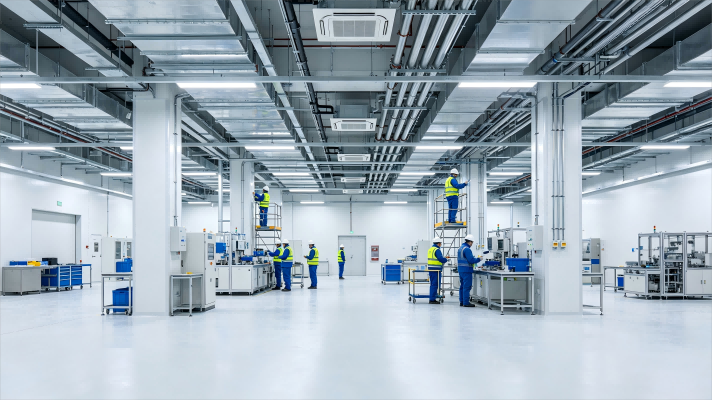
More recent projects scale purity not only by floor area but by control granularity—isolating micro-environments inside larger clean shells with modular partitions and sensor-driven airflow modulation. Where an ISO Class 5 zone once demanded a full laminar-flow room, it now often sits as a compact critical cell within a Class 8 background, cutting energy draw while tightening particle counts exactly where product is exposed. This layered approach has produced a cleaner, less expensive, and faster-to-deploy cleanroom ecosystem, one that keeps pace with rising demands from biotech fill-finish lines and advanced chip packaging.
Hidden Barriers: Material Shortages and Local Solutions in China
Material shortages in China often don't show up as empty shelves or halted production lines. Instead, they quietly reshape procurement strategies, force engineers to redesign components, and push factories to chase smaller, less reliable suppliers. The real constraint isn't always the headline-grabbing rare earths or advanced chips; it's the everyday essentials—specialty alloys, high-purity chemicals, even certain grades of industrial sand—that suddenly become scarce when trade routes shift or export controls tighten.
Local responses have moved well beyond stockpiling. In Guangdong, electronics manufacturers now pool orders for niche polymers to secure stable volumes from domestic chemical startups. A steel fabricator in Hebei replaced imported nickel-based welding wire with a locally developed manganese-silicon variant, cutting costs by a third while meeting the same stress tests. Universities and provincial labs are also stepping in, testing bio-based binders for construction and recycled copper for low-voltage wiring, turning scarcity into a driver for faster domestic substitution.
These adaptations aren't perfect. Batch-to-batch consistency remains a headache, and some substitutes still fail under extreme temperatures or corrosive conditions. But the direction is clear: material shortages are forcing a quieter, more distributed innovation ecosystem—one that relies on regional supply networks, circular material flows, and pragmatic engineering compromises rather than waiting for global markets to stabilize.
From Clean Benches to Ballrooms: A Spectrum of Controlled Environments
Controlled environments are rarely a single category; they stretch from the sterile precision of a laminar flow clean bench to the lively, crowded atmosphere of a hotel ballroom. At one end, a clean bench uses HEPA or ULPA filtration and unidirectional airflow to keep particle counts near zero, because a single speck of dust can compromise a cell culture or a semiconductor wafer. At the other end, a ballroom must handle hundreds of guests, fluctuating heat loads, and carbon dioxide buildup while keeping the space comfortable and free of drafts. Both are controlled environments, but their goals differ radically: one excludes virtually all contaminants, the other manages air quality and thermal comfort for human occupancy.
Between these extremes lies a whole spectrum. Hospital operating rooms demand positive pressure and high air change rates to push microbes away from the patient. Pharmaceutical compounding areas require ISO-classified zones and strict gowning protocols. Data centers focus less on particles and more on precise temperature and humidity bands to protect servers. Museums and archives often maintain tighter relative humidity control than many cleanrooms because fluctuations can crack wood panels or fade pigments. Each space chooses its own set of parameters based on what it protects: a product, a patient, a server, an artifact, or simply the comfort of a dancing crowd.
What makes this spectrum interesting is that the engineering trade-offs shift with the intended use. A clean bench can afford laminar flow and constant high airflow because it is small and unoccupied. A ballroom, by contrast, must balance air distribution with acoustic demands, occupant comfort, and energy use; pushing too much air creates noise and drafts, while too little leaves the space stuffy after an hour of dancing. Recognizing where a space falls on this spectrum helps facility designers avoid over-engineering a conference room like a cleanroom or under-ventilating a laboratory like a banquet hall. The mark of good environmental control is not maximum filtration, but the right kind and degree of control for the activity that takes place inside.
Cost Without Compromise: How Chinese EPC Firms Redefine Value
The long-held assumption that lower cost inevitably means lower quality has been quietly upended by Chinese EPC contractors. Instead of simply undercutting competitors on price, these firms have built a reputation for delivering turnkey projects that meet rigorous international standards while keeping budgets lean. The secret lies in vertical integration: many Chinese engineering, procurement, and construction companies control a significant portion of the supply chain, from raw materials to heavy equipment manufacturing. This allows them to compress lead times, reduce intermediary markups, and allocate savings directly to engineering refinement and site supervision—areas where compromise is never acceptable.
What sets leading Chinese EPC players apart is their willingness to adapt design philosophies to local conditions without diluting performance guarantees. A power plant in Southeast Asia, for instance, might be engineered with modular components that simplify logistics and reduce on-site labor costs, yet still meet the same efficiency and emissions thresholds as a conventional design. By prioritizing value engineering from the earliest feasibility stages, these firms turn cost discipline into a technical advantage rather than a sacrifice. Clients increasingly recognize that a lower bid from a Chinese EPC contractor does not signal thinner margins for quality, but rather a smarter allocation of resources across the entire project lifecycle.
The redefinition of value also extends to after-sales support and long-term operational reliability. Chinese EPC firms have learned that initial cost savings mean little if the plant underperforms or requires frequent shutdowns. As a result, many now embed advanced digital monitoring systems and offer comprehensive training programs for local operators as standard scope. This approach transforms the typical buyer-seller relationship into a partnership where the contractor's reputation is tied to the asset's performance years after handover. It is this blend of aggressive pricing, engineering rigor, and lifecycle accountability that continues to pull global infrastructure spending toward Chinese EPC models—proving that cost without compromise is not just a slogan, but a measurable engineering reality.
Data-Driven Sterility: IoT and the Future of Chinese Cleanrooms
The cleanroom has long been a theater of control—particles counted, pressure cascades tuned, operators gowned like surgeons. Yet for all the discipline, the underlying data often arrived late, sampled at intervals, trapped in logbooks. What changes when every fan filter unit, every airlock cycle, every pressure differential whispers its status in real time? Chinese cleanroom operators are discovering that sterility is no longer just a physical state but a continuous, queryable stream. A sensor mesh across a Suzhou pharmaceutical fab, for instance, might log 2,300 micro-variations per second—temperature drifts of 0.02°C, a 3 Pa pressure wobble near a pass-through, a spike in 0.5-micron particles when a cargo door lingers open 400 milliseconds too long.
What makes this shift distinctly Chinese is the appetite for integration. Rather than buying monolithic cleanroom management suites, many facilities now stitch together edge gateways, LoRa or 5G modules, and cloud dashboards from a dozen vendors—often at a tenth of the cost of legacy systems. One biotech park outside Chengdu runs predictive algorithms on particle counter feeds, nudging HVAC dampers before excursions breach GMP thresholds. The result is not just fewer batch rejections; it is a new cadence of operation where maintenance happens when data says so, not when a calendar does. A facility manager told me his team now debates “sterility debt” the way software engineers discuss technical debt—small ignored anomalies accumulating until a line must stop.
Yet the future isn't only about sensors; it's about who reads them. In some Chinese cleanrooms, AI models trained on years of historical runs can forecast a contamination event twenty minutes out with surprising accuracy—flagging a specific operator's glove change pattern or a loading dock's micro-turbulence. This predictive layer turns the cleanroom from a passive box into an active partner, one that remembers every batch, every shift, every ghost particle. The catch, of course, is data trust. When a model says “divert this lot for extra testing,” does the quality director obey? Early adopters are learning that the hardest part of data-driven sterility isn't the IoT architecture—it's building human workflows that can act on algorithmic hunches without losing the rigor that made cleanrooms sterile in the first place.
Exporting Expertise: China’s Cleanroom Contractors on the Global Stage
The shift from domestic megaprojects to international bids has forced China’s cleanroom contractors to rethink how they package decades of hard-won know-how. In markets like Southeast Asia, the Middle East, and Eastern Europe, they are no longer just suppliers of low-cost labor and materials; they now position themselves as turnkey partners who can handle everything from ISO class validation to airflow modeling under tight deadlines. This repositioning is visible in the growing number of Chinese firms winning contracts for semiconductor fabs, vaccine plants, and battery dry rooms outside their home borders — often by undercutting Western rivals on timeline without sacrificing the documentation that regulators demand.
What sets several of these contractors apart is their ability to transplant a domestic playbook that was forged in an environment of extreme speed and cost pressure. In China, a cleanroom that might take eighteen months to deliver in Europe is routinely completed in nine, thanks to parallel engineering, modular prefabrication, and a deep bench of field supervisors who have worked on dozens of similar projects. When that same discipline travels abroad, it collides with local permitting, unfamiliar labor laws, and clients who expect more hand-holding during commissioning. The firms that succeed tend to pair their core execution team with local consultants who understand how to navigate these frictions without diluting the speed advantage.
Still, the global stage is not a simple victory lap. Quality perception remains a hurdle: some international owners still associate Chinese contractors with corners cut on sealing, filter integrity, or humidity control. To counter this, leading firms now invest in third-party testing, transparent digital commissioning logs, and warranty structures that match European norms. The result is a quiet but noticeable realignment — where the old story of “cheap and fast” is slowly being replaced by a more nuanced reputation built on repeat projects, word-of-mouth referrals, and cleanrooms that hold their particle counts long after the ribbon is cut.
FAQ
Chinese projects often blend modular prefabrication with aggressive cost control. Instead of fully stick-built rooms, many facilities use locally produced sandwich panels, integrated fan filter units, and plug-and-play utility chases. This shortens on-site assembly and allows rapid reconfiguration, which matters when a fab or biolab needs to expand without long downtime.
Semiconductor fabs remain the largest driver, but vaccine and cell therapy plants have grown quickly. Lithium battery dry rooms and micro-optical assembly also add demand. Each sector has different cleanliness and humidity targets, so suppliers are moving away from one-size-fits-all designs toward process-specific zoning.
Many now use variable-speed ECM fans in FFUs, demand-controlled filtration, and heat recovery from exhaust air. Some facilities install real-time particle counters tied to HVAC controls so airflow can drop during idle shifts. The focus is on cutting fan energy and cooling load, which together dominate cleanroom operating costs.
Domestic production of aluminum honeycomb panels, HEPA filters, and control systems keeps lead times short and prices competitive. It also simplifies after-sales replacement. However, for top-end ISO 3 or GMP Grade A zones, critical components like ultra-low-penetration filters or high-precision sensors may still be imported to meet strict validation requirements.
ISO 14644 is the default for particle classification, while pharmaceutical projects follow GMP Annex 1 and Chinese pharmacopoeia requirements. Electronics fabs often add ISO 14644-9 for surface cleanliness and internal specs for airborne molecular contamination. Clients increasingly ask for both ISO and EU GMP compliance in the same facility to support export.
Retrofitting is often harder than new construction because existing HVAC capacity, ceiling plenum height, and floor flatness limit changes. Many older sites also have high air leakage. A practical approach is phased renovation: isolate one zone, upgrade filtration and controls, validate, then move to the next. This keeps production running but requires detailed contamination control during construction.
Wireless particle sensors, digital pressure mapping, and cloud-based alarm logs are becoming standard. Instead of manual clipboard checks, operators monitor trends and receive early warnings when filter loading or pressure differentials drift. This data also supports predictive maintenance for fans and dehumidification systems, reducing unplanned downtime.
Beyond price, check whether the vendor has completed projects in your specific process, not just general cleanrooms. Ask for as-built particle counts under dynamic conditions, not just static certification. Also evaluate their ability to provide local service for controls and filters, since long-term performance depends on calibration and replacement support.
Conclusion
China's cleanroom engineering has moved far beyond simple dust control, evolving into a discipline where precision meets pragmatism. From modular clean benches for university labs to massive ballroom-style semiconductor fabs, the spectrum of controlled environments now spans microelectronics, biopharma, and advanced manufacturing. What sets Chinese EPC firms apart is their ability to deliver cost without compromise—driving down per-square-meter costs through localized equipment sourcing, prefabricated wall systems, and aggressive project scheduling, while still meeting ISO 14644 and GMP standards. This isn't just about cheaper labor; it's about rethinking value chains, reusing tested designs, and optimizing airflow simulations before a single panel is installed. The result is a project delivery model that many global clients find surprisingly robust for the price point.
Yet the road hasn't been smooth. Material shortages—from high-purity piping to specialized FFU filters—have forced Chinese contractors to develop hidden local solutions, such as domestic alternatives for stainless steel passivation and in-house production of HEPA media. These adaptations have quietly strengthened the supply chain and reduced lead times, sometimes matching imported performance at a fraction of the cost. Meanwhile, data-driven sterility is reshaping operations: IoT sensors now monitor particle counts, differential pressure, and energy load in real time, feeding algorithms that adjust fan speeds and alarm thresholds automatically. This shift from reactive maintenance to predictive control is cutting energy use by up to 30% in some facilities. On the global stage, Chinese cleanroom contractors are exporting this accumulated expertise—not just labor, but full design-build packages for projects in Southeast Asia, the Middle East, and Africa. The evolution from clean benches to ballrooms has become a story of scalable purity, local resilience, and quiet technological leadership that few industries can ignore.
Contact Us
Contact Person: Amy Yang
Email: [email protected]
Tel/WhatsApp: 008619330882686
Website: https://www.genopharmatech.com/