

Calcium Chloride 77% Prills Factory Key Factors for Choosing a Trusted Supplier
2026-11-16
Sourcing calcium chloride 77% prills from a factory involves more than just comparing prices—it’s about ensuring consistent purity, reliable moisture control, and logistics that won’t fail you mid-season. Whether you're in de-icing, dust control, or oilfield applications, the wrong supplier can lead to clumping, supply gaps, or costly downtime. So what separates a factory you can trust from one that just talks a good game? In this guide, we’ll break down the key factors—from production capacity and quality certifications to packaging and after-sales support—that matter most when evaluating a partner. And if you're already looking for a name with a proven track record, Shouguang Golden Chemical has built its reputation on delivering consistent 77% prills that perform under real-world conditions. Keep reading to learn how to spot the right supplier before you commit.
Purity Levels That Match the Spec Sheet
A spec sheet is only as trustworthy as the batch it describes. We don't round up purity numbers or hide behind vague “high purity” claims. Every lot is tested against the exact figures printed on the sheet—whether that's 99.99% for metals or a specific trace-element ceiling for specialty alloys. If the measured value doesn't match the stated target, it doesn't ship. That's the whole policy.
What makes this approach different is the paper trail. Instead of sending a generic certificate with “typical” values, you get a batch-specific analysis showing the actual detection limits and results from that run. It's not unusual to see a certificate that lists seventeen elements, all below the threshold required by the sheet. That kind of detail matters when you're feeding a reactor or calibrating an instrument.
Over time, this consistency removes a variable from your own work. You stop wondering whether a failed experiment came from contaminated starting material. You stop dedicating shelf space to retesting incoming shipments. The purity level on the sheet becomes something you can plan around, not something you hope for.
Inside the Prilling Line: What to Look For
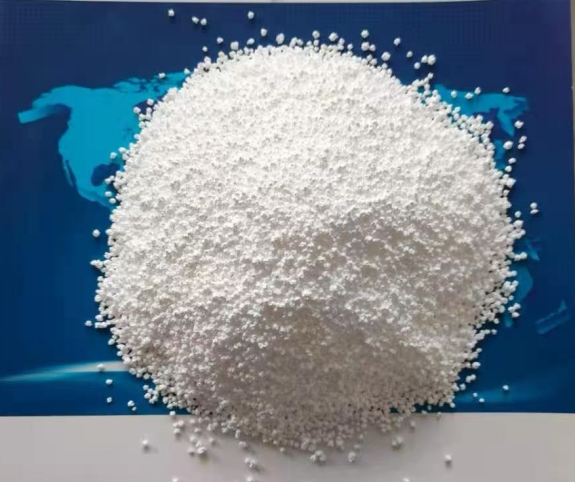
Stepping onto the prilling floor, the first thing that catches your eye is the tower’s rhythm—not the machinery itself, but how molten droplets fall and solidify in midair. A well-tuned line has a steady, almost hypnotic cadence: no sputtering at the nozzles, no uneven spray patterns. Watch the curtain of beads near the cooling air intake. If you see clusters or tails forming, that’s a sign the viscosity or temperature is drifting off spec. Operators who’ve run these lines for years will tell you they can hear a problem before the lab results come back—a subtle change in the hiss of the air quench or the patter of prills hitting the collection cone.
Beyond the visual and acoustic cues, trace the path from melt pump to classifier. Look for dead zones where fines accumulate or where oversized beads bounce back into the product stream. The best lines aren’t the newest or the most automated; they’re the ones where every transfer point has been tuned to avoid abrasion and static buildup. Check the dedusting cyclones and the recycle loop—neglect there shows up as a dusty haze around the bagging station and a slow drift in bulk density. A clean prilling line isn’t about spotless floors; it’s about predictable particle size distribution from hour to hour.
Finally, ask about changeover behavior. When the formulation shifts—different melt point, different additive package—does the line settle into a new steady state quickly, or does it fight back with bridging, caking, or pressure spikes? The real quality indicator isn’t in the control room trend lines; it’s in the hands of the operator who can catch a bad batch before it leaves the tower. Look for that person. They’ll show you the three or four small adjustments that separate a consistent prill from a variable one.
Can the Factory Handle Your Volume and Timeline?
When orders spike, many factories scramble to keep up, but this one has built its floor around scalable output. Multiple parallel production lines run simultaneously, each able to pivot between product variants without lengthy retooling. The equipment itself is a mix of automated CNC stations and flexible manual cells, so volumes from 500 to 50,000 units don't force a choice between speed and precision. Raw material buffers are kept at a two-week safety stock level, and supplier contracts include surge clauses that allow a 40% increase in component deliveries within ten days.
Timeline commitments start with a realistic production slot assessment, not a sales pitch. Once your specs are locked, the planning team builds a backward schedule from the ship date, inserting buffer days at every bottleneck—machining, finishing, assembly, QC. Daily output is tracked against that plan on a live dashboard, and if a station falls behind, extra shifts or a loaner machine from a partner shop are activated without waiting for the weekly review. Rush orders don't automatically mean overtime chaos; they trigger a pre-approved routing protocol that keeps lead times intact.
Past projects show the pattern: a 12,000-unit electronics enclosure order with a 21-day window was delivered in 17 days because the factory ran two mold sets in parallel and moved inspection inline. For a furniture hardware client, a last-minute design change pushed assembly back a week, but the factory recovered by pre-staging components and running final packaging over a weekend. That kind of flexibility doesn't come from luck—it's designed into the floor layout, labor cross-training, and the fact that the factory owner still walks the line every morning.
Third-Party Test Results and Compliance Paperwork
Independent lab reports, factory audit summaries, and regulatory certificates often land on a buyer's desk in a scattered mix of scans, emails, and outdated spreadsheets. Without a single point of reference, teams lose hours reconciling version numbers, verifying test dates, or chasing down missing pages. A practical approach is to treat compliance paperwork as a living file—every update logged, every approval timestamped, and every document linked to the exact product batch it covers.
What separates a smooth compliance review from a frantic one is not the number of documents but how they are organized. Instead of dumping PDFs into a generic folder, forward-thinking suppliers map each certificate to its corresponding regulation or customer requirement. This lets a quality manager pull up, say, all REACH, RoHS, or Prop 65 reports for a specific SKU in seconds, while also flagging which tests are about to expire and need re-testing before the next shipment.
Buyers rarely push back on paperwork that arrives complete, correctly named, and easy to verify. A simple cover sheet summarizing the test scope, lab accreditation, and result status can prevent most back-and-forth emails. The goal is not just having the files—it is making them usable on a Friday afternoon when a retailer asks for proof of compliance before the Monday morning loading window.
Packaging That Protects Against Moisture
Moisture is sneaky. It creeps through microscopic pores in cardboard and settles into powders, electronics, and dried goods before anyone notices. The best defense starts with laminated films like foil-lined polyester or metallized BOPP, which create a near-impermeable wall. Add a well-sealed fin or gusset, and you cut vapor transmission to a fraction of what standard poly bags allow.
But a barrier alone isn't always enough. Desiccant packets tucked inside the package absorb residual humidity from trapped air, while humidity indicator cards let handlers spot trouble at a glance. For products that need extra reassurance, vacuum skin packaging or nitrogen flushing removes oxygen and moisture in one step, leaving contents suspended in a dry, stable atmosphere.
It's not just about keeping things dry during shipping. Repeated temperature swings inside a warehouse can cause condensation inside even the best-sealed box. That's why layering a moisture-resistant overwrap with a breathable yet hydrophobic membrane works well for long-term storage. The goal is simple: keep water out, keep product integrity in, and avoid the musty, clumped-up surprise at the other end.
Support Before and After the First Shipment
Getting your first shipment off the ground involves more than just packing boxes. We take time before dispatch to walk through packaging requirements, labeling nuances, and any destination-specific restrictions that could slow things down. Questions that come up at the last minute—whether about pallet dimensions or invoice details—get answered directly, not routed through endless ticket queues.
Once the freight leaves, the conversation doesn't stop. We monitor transit milestones and flag anything unusual before it becomes a problem. If customs needs a different document or a carrier changes routing, we reach out with clear next steps instead of waiting for you to notice the delay.
After delivery, we follow up to confirm everything arrived in the condition you expected. That review helps catch small issues—damaged outer cartons, missing labels, a discrepancy on the receipt—while they're still easy to resolve, and it gives us useful feedback for your next order.
FAQ
The 77% grade offers higher active ingredient per ton, which reduces freight and handling costs while delivering faster de-icing or dust control performance. Reputable factories typically achieve this through controlled hydration and drying rather than simply blending fillers.
Ask for detailed process flow documentation, batch traceability records, and on-site audit reports. A trustworthy factory will share evidence of consistent prill size distribution, moisture limits, and residual impurities instead of only providing a certificate of analysis.
Look for tests covering assay (77% minimum CaCl2), alkalinity, magnesium and alkali metal chlorides, sulfate, water-insoluble matter, and particle size. The factory should also retain samples and be willing to provide results before shipment.
Harder prills resist breakage during loading, transport, and storage. If prills disintegrate into powder, it can cause caking, dust problems, and uneven spreading. A reliable supplier monitors crush strength and screens out undersized or oversized particles.
Calcium chloride is highly hygroscopic, so packaging must use moisture-barrier liners, heat-sealed bags, or bulk bags with inner liners. The factory should also advise on palletization and shelf life under different humidity conditions to prevent caking before use.
Confirm that the factory has a stable upstream supply of hydrochloric acid and limestone or other calcium sources. Ask about annual output, typical lead times, and how they handle order peaks in winter, because a low price is useless if the supplier cannot deliver on schedule.
While not universal, ISO 9001 for quality management, REACH registration for EU markets, or local safety production licenses indicate formal systems. More important is whether the factory can provide consistent product data, emergency response support, and clear technical contacts.
Ask how the supplier handles application questions, dosage guidance, storage recommendations, and complaint resolution. A genuine factory will offer direct access to technical staff, not just a salesperson, and will follow up on field performance.
Conclusion
You can't verify a calcium chloride 77% prills supplier on paper alone. Start by matching the certificate of analysis against the actual spec sheet, then ask for a retained sample from the last three production runs. Purity numbers look similar across many factories, but traces of magnesium, alkali metal chlorides, and insoluble matter shift how the prills behave in de-icing, dust control, or oilfield applications. Walk the prilling line if possible—check the melt temperature control, nozzle condition, and cooling air flow. Uniform prill size, low dust, and minimal caking after three months of storage tell you more than any polished brochure. The factory also needs to prove it can handle your order size without padding lead times. Ask for a live production schedule rather than a generic capacity figure; a supplier that quotes honest weekly output and reserves a specific line slot is more reliable than one that promises everything and then delays.
Third-party test results should come from a lab you recognize, not an in-house printout, and the paperwork should include REACH, ISO, or other compliance documents relevant to your destination market. Moisture protection is non-negotiable for 77% calcium chloride prills—check that bags include an inner liner, heat-sealed valve, or desiccant pack, and ask how the factory handles monsoon season or long ocean freight. Beyond the first shipment, a trustworthy supplier assigns a technical contact who understands your use case, not just a sales rep. They should offer pre-shipment samples, loading supervision photos, and quick answers on customs or moisture issues after delivery. Those small response habits often reveal more about long-term reliability than a signed contract.
Contact Us
Contact Person: Tom Cui
Email: [email protected]
Tel/WhatsApp: +8618663670626
Website: https://www.jinjigoldenchem.com