

Best SLA 3D Printer Solutions for Precision Prototyping and Manufacturing
2026-05-26
Precision prototyping and manufacturing demand more than just a 3D printer—you need a solution that bridges the gap between intricate design and flawless execution. In a market flooded with options, finding the right SLA technology can feel overwhelming, especially when microns matter and every print counts. That's where ProtoMat reshapes the game—not just as another machine, but as a tailored ecosystem that anticipates the nuances of your most ambitious projects. Before we dive into what sets the best SLA printers apart, ask yourself: is your current setup truly unlocking the fidelity your prototypes deserve, or are you settling for 'close enough'? Stick around, because the answer might redefine your standards for speed, surface finish, and repeatability—and it's not what the spec sheets typically tell you.
Understanding the Core Advantages of SLA for High-Precision Work
For parts demanding exceptional surface quality and fine feature resolution, stereolithography consistently outperforms many other 3D printing technologies. The process uses a precise ultraviolet laser to cure photopolymer resin layer by layer, building objects with remarkably smooth surfaces. This allows for the creation of intricate geometries that would be difficult or impossible to achieve with filament-based or powder-bed methods, making SLA the go-to choice for prototyping optics, medical devices, and intricate jewelry patterns. The thin layers and controlled curing produce parts that often require minimal post-processing, saving time and preserving delicate details.
One of SLA’s standout characteristics is its ability to hold extremely tight tolerances across a build. Because the curing is photon-driven rather than heat-based, warping and shrinkage are considerably reduced compared to fused deposition modeling. Industrial-grade SLA machines deliver dimensional accuracy that rivals traditional machining for small to medium-sized parts, enabling functional testing and even low-volume end-use production. This level of precision is maintained consistently across the entire build platform, so multiple parts can be printed simultaneously without sacrificing quality, a major advantage in scaled iterative design.
Material versatility further cements SLA’s role in high-precision applications. Modern resins are engineered to mimic a wide range of engineering plastics, offering properties like high temperature resistance, impact strength, or biocompatibility. This means users can select a material tailored to their specific need—whether it’s a clear dental aligner mold that must fit precisely, an injection mold prototype that can withstand short runs, or a transparent flow visualization model. The combination of sharp resolution, custom material properties, and isotropic mechanical behavior gives SLA a unique position where aesthetic and functional demands overlap, making it indispensable for work where every micron matters.
Materials That Make a Difference: Resins Engineered for Performance
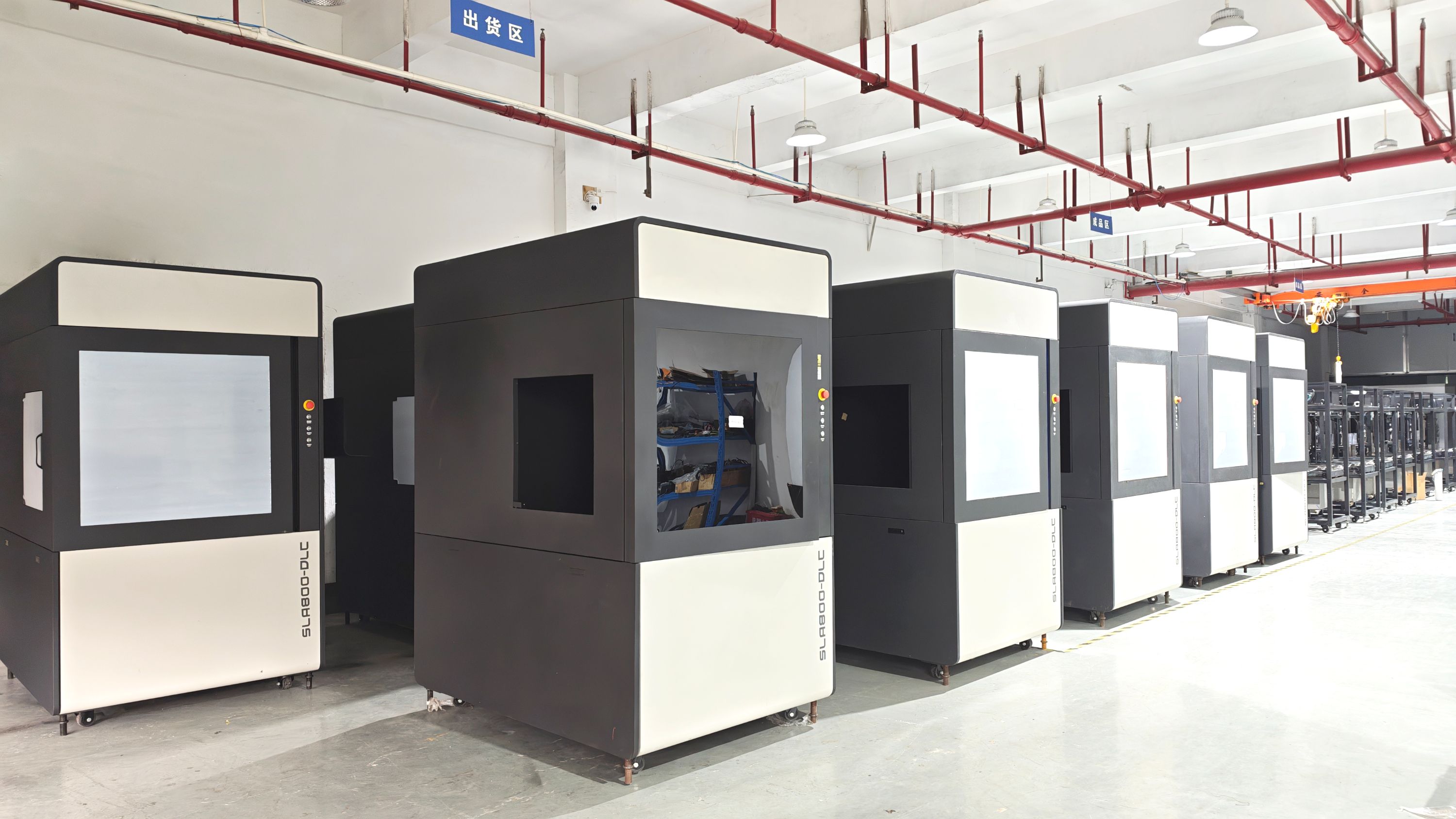
The difference between a product that merely works and one that truly lasts often comes down to the materials inside it. Engineering resins are designed to close that gap, providing targeted mechanical strength, chemical resistance, and thermal stability that off-the-shelf plastics simply can’t match. By tailoring polymer structures at the molecular level, these materials anticipate stress rather than just reacting to it, opening doors to lighter, tougher, and more reliable applications across industries.
What sets performance-engineered resins apart is their ability to hold tight tolerances under conditions that would cause standard materials to warp or degrade. For instance, specialized formulations can maintain stiffness after prolonged exposure to fuels, oils, or cleaning agents, making them indispensable in automotive under-hood components and medical devices that endure frequent sterilization. This predictability removes the guesswork from design, allowing engineers to slim down wall thicknesses and consolidate assemblies without sacrificing durability.
Beyond technical specs, these resins also reshape how products can be manufactured. Some grades flow easily into complex molds yet emerge with low internal stress, reducing post-processing steps and scrap rates. Others are reinforced with carefully selected additives—minerals, glass, carbon fiber—to tune impact resistance or electrical conductivity without compromising surface finish. The result is a more streamlined path from concept to market, where the material itself becomes a competitive advantage through consistency, performance, and design freedom.
From Concept to Creation: Streamlining Prototyping with SLA
When an idea first takes shape, the gap between a rough sketch and a tangible object can feel overwhelming. That's where SLA prototyping steps in, turning digital designs into physical parts with a speed that matches the pace of innovation. Instead of waiting weeks for traditional tooling, teams can hold a concept in their hands within hours, allowing them to spot design flaws, test ergonomics, and gather feedback long before committing to production. The process feels less like manufacturing and more like sketching in three dimensions—immediate, forgiving, and endlessly iterative.
SLA's real strength lies in its ability to capture details that other rapid prototyping methods often blur. Fine features, sharp edges, and smooth surfaces emerge with a clarity that makes visual and functional testing genuinely meaningful. Whether it's a medical device component that needs to mate perfectly with existing hardware or a consumer product with intricate textures, SLA produces parts that look and perform remarkably close to the final injection-molded version. This fidelity reduces the number of design cycles and helps cross-functional teams align around a shared, physical reference point early in the development process.
Beyond speed and precision, SLA also opens doors to material versatility. From rigid and durable to flexible and transparent, resins can be selected to match the specific demands of each project. That means a prototype isn't just a shape—it can be used for functional testing, light assembly checks, or even low-volume end-use parts. By collapsing the distance between digital concept and physical reality, SLA empowers creators to experiment more freely, make decisions confidently, and bring products to market with fewer surprises along the way.
Scaling Up: How SLA Fits into Modern Manufacturing Pipelines
Bringing stereolithography into a production environment used to mean sacrificing speed for precision, but that’s no longer the case. Modern SLA systems have evolved to handle larger build volumes and faster print cycles without compromising the surface finish that engineers rely on. The real shift comes from integrating these printers directly into existing workflows—connecting them to automated post-processing stations and real-time monitoring tools that turn a prototyping tool into a just-in-time manufacturing asset.
The material landscape has expanded in ways that make SLA a legitimate contender for end-use parts. High-strength, heat-resistant, and even bio-compatible resins now cover applications from automotive brackets to surgical guides. This variety means a single SLA platform can support multiple stages of the pipeline, from early concept models to final production runs, reducing the need to switch technologies and keeping the entire team aligned on a common set of capabilities.
Scaling up with SLA isn’t just about adding more machines—it’s about rethinking the entire part delivery cycle. By nesting components densely in each build and using smart scheduling software, manufacturers are hitting throughput numbers that compete with traditional methods while still offering the geometric freedom that only additive manufacturing provides. For companies willing to invest in the ecosystem, SLA is quietly becoming the backbone of a flexible, responsive production line.
Choosing the Right SLA Printer: Key Features That Impact Output
When evaluating SLA printers, resolution often gets the spotlight, but it's the interplay of light source and optics that truly defines print quality. A high-quality laser or a precisely calibrated DLP projector can make the difference between crisp edges and soft details. Look beyond pixel size alone; uniformity of the light beam, its power calibration, and the stability of the optical path over time are what ensure consistent results across the entire build area, not just at the center.
Material compatibility is another overlooked cornerstone. A printer that locks you into a proprietary resin ecosystem limits experimentation and drives up long-term costs. The best machines offer flexibility—supporting third-party resins and allowing fine-tuning of exposure settings. This openness lets you match the material properties exactly to your application, whether you need high-temperature resistance, flexibility, or biocompatibility, without being constrained by a narrow selection of pre-approved formulations.
Finally, don't underestimate the importance of build platform design and calibration ease. A sturdy, quick-release plate that minimizes warping and simplifies part removal can save hours of frustration. Printers that rely on automatic calibration or have simple, tool-free leveling procedures reduce the learning curve and keep your workflow moving. After all, the goal is spending more time printing and less time troubleshooting mechanical hiccups.
Real-World Applications Showcasing SLA’s Impact Across Industries
Across the healthcare sector, SLAs are quietly transforming patient care by ensuring that critical systems stay online. Hospitals rely on guaranteed uptime for electronic health records and real-time monitoring devices; when a vendor commits to a 99.9% availability target with rapid escalation paths, a single hour of downtime can make the difference between life and death. This accountability drives proactive maintenance and faster incident resolution, letting medical staff focus on patients instead of IT headaches.
In retail, SLAs shape the customer experience from the warehouse to the checkout screen. A major e-commerce platform guarantees sub-second page loads and seamless payment processing through tightly defined performance metrics with its cloud provider. During flash sales, those microseconds matter—if the agreement specifies penalties for latency spikes, the provider invests in edge caching and auto-scaling, turning a potential crash into a smooth revenue surge.
Manufacturing floors are another arena where SLAs prove their worth. When robotics and IoT sensors depend on low-latency data pipelines, a well-crafted agreement with a network partner ensures that assembly lines never stall. One automotive plant baked millisecond-level response times into its contract, along with on-site support within four hours of a fault. The result: predictive maintenance alerts reach technicians before a machine fails, slashing unplanned downtime by over thirty percent in the first year.
FAQ
SLA uses a laser to cure liquid resin layer by layer, achieving incredibly fine details and smooth surfaces that are hard to match with filament-based methods. This process captures intricate geometries and tight tolerances down to a few microns, making it ideal for visual models and functional prototypes where accuracy is non-negotiable.
Modern SLA resins now mimic the properties of engineering thermoplastics, offering enhanced strength, heat resistance, and flexibility. Some are even biocompatible or ESD-safe. This evolution means prototypes behave like final parts, and the same machine can produce low-volume production runs without switching processes.
Key aspects include build volume versus part size, the range of compatible engineering resins, repeatability across builds, and workflow automation. Look for printers with consistent laser power and closed-loop calibration to minimize deviation batch after batch. Software that streamlines support generation and nesting is also a major time-saver.
In many cases, yes—especially for complex geometries where CNC setups would be cumbersome. SLA delivers smooth surfaces right off the printer, often requiring only light sanding or bead blasting. While dimensional accuracy depends on calibration and resin characteristics, it routinely achieves tolerances within ±0.1 mm, making it a viable alternative for non-critical metal parts.
Post-processing is integral. After printing, parts must be washed in a solvent to remove uncured resin and then fully cured under UV light to develop final mechanical properties. Proper support removal and sanding affect surface quality and dimensional fit. Skipping or rushing these steps can undermine the precision gained from the printer itself.
Layer height and exposure settings dictate the trade-off. Lower layer heights (like 25 microns) yield finer Z-resolution but take more time. Many shops optimize by using thick layers for early concept models and switching to fine layers for presentation pieces. Some printers offer print profiles that adjust settings dynamically per geometry to maximize throughput without sacrificing critical details.
Resin cost is the biggest consumable, plus the resin tank and build platform have finite lifespans. Labor for cleaning and curing adds to operational expense. However, compared to tooling for injection molding, the per-part cost often breaks even for volumes under a few thousand units. Factoring in design flexibility and reduced inventory, SLA can be surprisingly economical for low-volume manufacturing.
Conclusion
SLA technology has cemented its reputation as the go-to solution for professionals who demand micron-level precision in prototyping and end-use parts. What truly sets the best SLA printers apart is their ability to deliver flawless surface finishes and intricate geometries that mimic final production quality—eliminating the stair-stepping effect common in other 3D printing methods. Modern systems now pair high-resolution laser systems with advanced galvo controls, ensuring that even the most delicate features, like thin walls or embossed text, come out crisp and accurate. This precision isn't just about pretty prototypes; it directly translates into functional testing accuracy for aerospace brackets, medical devices, and consumer electronics housings where tolerances matter.
Beyond the hardware, the real magic lies in the synergy between purpose-engineered resins and scalable workflows. Top-tier SLA solutions support an expansive library of materials—from tough, ABS-like resins for snap-fit assemblies to biocompatible and castable options that open doors in healthcare and jewelry. Smart manufacturers are integrating these printers into production lines by leveraging automated build preparation, batch nesting, and seamless post-processing stations that drastically cut hand-finishing time. Whether you're iterating a complex fluidic manifold overnight or producing hundreds of customized surgical guides per day, the right SLA ecosystem combines repeatability, material versatility, and uptime reliability. It’s this practical fusion of ultra-fine detail and manufacturing pragmatism that helps teams compress development cycles and enter markets with confidence.
Contact Us
Contact Person: Joe
Email: [email protected]
Tel/WhatsApp: +8613799507208
Website: https://www.3dprotomat.com/